Reynand Wu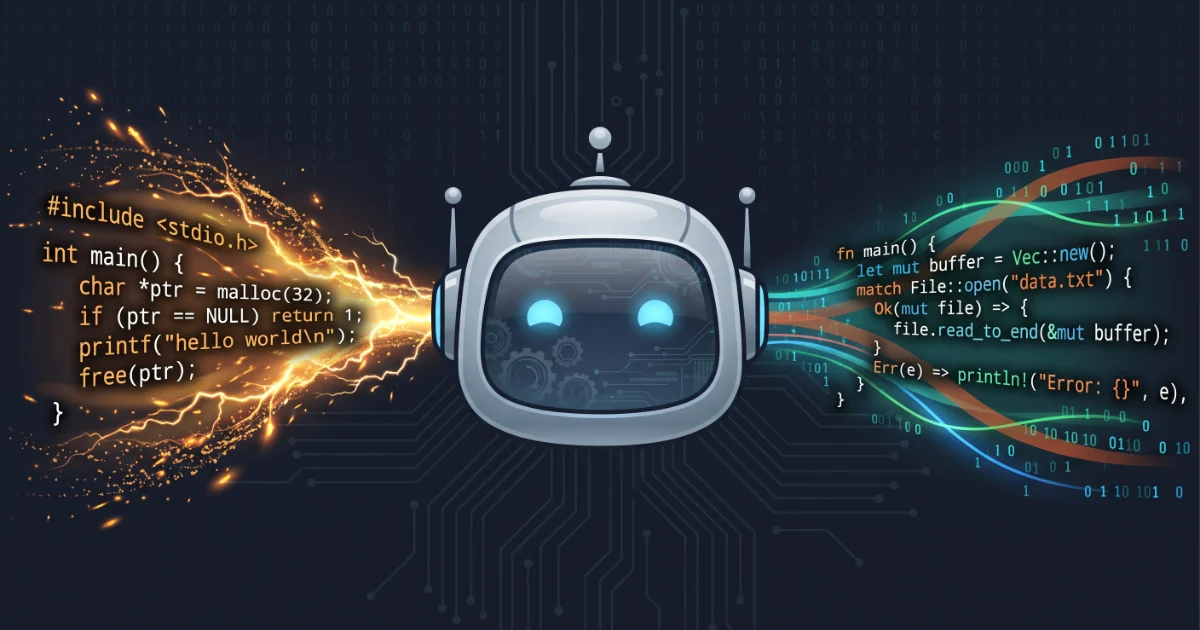
In a landmark achievement for cybersecurity, Google’s engineering teams have successfully validated a novel, AI-accelerated methodology for migrating legacy C infrastructure to memory-safe Rust. By leveraging Gemini—Google’s advanced large language model—to translate complex image-processing code, the team has demonstrated that it is possible to neutralize entire classes of security vulnerabilities while maintaining, or even improving, performance.
The experiment, which focused on the widely used giflib library, serves as a blueprint for the future of software maintenance. By replacing approximately 3,000 lines of C with an ABI-compatible Rust equivalent, Google was able to eliminate the need for expensive, latency-inducing process isolation sandboxes. Perhaps most significantly, the new Rust implementation proved inherently immune to a zero-day heap-write vulnerability (CVE-2026-26740) that crippled the original C-based library.
The Chronic Crisis of Memory Corruption
For decades, memory corruption bugs have plagued the technology landscape. Despite the evolution of modern compilers and static analysis tools, these flaws—including buffer overflows, use-after-free errors, and heap-based write vulnerabilities—continue to account for roughly 70% of all high-severity security incidents in mature C and C++ stacks.
Historically, the industry has faced a "migration paradox." While memory-safe languages like Rust offer an architectural solution to these bugs, the sheer volume of legacy C/C++ code—comprising millions of lines of mission-critical infrastructure—makes manual rewrites prohibitively expensive and prone to human error. Teams have traditionally relied on "runtime bounds checking" or complex sandboxing to mitigate risk, but these methods often introduce significant performance overhead and operational complexity.
Google’s initiative, led by engineers Bastian Kersting and Max Hils, sought to break this deadlock by introducing an autonomous, AI-driven feedback loop that moves beyond simple translation to verifiable code transformation.
Chronology: A Three-Stage Migration
The migration project was not a "set it and forget it" task for the AI. Instead, the team designed a rigorous three-stage automated pipeline that emphasized safety and parity.
Phase 1: AI-Assisted Translation
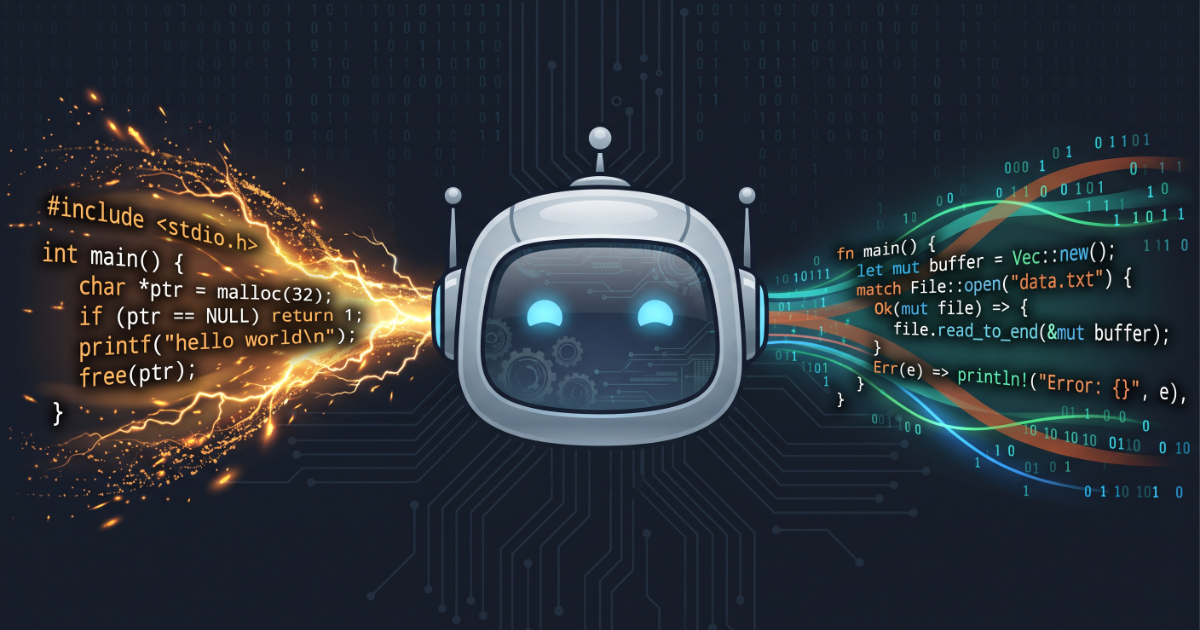
The initial phase involved using Gemini to port the C library’s logic into Rust. To ensure the new library could be dropped into existing systems without breaking downstream callers, the team required the output to be ABI-compatible. This necessitated the retention of original exported symbols and struct definitions.
During these initial iterations, the model produced code that included "unsound" raw pointer semantics—a common pitfall when mapping C’s unchecked memory management to Rust’s strict ownership model. Human domain experts were required to step in to refine pointer ownership and lifetime invariants, demonstrating that AI remains an assistant rather than a replacement for architectural expertise.
Phase 2: Differential Testing and Feedback
Once the code was structurally aligned, the team deployed an automated differential testing engine. This engine executed side-by-side iterations of the original C library and the new Rust implementation, feeding failure traces back into Gemini. This allowed the model to iteratively "patch" itself, adjusting the logic until the Rust code exhibited identical behavior to the legacy source across millions of test cases.
Phase 3: Semantic Validation
The final phase focused on mass-scale regression. The team subjected the Rust library to a barrage of over 30 million real-world GIF assets, ensuring bit-for-bit rendering parity. By using adversarial LLM prompts to analyze the repositories for hidden bifurcations, the team verified that the two versions were functionally indistinguishable.
Supporting Data: Efficiency and Security
The results of this migration have provided compelling evidence for the efficacy of language-level safety.
Performance and Latency
One of the most persistent criticisms of memory-safe languages is that the mandatory bounds checking required to prevent vulnerabilities introduces a performance tax. However, production telemetry across Google’s global image decoding clusters revealed that the Rust implementation operated at absolute runtime parity with the original C library.
Furthermore, because the memory safety guarantees were moved directly into the type system, the team was able to decommission the process isolation sandboxes previously required to handle untrusted GIF input. The removal of this isolation boundary led to a measurable reduction in p99 tail latency, proving that security and performance can be synergistic rather than competing goals.
The "Immunization" of CVE-2026-26740
The project’s most dramatic validation occurred in the staging environment. While the team was finalizing their implementation, an external researcher discovered an out-of-bounds heap write vulnerability in the upstream giflib library, later cataloged as CVE-2026-26740.
Because the Rust version had been rewritten with strict ownership and boundary enforcement, the staging nodes running the new library were structurally immune to the flaw. The vulnerability could not be triggered in the Rust implementation because the language primitives simply disallowed the illegal memory access that the C version permitted. This incident provided irrefutable proof that architectural language migrations can preempt entire vulnerability classes before they are even discovered.
Official Perspectives and Industry Response
Google has open-sourced the resulting library under the name giflib-rs, encouraging other organizations to use it as a reference implementation.
The response from the developer community has been largely positive, though marked by healthy skepticism. On platforms like Hacker News and Reddit, engineers praised the rigorous differential fuzzing framework. Many noted that the project’s success in catching a pre-existing out-of-bounds write in Google’s own legacy C code was a highlight, proving that the migration process itself can improve existing security posture.
However, industry experts cautioned against viewing AI as a universal solution. Critics highlighted that:
- Maintenance Divergence: Forking upstream C dependencies into Rust repositories creates a long-term maintenance challenge. When the original C library releases an update, the Rust port must be updated manually or via further AI-assisted efforts, creating a "versioning drift."
- The FFI Burden: The Foreign Function Interface (FFI) wrappers required to bridge C and Rust remain a significant area of risk. These wrappers often involve
unsafecode blocks that demand high-level human oversight to prevent memory leaks and maintain thread safety. - Scaling Limits: While the one-shot translation approach worked for a small, self-contained library like
giflib, many argue that larger, more complex codebases require a more deterministic approach, such as using transpilers (likec2rust) followed by AI-driven refactoring into idiomatic Rust.
Implications for the Future of Software Engineering
Google’s experiment with giflib-rs signals a shift in how the industry approaches technical debt. We are moving toward a future where "memory safety" is no longer a luxury but an automated standard.
For software architects, the implications are profound. If memory-safe, high-performance replacements for legacy code can be generated and verified at scale, the primary argument for maintaining C/C++ in modern web-facing infrastructure—namely, the cost of migration—begins to evaporate.
However, the success of this project also underscores the necessity of a "human-in-the-loop" model. As Google’s engineers noted, AI is not a panacea. The most critical component of the giflib-rs project was not the generation of the code, but the validation framework. Without the differential fuzzer and the expert-led audit of the FFI boundaries, the migration would have been a dangerous gamble rather than a security success.
As we look toward 2026 and beyond, the automation of language transitions represents one of the most promising frontiers in software engineering. By combining the raw power of LLMs with the cold, hard logic of differential testing, organizations can finally begin the process of purging the memory vulnerabilities that have defined the last three decades of cyber insecurity. The question is no longer whether we can afford to migrate to memory-safe languages—it is whether we can afford not to.

 Jia Lissa
 Lina Hope
 Nila Kartika Wati

 Basiran
 Sagoh
Sagoh