
 Iffa Jayyana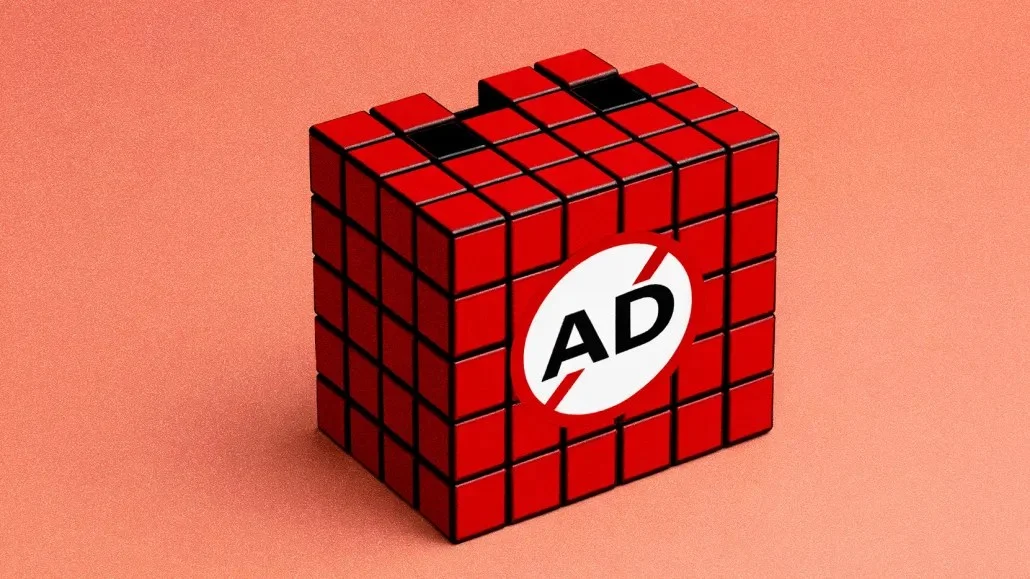
As the retail industry gears up for the most critical quarter of the fiscal year, a new contender in the digital advertising landscape is struggling to find its footing. Despite the massive hype surrounding Generative AI and the launch of advertising capabilities on ChatGPT in early 2026, major brands are largely keeping their wallets closed this holiday season. While the platform has successfully attracted a growing number of early-adopter advertisers, the consensus among industry experts is clear: AI-driven search remains an experimental, high-cost, and unproven channel compared to the established giants of Meta and Google.
The Main Facts: A High-Stakes Experiment
The promise of AI-integrated advertising is seductive: direct access to "high-intent" users who are already deep in the research phase of their purchasing journey. However, the reality of the 2026 holiday landscape suggests that brands are viewing ChatGPT not as a primary revenue driver, but as a speculative sandbox.
The core issues plaguing the platform are twofold: prohibitive costs and a lack of proven ROI. With cost-per-click (CPC) rates reportedly as high as six times those of Google, many marketing executives are finding it difficult to justify the expense during a period where budget efficiency is paramount. Furthermore, AI assistants are still in the early stages of establishing consumer trust as reliable product curators. When the stakes are at their highest—during the Q4 holiday rush—advertisers are opting for the stability of proven channels rather than risking their capital on the nascent, and often unpredictable, nature of AI-generated responses.
A Chronology of AI Adoption in Media
To understand the current state of the market, one must look at the rapid trajectory of OpenAI’s advertising rollout:
- February 2026: OpenAI officially launches its advertising capabilities, signaling a major shift in how the company plans to monetize its massive user base. The announcement triggers an immediate surge of interest from tech-forward brands.
- Spring 2026: A "gold rush" mentality takes hold. Marketing agencies and brand managers begin exploring the technical requirements for integrating sponsored product listings into AI-generated responses.
- August 2026: Market intelligence firm Sensor Tower reports that over 1,400 unique advertisers have run campaigns on the platform, marking an 8% month-over-month increase. This indicates a steady, if not explosive, growth in advertiser volume.
- September 2026: Data reveals that the platform is primarily dominated by deep-pocketed, large-scale enterprises. Brands such as Capital One, Expedia, and Cloudflare emerge as the top spenders, accounting for a significant portion of the total ad share.
- Q4 2026: The holiday season arrives, and with it, a reality check. Despite the momentum, the "experimental" label persists. Brands are largely opting to maintain their existing budgets with Meta and Google rather than reallocating significant portions to ChatGPT.
Supporting Data: Who Is Actually Spending?
Data from Sensor Tower provides a granular look at the current advertising ecosystem on ChatGPT. While the number of participants is increasing, the diversity of the spend is narrow. The concentration of ad spend among large-scale corporations—with Capital One (4%), Expedia (3%), and Cloudflare (2%) leading the pack—suggests that AI advertising is currently a game for those with the liquidity to "waste" money on R&D.
Smaller, direct-to-consumer (DTC) brands, which are often more sensitive to CAC (Customer Acquisition Cost) fluctuations, are noticeably more cautious. The technical barrier is also significant; unlike traditional programmatic advertising, where marketers can surgically target specific demographics and psychographics, ChatGPT ads are surfaced contextually through organic AI responses. This lack of granular control over audience targeting is a major deterrent for brands that rely on the precise performance metrics provided by established ad-tech platforms.
Official Responses and Expert Perspectives
Industry leaders are vocal about the risks associated with this new frontier. Terence Einhorn, VP of Solutions Architect and Head of Insights at Measured, has been particularly candid about the limitations of the current landscape.
"If you are looking to drive business efficiently right now, you should probably not use tools that have a completely unproven track record," Einhorn remarked. He highlights a critical flaw in the current model: the risk of subsidizing "non-incremental" sales. In many instances, the ads being served to high-intent users are capturing consumers who were already planning to purchase the product. Consequently, brands end up paying a premium for a conversion they would have likely received regardless of the ad spend.
Anders Bill, co-founder and Chief Product Officer of Superfiliate, echoes this sentiment. While his clients are interested in how AI platforms might evolve, they aren’t ready to shift meaningful budget. "Most brands aren’t moving meaningful budgets away from Meta or search yet," Bill stated. He emphasizes that the current focus for brands is not on paid ads, but on "Generative Engine Optimization" (GEO)—the art of organically ranking at the top of an AI’s "wishlist" or product recommendation list.
The "Catch-22" of AI Advertising
The most significant challenge for OpenAI and its competitors in the AI space is the "Catch-22" described by Einhorn. Brands are reluctant to invest in a channel until they have concrete proof of its efficacy. However, because the channel is new, that proof can only be generated by running expensive, large-scale campaigns—campaigns that brands are unwilling to fund without prior evidence of success.
Furthermore, there is the "trust gap." Consumers have spent years learning to navigate and ignore traditional digital ads. When a user asks an AI assistant for a product recommendation, they expect an objective, analytical response. If that response is heavily influenced by sponsored content, it risks alienating the user and degrading the core utility of the AI platform. This agentic nature of the ads—where the AI serves as a shopping concierge—makes it difficult for brands to maintain a consistent brand voice or value proposition within the ad unit itself.
Implications: The Long-Term Outlook
Despite the current lack of holiday-season enthusiasm, the consensus is not that AI advertising is a failure, but that it is in a "maturation phase."
- The Rise of Learning Budgets: Forward-thinking brands are setting aside small, separate "learning budgets" specifically for experimental channels like ChatGPT and Perplexity. These funds are not expected to produce a direct ROI but are considered an investment in future competitive advantage.
- Platform Refinement: As OpenAI and other AI developers refine their ad products, we can expect to see more sophisticated targeting tools that mirror the capabilities of traditional digital platforms. Once these tools become available, the barrier to entry for mid-sized brands will drop.
- The Shift from PPC to GEO: In the short term, the primary battlefield will likely be in the organic space. Brands will prioritize optimizing their digital presence so that they are naturally suggested by AI models, reducing the need for expensive, high-CPC sponsored placements.
- A New Measurement Paradigm: As seen in the partnership between Measured and OpenAI, there is an industry-wide push to make AI ad performance more measurable and visual. Until brands can clearly distinguish between "subsidized" sales and truly incremental growth, adoption will remain limited to the largest enterprise players.
Conclusion
The 2026 holiday season will likely be remembered as the era of "cautious curiosity" for AI advertising. While ChatGPT has firmly established itself as a technological phenomenon, its transition into a reliable advertising utility is still in its infancy. For now, the brands winning the holiday season will be those that stick to the proven performance of established search and social channels, while quietly observing the evolution of the AI landscape from the sidelines. The technology is undeniably the future of discovery, but for the average brand, the future is not yet ready to pay for itself.

 Rifan Muazin
 Azzam Bilal Chamdy
 Laily UPN
 Suro Senen
 Lina Hope
 Lina Irawan