
 Lina Hope
For over two decades, Google has been at the forefront of machine learning and artificial intelligence, treating these technologies not merely as products, but as foundational infrastructure designed to enhance human capability. As we reflect on the milestones of April 2026, it is clear that the company has shifted its focus from passive generative AI toward the era of "Agentic AI"—systems capable of autonomous reasoning, complex planning, and execution across multi-step workflows.
From the massive stage of Cloud Next ’26 to the quiet, precision-engineered updates in developer tools like Colab, April was a month defined by scale, efficiency, and accessibility.
The Main Event: Cloud Next ’26 and the Agentic Shift
The centerpiece of April’s news cycle was undoubtedly Google Cloud Next ’26. With over 32,000 attendees and more than 260 product announcements, the event served as a definitive declaration: the future of enterprise technology is agentic.

Empowering the Enterprise
The introduction of the Gemini Enterprise Agent Platform marked a significant maturation in how businesses interact with AI. Rather than relying on simple chatbots, organizations can now deploy autonomous agents capable of managing complex, multi-step business processes. These agents are governed by enterprise-grade security frameworks, ensuring that as AI takes on more operational load, it remains within the guardrails of corporate compliance.
Redefining Security
Collaboration with cybersecurity leader Wiz highlighted a proactive approach to the risks inherent in the AI era. As businesses integrate AI agents into their core infrastructure, the attack surface expands. The partnership aims to provide a unified security layer, ensuring that enterprises can harness the raw power of Gemini without compromising their digital sovereignty.
Infrastructure: The Eighth-Generation TPUs
AI performance is ultimately a function of compute power. Google unveiled its eighth-generation Tensor Processing Units (TPUs), engineered specifically to handle the massive, sustained compute demands of the agentic era. By co-designing the silicon with the software architecture, Google has achieved a leap in power efficiency, allowing data centers to sustain higher performance levels with a significantly smaller energy footprint.

Chronology of Innovation: A Month of Rapid Development
April 2026 was not just about the big stage; it was a month of relentless iteration.
- Early April: Focus on Creativity. The month began with the widespread rollout of Google Vids, which now allows users to generate professional-quality video content at no cost. Powered by the Lyria 3 and Lyria 3 Pro models, this democratized creative production, allowing everyone from students to small business owners to bypass the traditional barriers of video editing.
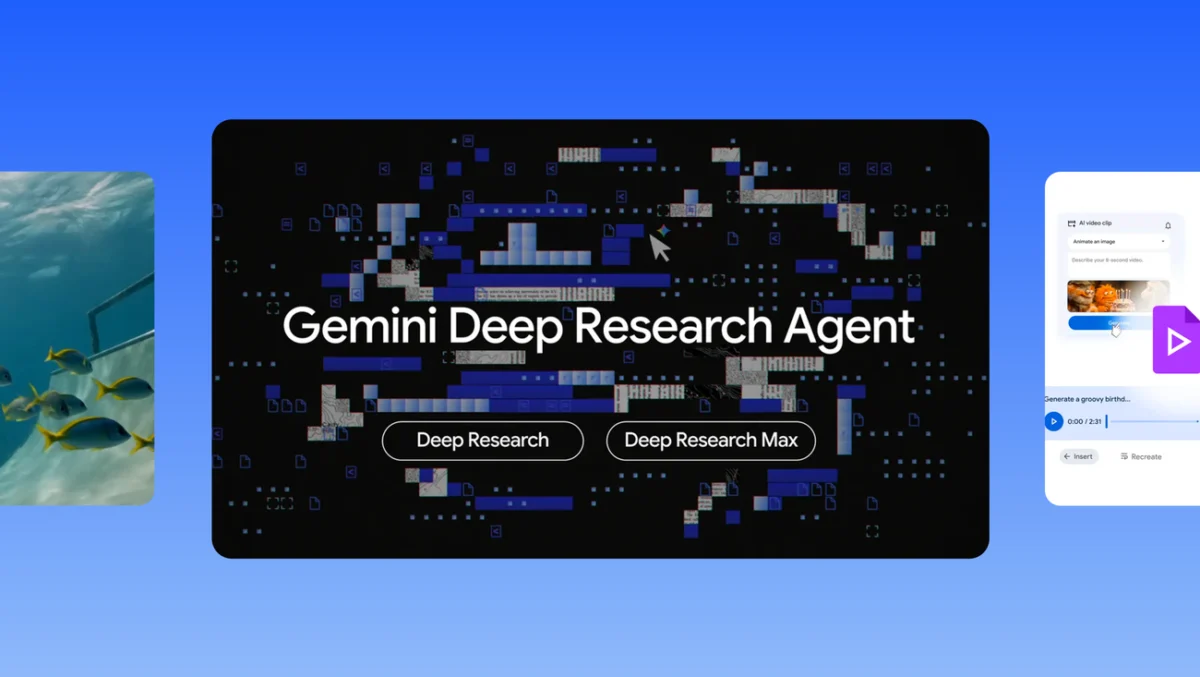
- Mid-April: The Research Leap. The introduction of Deep Research Max changed the calculus for data-heavy roles. By autonomously conducting high-level research and synthesizing vast datasets, the tool effectively eliminated the "grunt work" that often delays strategic decision-making.
- Late April: Developer Empowerment. The month concluded with a flurry of developer-focused updates, including the release of Gemma 4—the most capable open model in its class—and the introduction of Learn Mode in Colab, effectively placing a personal AI coding tutor in every developer’s browser.
Supporting Data: Why Momentum Matters
The scale of Google’s AI adoption is no longer theoretical; it is measurable and massive. CEO Sundar Pichai noted that nearly 75% of Google Cloud customers are now actively utilizing Google Cloud AI services.
Even more telling is the volume of processing: over 330 organizations have each processed more than a trillion tokens in the past year alone. This surge in usage underscores a critical transition—AI has moved from the experimental "sandbox" phase into the production environment, where it is now a primary engine for business value.

Furthermore, the community response to the Gemma model family has been historic. Since the initial launch of the first generation, developers have downloaded Gemma models over 500 million times, proving that Google’s open-model strategy is successfully fostering a global ecosystem of innovation.
Official Perspectives: The Vision for 2026
In his keynote address at Cloud Next, Sundar Pichai emphasized that the goal of this technology is not to replace the human element, but to provide a "force multiplier" for human ingenuity.
"We are moving past the point of AI as a tool we talk to, toward AI as a partner that works alongside us," Pichai stated. This sentiment is echoed across the product teams. Whether it is the Fitbit health coach—which now uses Gemini to provide more nuanced, human-like biometric analysis—or the Google Translate team marking 20 years of linguistic connectivity, the common thread is personalization.

The Google.org and Johnson & Johnson Foundation partnership, a $10 million initiative to bring AI training to rural healthcare workers, provides the best evidence of this mission. By focusing on the "last mile" of healthcare, Google is ensuring that the benefits of AI are not concentrated solely in elite, urban medical centers, but are distributed to the communities that need them most.
Implications: The Road Ahead
As we look toward the remainder of 2026, the implications of these April announcements are profound.
1. The Death of "Syntax-First" Coding
With the launch of the AI Agents Vibe Coding Course and the integration of Learn Mode in Colab, the barrier to software development is lowering. We are entering a period where the ability to conceptualize a solution is becoming more important than the ability to write perfect syntax. This will likely lead to an explosion in the number of people capable of building software.

2. The Standardization of Autonomous Workflows
The Gemini Enterprise Agent Platform suggests that by the end of the year, we will see the first generation of truly autonomous, "self-driving" companies. These organizations will utilize agents for procurement, supply chain management, and customer support, with humans acting as supervisors rather than operators.
3. Sustainability as a Competitive Advantage
By prioritizing energy efficiency in the eighth-generation TPUs, Google is signaling that the future of AI cannot be energy-agnostic. As the climate impact of large-scale model training becomes a point of public and regulatory concern, the ability to deliver "intelligence per watt" will become the primary metric for measuring the success of an AI company.
4. Language as a Global Bridge
The 20th anniversary of Google Translate serves as a reminder that AI is fundamentally about connection. With the new "pronunciation practice" tool on Android, Google is moving beyond text-based translation into the nuances of speech, further reducing the friction of cross-cultural communication.

Conclusion
April 2026 was a watershed moment. It moved the conversation away from the "magic" of generative AI and toward the utility of agentic AI. By combining massive compute infrastructure with a commitment to accessibility—from open-source models like Gemma to educational tools in Colab—Google is setting the stage for a year in which AI becomes deeply woven into the fabric of professional, creative, and personal life.
The era of "vibe coding," autonomous research, and AI-driven health coaching is no longer a vision of the future; it is the reality of the present. As these tools continue to evolve, the challenge for users and businesses alike will not be finding ways to use AI, but determining which of the infinite possibilities to pursue first.


 Ali Ikhwan
 Neng Nana

 Suro Senen

 Azzam Bilal Chamdy
 Asep Darmawan

 Nana Wu

 Nana
 Muslim
