
 Asep Darmawan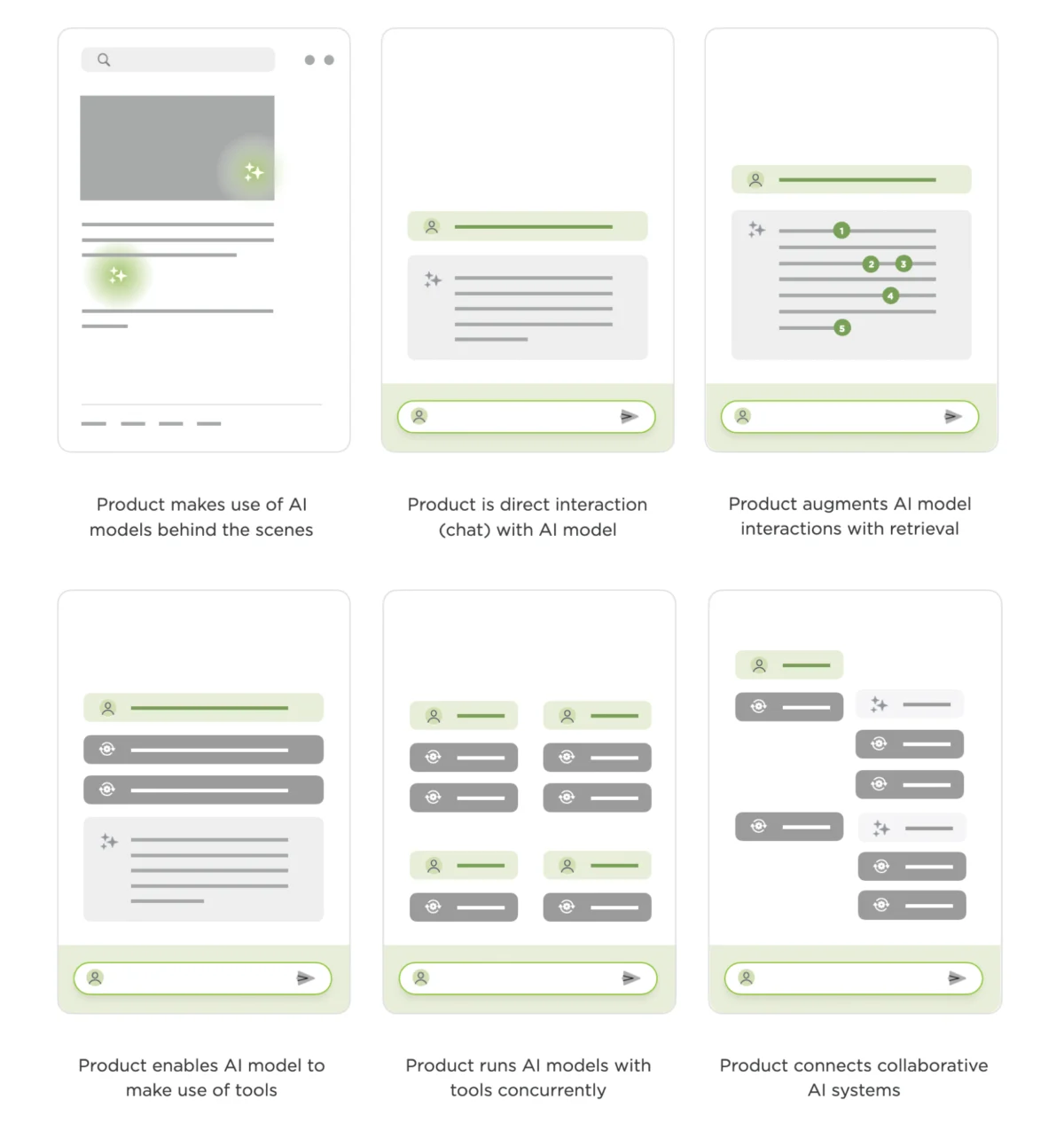
The evolution of artificial intelligence in software development has moved at a breakneck pace, transitioning from experimental curiosities to foundational pillars of modern engineering. Only a year ago, the prevailing narrative centered on the integration of large language models (LLMs) into existing workflows. Today, the conversation has shifted dramatically: we are no longer asking how AI can assist us, but how it can coordinate itself.
As we reach the mid-point of the decade, the industry has firmly entered the era of "agent orchestration." This transition marks a fundamental departure from the chat-based interfaces that defined the early wave of generative AI, moving toward autonomous, multi-agent systems that function more like a distributed workforce than a simple text-completion engine.
The Chronology of AI Product Evolution
To understand where we are going, we must analyze the trajectory that brought us here. The evolution of AI products has been defined by a progressive offloading of cognitive and mechanical tasks from the human user to the machine.
Phase 1: The Behind-the-Scenes Era
In the early days, AI was a utility—a backend service invoked to perform specific, isolated tasks like summarizing text or generating snippets of code. Interaction was manual and brittle. Developers would copy and paste inputs and outputs, acting as the "glue" between the AI model and the application logic.
Phase 2: The Chat Era
The release of conversational interfaces brought AI to the forefront of the user experience. This was the era of the "Copilot." While revolutionary, this phase was inherently limited by human throughput; the AI could only act as fast as the human could prompt it. It was a 1:1 relationship between user and model, which eventually hit a ceiling in terms of scalability.
Phase 3: The Orchestration Era (Current)
We have now entered the age of agentic coordination. In this paradigm, a single human supervisor oversees a fleet of specialized agents. These agents are not merely writing code; they are building, testing, deploying, and self-correcting. This is the stage where the vision of "AI models collaborating to get things done" has become the industry standard.
The Scaling Challenge: When Hundreds of Agents Converge
The most forward-leaning software organizations are currently managing environments where hundreds of agents operate simultaneously. These systems are tasked with complex engineering cycles, from architectural design to regression testing. However, the legacy tools—born in the earlier "Chat" era—are proving insufficient to handle this level of complexity.
When an agentic system grows, the primary challenge is no longer "intelligence" but "coordination." If multiple agents are modifying the same codebase without a centralized governance mechanism, the result is chaotic. Developers report that without proper tooling, the cognitive load required to manage these autonomous systems often negates the efficiency gains they provide.
Intent: A New Paradigm for Agentic Infrastructure
In response to these challenges, the developer tool Intent has been redesigned and open-sourced to address the specific needs of high-scale agent orchestration. Intent tackles the friction of multi-agent work through three core architectural pillars:
1. Isolated Workspaces
To prevent agents from stepping on one another’s work, Intent creates isolated, ephemeral environments for every task. By providing each agent with a separate copy of the relevant files, the system eliminates the "interference" that occurs when multiple automated entities attempt to manipulate a single codebase concurrently.
2. The Coordinator Hierarchy
Intent utilizes a layered approach to management. At the ground level, specialized sub-agents handle discrete technical tasks. Above them, a "coordinator" agent manages the flow of work, breaking down high-level objectives into actionable steps. Finally, a higher-level oversight agent monitors the entire project across multiple workspaces and devices, ensuring that no task falls through the cracks.
3. Living Specs and Observability
Perhaps the most significant innovation is the concept of the "living spec." By grounding agent actions in a continuously updated specification, the system remains aligned with the user’s intent. The product is designed to provide high-fidelity observability—allowing developers to see exactly what is happening—and introspection—the ability to query the system to understand why a specific decision was made.
Implications: The Shift Toward Abstraction
The ultimate goal of this technological evolution is not to force developers to become "agent managers," but to eventually render the management of agents as invisible as the management of operating system kernels.
The Death of the Interface
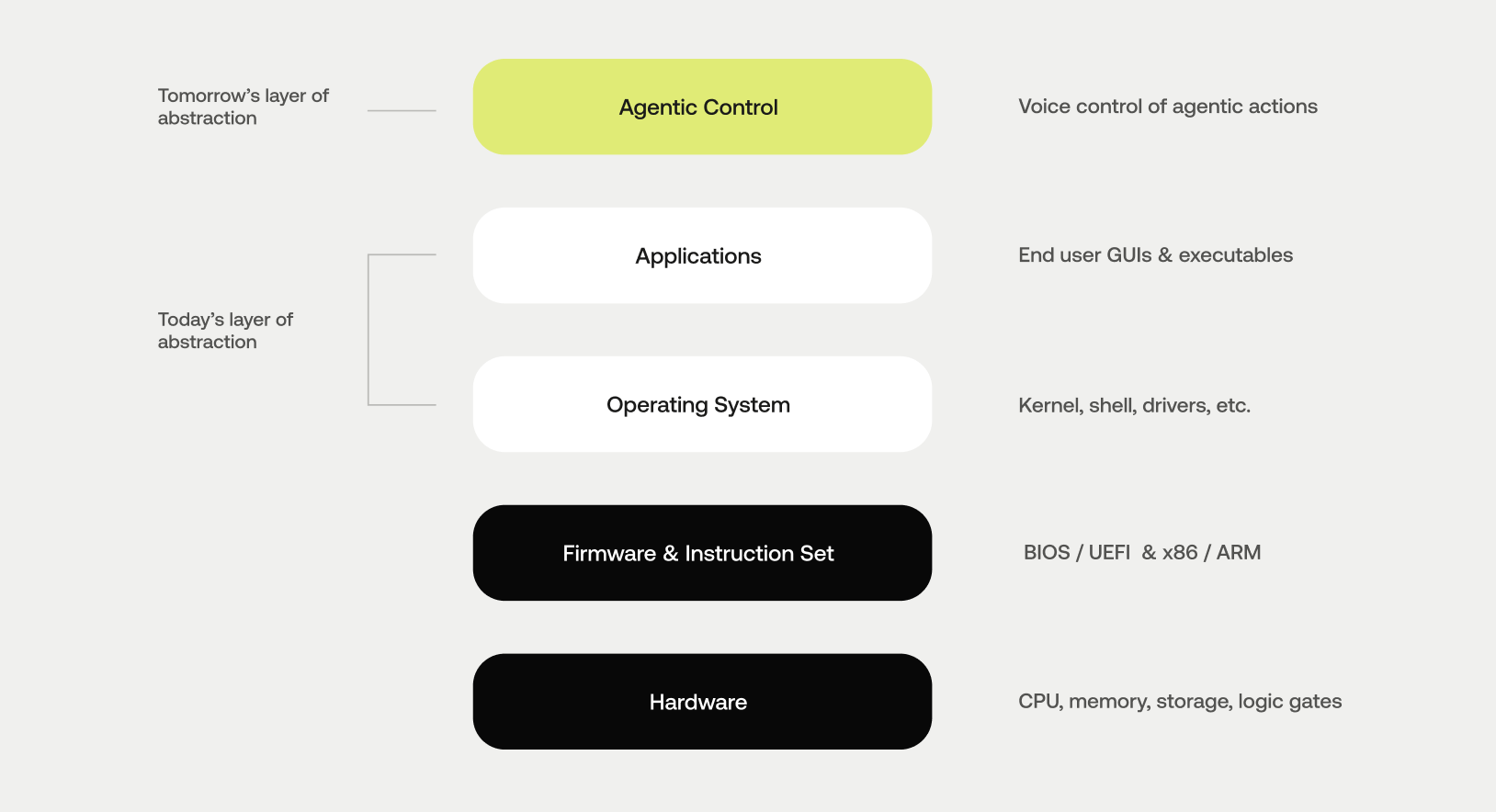
For decades, we have focused on improving the graphical user interface (GUI) or the command-line interface (CLI). However, the future of AI products lies in the removal of the interface.
As trust in these systems grows, we are moving toward a new layer of abstraction. Just as the average user does not need to understand how the kernel handles memory allocation to use a web browser, the future software consumer will not need to understand how their agents interact with underlying applications. The agent becomes the interface.
Human-Centric Computing Revisited
This trajectory mirrors the prophetic vision outlined in the "Knowledge Navigator" video produced by Apple in the late 1980s. Informed by conversations between John Sculley and Alan Kay, the video envisioned a device that acted as an active agent, anticipating needs and facilitating complex tasks.
We are finally arriving at the realization of this vision. By adding layers of abstraction, we are moving toward a world where technology serves as a proactive partner rather than a reactive tool.
The Road Ahead: Balancing Control and Autonomy
The transition to full autonomy remains a delicate balancing act. While developers are increasingly comfortable letting go of manual code reviews—relying instead on the outputs of coordinator agents—they still require the ability to "course correct."
As these systems mature, the industry will see a bifurcation in tool design:
- The Infrastructure Layer: Tools like Intent, which provide the transparency and observability required to maintain order in large-scale agentic systems.
- The Abstraction Layer: The invisible orchestration layer that will handle the mundane, day-to-day interactions between agents and software, abstracting away the technical complexity for the end user.
The trajectory is clear. We are moving away from the era of "prompting" and toward the era of "intent." As developers, our role is shifting from manual coding to the definition of outcomes. By architecting systems that can think, coordinate, and execute in concert, we are not just building better software—we are fundamentally changing the nature of human-computer interaction.
In the coming years, the winners in the software space will not be those who build the smartest agents, but those who build the most effective ecosystems for those agents to live, work, and coordinate within. The era of the single-model application is over; the era of the agentic operating system has begun.


 Reynand Wu
 Iffa Jayyana
 Laily UPN

 Rifan Muazin
 Suro Senen
 Lina Hope
 Lina Irawan