
 Neng Nana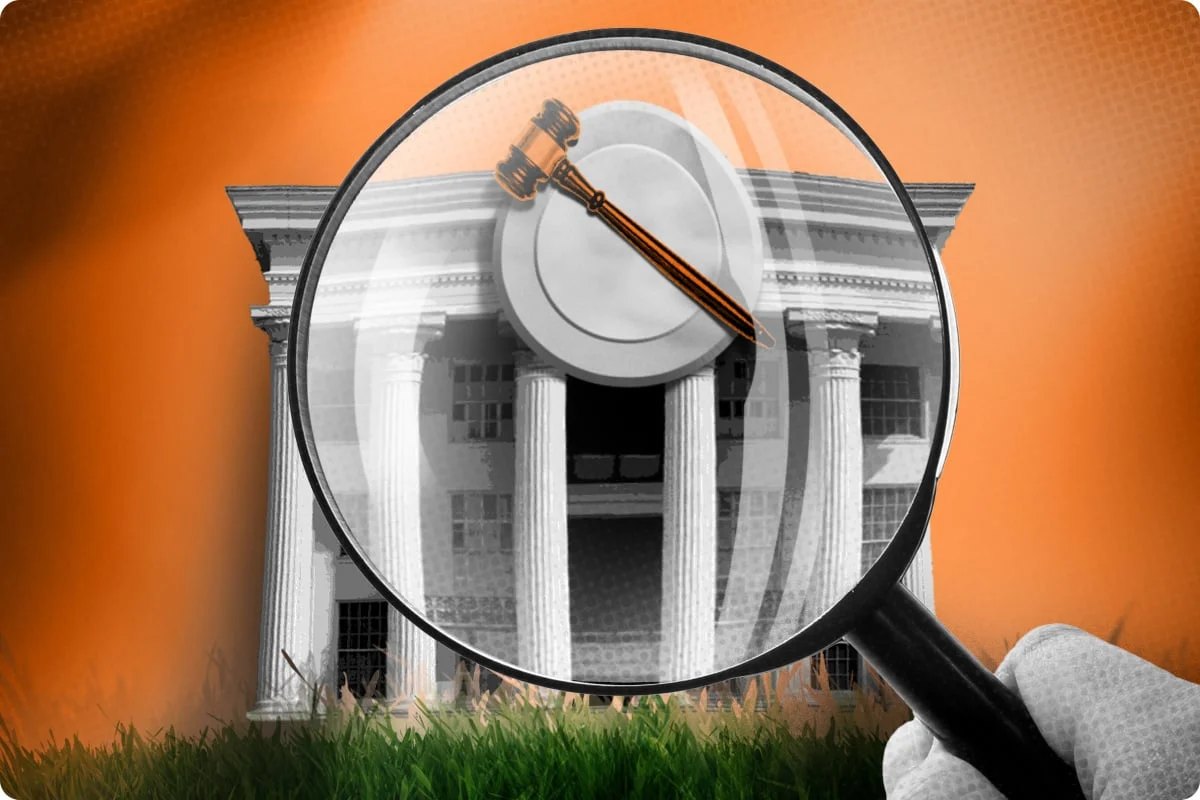
In a high-stakes escalation of the ongoing friction between the federal government and the legal academy, the Trump administration has officially moved to revoke the federal recognition of the American Bar Association’s (ABA) accreditation council. This unprecedented administrative challenge threatens to upend the foundational structure of legal education in the United States, potentially jeopardizing the eligibility of thousands of law students for federal financial aid and casting significant uncertainty over the future of bar licensure nationwide.
The ABA currently serves as the sole federally recognized accrediting body for law schools, overseeing nearly 200 institutions. Because state bar admission requirements are tethered to graduation from a federally recognized, ABA-accredited program, the loss of this status would create a systemic crisis, effectively placing the professional future of the next generation of attorneys in legal and financial limbo.
The Core Allegations: A 30-Point Indictment
The U.S. Department of Education released an 86-page report late last week detailing its intent to withdraw recognition from the ABA’s Section of Legal Education and Admissions to the Bar. The report lists nearly 30 specific violations of federal regulatory standards.
At the heart of the government’s argument is a challenge to the structural independence of the accrediting body. The Education Department asserts that the Section of Legal Education is not sufficiently autonomous from the broader ABA organization, creating a conflict of interest that compromises the integrity of its oversight functions.
Furthermore, the Department has leveled a pointed critique regarding the ABA’s response to the Supreme Court’s 2023 ruling in Students for Fair Admissions v. Harvard, which effectively ended race-conscious admissions. The government claims the ABA failed to timely reform its standards to align with the new legal reality. Specifically, the ABA had long required law schools to demonstrate a "commitment to diversity and inclusion" through faculty and staff representation. While the council suspended this standard in February 2025 and is set to vote on its total repeal on September 8, the Department of Education views this as "too little, too late," characterizing the ABA’s adherence to diversity, equity, and inclusion (DEI) initiatives as an ongoing, "unlawfully discriminatory" practice.
Chronology of a Mounting Conflict
The push to decertify the ABA did not emerge in a vacuum; it is the culmination of a months-long campaign by the White House to dismantle what it describes as "radical leftist" influence in higher education.
- Early 2025: The Trump administration signals its intent to investigate accrediting bodies that maintain policies the White House views as ideologically driven.
- February 2025: Facing intense political pressure, the ABA’s Section of Legal Education suspends its DEI-related accreditation standards, though it does not formally repeal them.
- April 2025: President Trump issues an executive order explicitly naming the ABA as a prime example of an institution promoting "unlawfully discriminatory practices" through its accreditation criteria.
- January 2026: Several states, responding to the national discourse, begin amending their licensure requirements to provide alternatives to the ABA’s monopoly on law school oversight.
- August 2026: The Department of Education releases its final staff report recommending the revocation of the ABA’s recognition, setting the stage for a contentious administrative battle.
The Regulatory Tug-of-War
While the Department of Education’s report is a critical blow, it is not the final word. The recommendation will move to the National Advisory Committee on Institutional Quality and Integrity (NACIQI), a body tasked with advising the Secretary of Education on accreditation matters.
The NACIQI is scheduled to convene on September 23 and 24 to discuss the findings. Following that deliberation, the committee will submit its own recommendation to Under Secretary Nicholas Kent. Only after this rigorous administrative process will a final, binding decision be rendered.
The political alignment of the NACIQI suggests a difficult road ahead for the ABA. Bob Eitel, a member appointed by Secretary of Education Linda McMahon in late 2025, has been vocal about his skepticism regarding the ABA. During a 2025 panel, Eitel cited concerns that have long circulated in conservative legal circles, specifically criticizing the "woke criteria" embedded in accreditation and the lack of separation between the ABA’s advocacy arm and its regulatory arm.
Implications for Students and Institutions
The potential fallout from a revocation of recognition is vast and complex. The most immediate impact would fall on the 13 freestanding law schools that rely entirely on the ABA’s seal of approval to grant their students access to federal student loans. Without federal recognition, these institutions would be unable to participate in Title IV student aid programs, potentially rendering them insolvent or inaccessible to middle- and low-income students.
However, the ripple effects would extend far beyond freestanding institutions. Because the legal profession is strictly regulated at the state level, a "de-accredited" status would create a massive hurdle for graduates attempting to sit for the bar exam.
The Portability Problem
Peter Lake, a professor at Stetson University College of Law, highlights the "nuance" of this crisis, noting that the disruption will not be uniform. "Even if students can still access loans, it won’t matter if they can’t get a license that’s portable," Lake explained.
Currently, many states require graduation from an ABA-accredited school as a prerequisite for bar admission. If the ABA loses federal recognition, states will be forced to scramble for solutions. Some may pivot to allow graduates from unaccredited schools to sit for the exam, but this would likely destroy the "portability" of a law degree—a graduate might be able to practice in one state but find themselves barred from moving their career to a jurisdiction that maintains stricter accreditation standards.
Official Responses and Strategic Maneuvers
Melissa Hart, chair of the ABA’s accreditation council, remains firm in the face of these challenges. In a formal statement to Inside Higher Ed, Hart expressed confidence that the council operates in full compliance with federal law.
"We look forward to the opportunity to address any misconceptions and clarify the record at our upcoming hearing before the NACIQI committee," Hart wrote. She emphasized that the organization’s primary focus remains on "ensuring quality legal education that produces competent, ethical attorneys who are eligible for licensure."
Behind the scenes, observers speculate that the ABA is preparing for a multi-front legal battle. Hart confirmed that the council is prepared to appeal any adverse decision through the Department of Education’s internal channels and, if necessary, to seek judicial review in federal court.
The Future of Legal Accreditation
As the September hearings approach, the legal academy finds itself at a crossroads. Some experts, such as Lake, suggest that the ABA could attempt to "rebrand" or restructure, creating a new, independent accrediting body that satisfies the Department’s demand for autonomy. However, the time required to gain federal recognition for a new entity is substantial, leaving a dangerous gap in coverage for thousands of law students.
Furthermore, the broader ideological conflict remains unresolved. While the ABA is moving to repeal its diversity standards, the administration’s focus on the "separation of powers" within the accrediting process suggests that the conflict is no longer just about DEI. It is a fundamental questioning of whether a professional association—which often takes political stances on public policy—should also act as the government-sanctioned gatekeeper for entry into the legal profession.
For now, the legal education community is holding its breath. The potential for administrative chaos is high, and the precedent set here could redefine the relationship between the federal government and the professional bodies that dictate the standards for doctors, engineers, and attorneys for decades to come. As the September 23 NACIQI meeting nears, the question is not just whether the ABA will keep its recognition, but whether the entire system of American legal accreditation is entering an era of permanent, radical transformation.

 Nana Muazin
 Layla Zulfa
 Raul Delapena Setiawan
 Reynand Wu
 Sagoh
Sagoh

 Azzam Bilal Chamdy
 Ali Ikhwan