
 Iffa Jayyana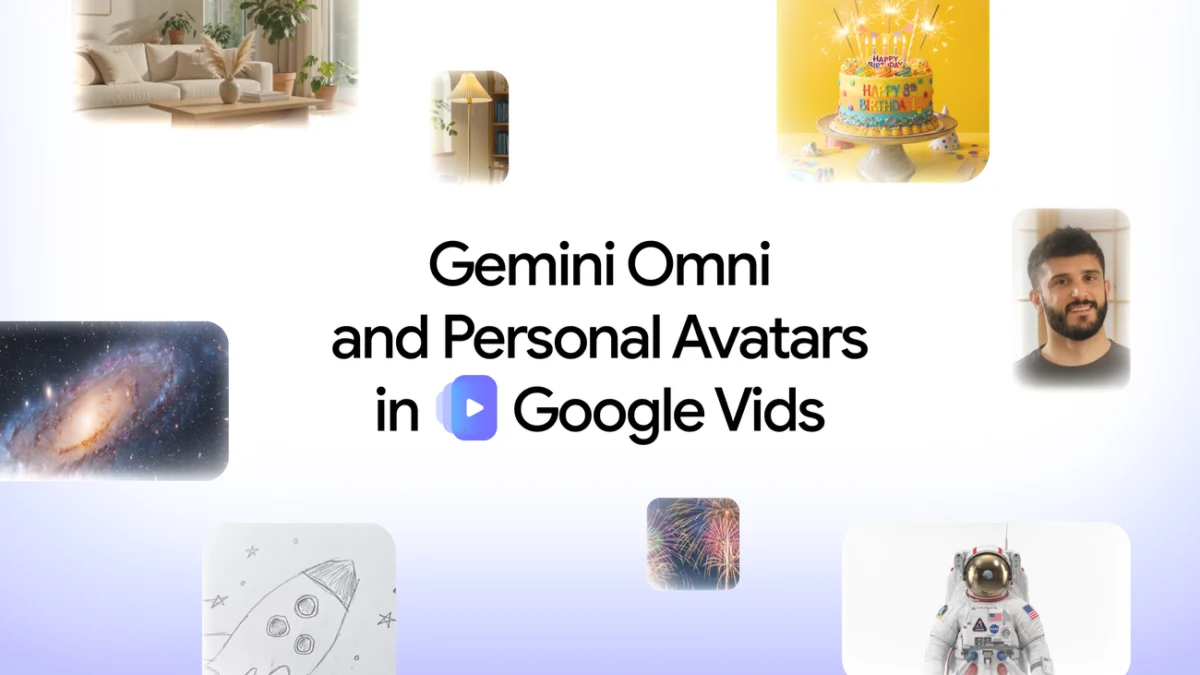
In an era where video has become the primary language of the internet—from corporate communications and educational modules to social media storytelling—Google is significantly lowering the barrier to entry for professional-grade production. Today, Google announced a transformative suite of updates for its video creation platform, Google Vids, introducing Gemini Omni and Personal Avatars. These features represent a paradigm shift, moving video production from a labor-intensive, technical process to a seamless, prompt-based creative experience.
For millions of users who rely on Google’s ecosystem to bring ideas to life, these tools promise to eliminate the "blank page" syndrome and the logistical hurdles of high-end video production. By leveraging sophisticated artificial intelligence, Google is effectively handing a professional film studio to every user with a keyboard.
Main Facts: The New Toolkit for Creators
The core of the announcement centers on two major technological pillars integrated directly into the Google Vids workflow:
- Gemini Omni Integration: Gemini Omni acts as the "creative engine" of the platform. It enables users to generate, edit, and refine video content using nothing more than natural language prompts. By combining text-to-video capabilities with image-reference inputs—such as sketches or photographs—the system can interpret a user’s vision and render high-quality clips that align with specific stylistic or narrative requirements.
- Personal Avatars: This feature addresses the "camera-shy" hurdle. Users can now generate a high-fidelity digital twin of themselves. By providing a simple selfie and a short audio clip, the system creates a personalized avatar capable of speaking any text the user inputs. This enables the creation of personalized video updates, training materials, or announcements without the need for traditional studio lighting, professional microphones, or even a change of clothes.
These updates build upon the momentum generated earlier this year when Google introduced Veo 3.1 to the Vids platform, which allowed for foundational video generation. The integration of Gemini Omni and Personal Avatars pushes this functionality into the realm of complex, iterative storytelling.
Chronology: The Evolution of Google Vids
To understand the gravity of this update, one must look at the rapid maturation of Google Vids over the past twelve months:
- Early 2024: Google launches Google Vids, positioning it as an AI-powered workspace application designed specifically for professional storytelling, team collaboration, and video-first communication.
- February 2025: The integration of Veo 3.1 marks a turning point. For the first time, users can generate video sequences directly within the Vids interface, signaling a move toward generative-first content creation.
- Mid-2025: Beta testing begins for multimodal editing tools, focusing on how large language models (LLMs) can interact with temporal video data.
- October 2026: The official rollout of Gemini Omni and Personal Avatars. This milestone completes the transition of Vids from a collaborative editor to a comprehensive generative production suite.
Supporting Data and Technical Capabilities
The technical underpinnings of these features rely on a synthesis of multimodal AI models. Gemini Omni is not merely a generative engine; it is an editing assistant. Users are no longer confined to static output. Through a "chat-to-edit" interface, the system allows for granular, step-by-step refinements.
For instance, if a user generates a clip of a city skyline, they can follow up with a prompt like, "Shift the lighting to sunset and add a cinematic lens flare," or "Change the background to a rainy atmosphere." The system maintains the continuity of the original clip while applying specific aesthetic adjustments.
Regarding the Personal Avatars, Google has implemented strict verification protocols. Because these avatars mirror a user’s likeness, the feature is limited to individuals aged 18 and older, with strict account-bound restrictions. The data used to create these avatars is stored locally or within the user’s secure Google Workspace environment, ensuring that the digital likeness remains under the owner’s control.
Implications for Industry and Professional Workflow
The introduction of these tools is poised to disrupt several sectors, most notably corporate communications, human resources, and digital marketing.
1. The Democratization of Corporate Training
Historically, creating a library of training videos for a global workforce required significant budget allocation for videographers, actors, and post-production editors. With personal avatars, a department head can record one script, and the system can generate localized versions of that video in different languages or with different speakers, all while maintaining the original tone and intent.

2. Streamlining the Iterative Process
The "chat-to-edit" functionality is perhaps the most significant boon for productivity. In traditional video editing software, changing a background or adjusting color grading often requires deep technical knowledge of software like Adobe Premiere or DaVinci Resolve. Google Vids abstracts these complexities. By allowing users to describe edits in plain English, the platform removes the technical bottleneck, allowing teams to focus on the message rather than the mechanics.
3. The Future of Remote Communication
As hybrid work models become the permanent standard, the need for high-quality, asynchronous communication is at an all-time high. Personal avatars offer a solution to the "video fatigue" associated with constant live meetings. Leaders can provide updates via personalized video avatars that feel more human and engaging than a wall of text in a Slack channel or email, yet require a fraction of the effort to produce.
Transparency, Ethics, and SynthID
Google is acutely aware of the potential for misuse regarding generative media. As part of this release, the company is doubling down on its commitment to AI safety through the use of SynthID.
Every piece of media generated within the Vids platform—whether it is a clip produced by Gemini Omni or a segment delivered by a Personal Avatar—is embedded with an invisible, robust digital watermark. This watermark, known as SynthID, remains embedded in the file even if the video is compressed, cropped, or filtered.
This is a critical move toward establishing a "trust layer" on the internet. By ensuring that AI-generated content is clearly identifiable as such, Google is attempting to mitigate the risks associated with deepfakes and misinformation. While the tools are powerful, the company insists that transparency remains a core component of the user experience.
Accessibility and Availability
As of the current rollout, these features are strategically positioned for professional use cases. Gemini Omni and Personal Avatars are available to:
- Google AI Pro and Ultra subscribers: Targeted at power users and creative freelancers.
- Google Workspace business customers: Aimed at organizations looking to streamline internal and external communications.
By gating these features behind enterprise and professional tiers, Google is initially prioritizing the use cases where security, identity verification, and productivity are the primary concerns.
Conclusion: The New Standard for Storytelling
The update to Google Vids is a clear signal that the future of video is not just about capture—it is about synthesis. By integrating Gemini Omni and Personal Avatars, Google has transformed the platform into an intelligent collaborator.
We are moving into an era where the limit of one’s video output is no longer defined by technical skill or access to studio equipment, but by the clarity of one’s vision. Whether it is a business leader delivering a global message or a creator crafting an immersive narrative, Google Vids is setting a new standard for how we tell our stories in a digital-first world.
As these tools continue to evolve, the distinction between "filmed" content and "generated" content will continue to blur, placing even greater importance on the ethics of creation—a challenge Google seems prepared to meet with its ongoing commitment to SynthID and user-centric security. The canvas of the digital world has just become significantly more expressive.


 Pevita Pearce
 Suro Senen
 Nana Wu
 Nana
Nana
 Evan Lee Salim
 Lina Hope
 Jia Lissa