
 Ammar Sabilarrohman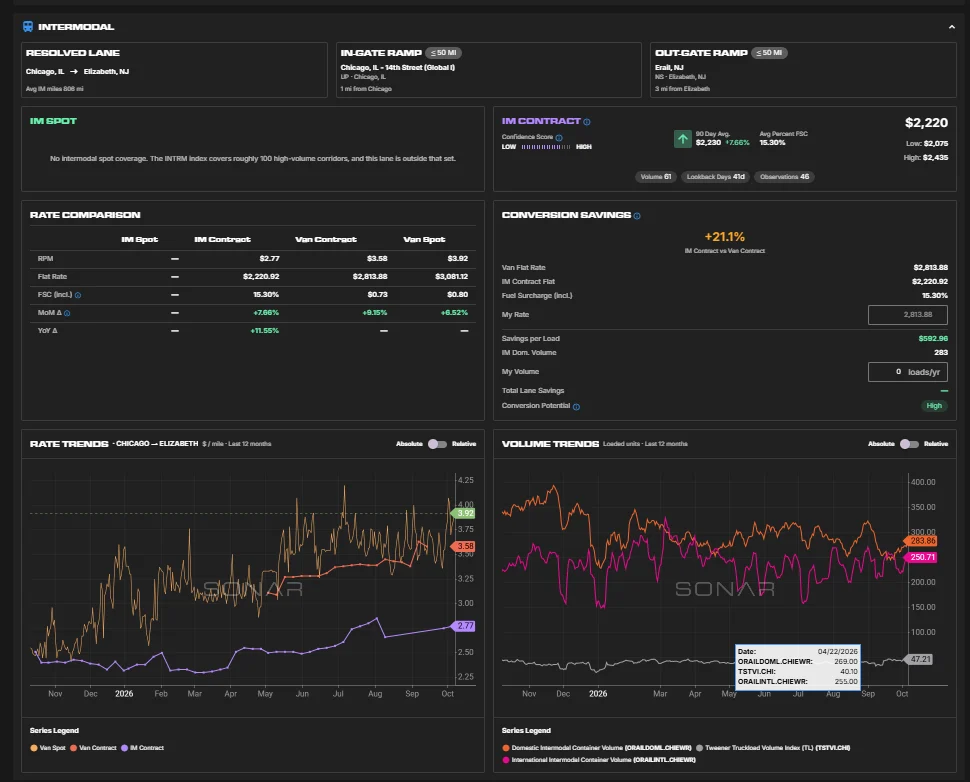
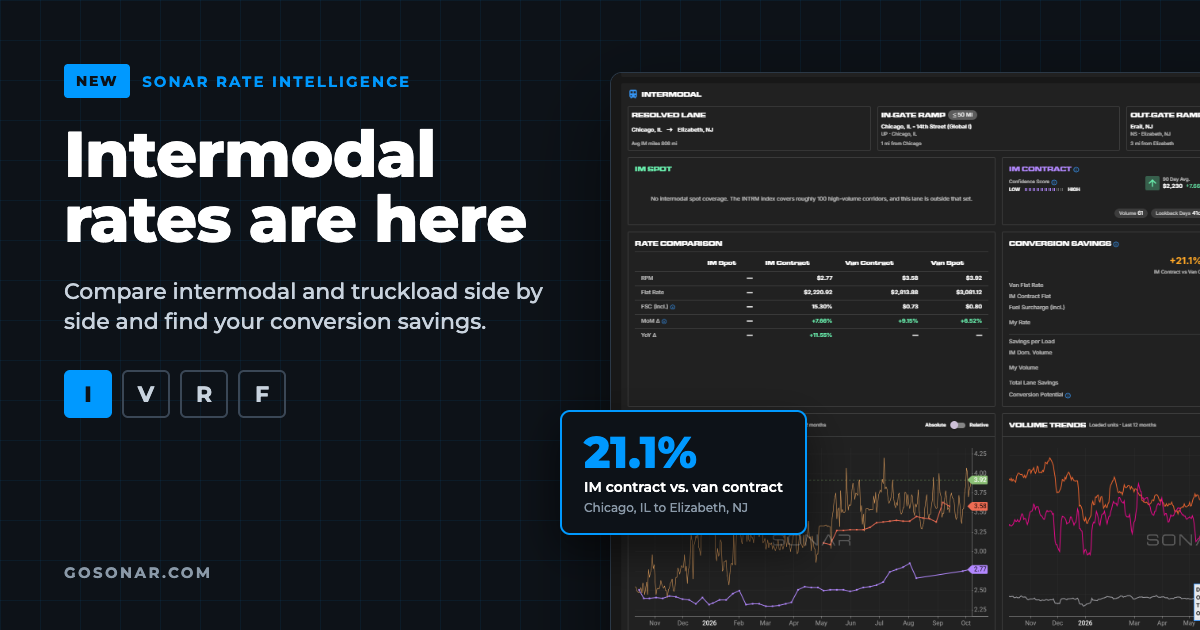
In an era where supply chain efficiency is measured in basis points and precise margin management, the ability to pivot between transport modes has become a critical competitive advantage. Freight market intelligence leader SONAR has announced a significant expansion of its flagship Rate Intelligence platform: the integration of comprehensive intermodal rates. This strategic move provides shippers, freight brokers, and carriers with a unified lens through which they can evaluate the viability of truckload-to-intermodal conversion on virtually any lane, fundamentally changing how logistics professionals approach procurement and network design.
Main Facts: A New Standard in Modal Comparison
The core of this update is the seamless integration of intermodal contract and spot rates into the existing Rate Intelligence ecosystem. Historically, logistics planners were forced to rely on siloed data sources—often managing disparate spreadsheets to compare the cost-effectiveness of over-the-road (OTR) van transport against intermodal rail. SONAR’s latest update eliminates this fragmentation.
Users can now conduct side-by-side comparisons of intermodal and van pricing, with automated calculations that estimate the "Conversion Savings" per load. By inputting specific volume parameters, users can instantly determine the annual financial impact of shifting freight from a traditional truckload model to a rail-based intermodal strategy. The tool accounts for the nuances of the industry, including drayage—the essential, short-haul trucking component that moves containers between rail ramps and final destinations—ensuring that the cost-benefit analysis is grounded in real-world operational realities.
Chronology of Development: From Concept to Deployment
The path to this integration represents a multi-year effort to refine data resolution within the freight sector.
- Early Development: SONAR began by aggregating massive datasets concerning van-load contract and spot rates. As the platform matured, the industry signaled a growing demand for multi-modal visibility, particularly as fuel volatility and driver shortages increased the appeal of rail transport.
- Data Validation: Throughout the past 18 months, SONAR engineers worked to normalize intermodal pricing, which is notoriously more complex to track than OTR rates due to varying accessorials and rail-ramp configurations.
- Beta Phase: Select enterprise shippers and brokerage partners utilized a "soft launch" version of the tool to test the accuracy of the conversion algorithms against their internal procurement logs.
- The Launch: As of October 2026, the functionality has been rolled out to the entire SONAR user base, providing an immediate, "live" view of intermodal market conditions alongside existing van data.
Supporting Data: The Case for Conversion
The necessity of this tool is best illustrated by the current market landscape. For example, on the high-volume corridor between Chicago and Elizabeth, New Jersey, the data reveals a compelling narrative for shippers looking to trim costs.
Current market data indicates that intermodal contract pricing on this lane sits approximately 21.1% below van contract rates. In monetary terms, this translates to a savings of roughly $593 per load.
Comparative Market Metrics (Snapshot)
| Mode | Rate per Mile | Flat Rate | Month-over-Month Change |
|---|---|---|---|
| Intermodal Contract | $2.77 | $2,220.92 | +7.66% |
| Van Contract | $3.58 | $2,813.88 | +9.15% |
| Van Spot | $3.92 | $3,081.12 | +6.52% |
This data provides more than just a cost baseline; it offers a roadmap for procurement teams. By observing the month-over-month inflationary trends in both van and intermodal categories, users can time their contract negotiations to maximize savings, effectively "hedging" their transportation spend against the cyclical volatility of the trucking market.
The Operational Mechanics of Conversion
Truckload-to-intermodal conversion is a strategic process that involves moving freight from over-the-road long-haul trucks to rail containers. While the financial benefits are often significant, the operational hurdle has always been the complexity of coordinating drayage at both the origin and the destination.
SONAR’s platform simplifies this by providing a "Resolved Intermodal Lane" view. This displays not just the rail-to-rail portion, but the total cost of the move, including the anticipated drayage. Users can now identify "Conversion Savings" by comparing the van flat rate to the intermodal contract flat rate on a lane-by-lane basis. If the savings exceed the potential cost of added transit time or the complexity of drayage, the decision to convert becomes data-driven rather than speculative.
Implications for the Freight Ecosystem
The inclusion of intermodal data into Rate Intelligence has profound implications for every tier of the logistics industry:
For Shippers
Procurement managers can now build more resilient and cost-effective networks. By identifying lanes where intermodal capacity is stable and cheaper, shippers can reduce their reliance on the volatile OTR market. This is particularly valuable during peak seasons when spot-market truckload rates can spike, while intermodal rates often remain more predictable.
For Freight Brokers and 3PLs
The competitive landscape for brokers is increasingly defined by their ability to offer "value-add" solutions. A broker who can proactively approach a client with a data-backed proposal to save 20% on a specific lane by converting to intermodal is no longer just a capacity provider—they become a strategic consultant.
For Carriers
Asset-based carriers that operate both truckload and intermodal divisions can use the tool to optimize their own internal load balancing. By monitoring rate trends, they can shift assets to the lanes where they provide the highest margin, rather than relying on historical lane preferences.
Frequently Asked Questions
Q: Does every lane have intermodal spot rates?
A: No. SONAR’s intermodal spot index currently covers approximately 100 high-volume, critical corridors. For lanes that fall outside of these high-volume sets, the system provides intermodal contract rates, ensuring that users always have a comparative metric for their analysis.
Q: How does the system define "Conversion Savings"?
A: The savings metric is calculated by subtracting the intermodal contract flat rate from the current van flat rate. By applying this difference to the user’s annual volume projection, the system provides an estimated total annual savings figure, offering a clear ROI for procurement initiatives.
Q: What is the significance of the "I" label?
A: In the SONAR interface, saved lanes that have been analyzed for intermodal potential are tagged with an "I." This allows users to quickly filter their research and monitor specific lanes for shifts in the cost-gap between OTR and rail.
Looking Forward: The Future of Freight Intelligence
The integration of intermodal data is a reflection of a broader industry trend toward "total network visibility." As logistics costs become a larger percentage of the total cost of goods sold (COGS), the margin for error in transportation procurement is shrinking. Platforms like SONAR are moving away from being mere reporting tools to becoming decision-support engines.
Industry leaders will have the opportunity to discuss these shifts and the future of freight technology at the upcoming F3: Future of Freight Festival in Chattanooga. The event, held from October 27–28, 2026, will feature industry-defining keynotes and demonstrations of the latest FreightTech innovations. For those looking to deepen their understanding of compliance, the Brokerage Compliance Symposium on October 26 will address the critical legal and operational challenges facing the industry, including cargo theft, insurance gaps, and FMCSA regulations.
By synthesizing intermodal and truckload data into a single, cohesive workflow, SONAR has removed the friction from one of the most common logistical dilemmas. In a market defined by complexity, the ability to make rapid, data-backed decisions is the ultimate differentiator. As shippers and brokers alike look toward 2027 and beyond, this new capability will likely serve as the foundation for more intelligent, efficient, and cost-effective supply chains.

 Basiran
 Neng Nana
 Iffa Jayyana
 Raul Delapena Setiawan
 Rifan Muazin
 Asro
Asro