
 Muslim
In the sprawling, hyper-connected landscape of modern cloud infrastructure, efficiency is not merely an aspiration; it is an existential necessity. Every second, millions of digital tasks—from streaming a video to processing a global ad campaign—must be routed to the right server, in the right rack, in the right data center. This is the "assignment problem," a classic computational conundrum that has long plagued computer scientists.
To manage this, Meta has officially open-sourced Rebalancer, a sophisticated optimization framework that has served as the backbone of the company’s infrastructure for the last decade. By decoupling the definition of a problem from its mathematical execution, Rebalancer allows engineers to solve complex, large-scale resource allocation challenges that were previously considered intractable.
Main Facts: The Anatomy of Rebalancer
At its core, Rebalancer is a domain-specific language and execution engine designed to bridge the gap between human-readable policies and machine-executable optimization. The framework operates on a simple premise: given a set of objects (tasks, services, or data shards) and a set of bins (servers, racks, or regions), how do we distribute the former into the latter while satisfying a web of conflicting constraints?
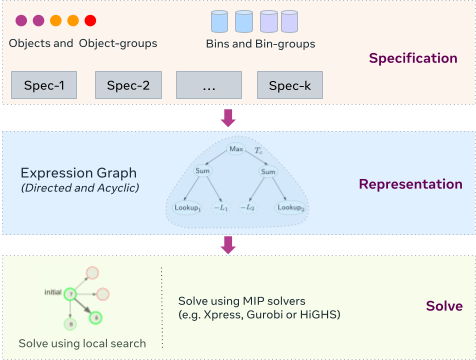
The primary innovation of Rebalancer is its "expression graph" architecture. Rather than forcing engineers to write raw, complex mathematical proofs for Mixed Integer Programs (MIPs), Rebalancer allows users to define "specs"—modular building blocks for constraints and objectives. These are translated into a directed-acyclic graph, which the system then solves using one of two methods:
- The Optimal Solver: Best for small-to-mid-sized problems, this mode utilizes powerful commercial solvers like FICO Xpress and Gurobi, or open-source alternatives like HiGHS.
- The Local Search Solver: A heavily parallelized, custom heuristic engine designed for massive scale. It iteratively "moves" objects between bins, evaluating millions of configurations per second to find a near-optimal solution where traditional mathematical solvers would simply crash due to memory exhaustion.
A Decade of Evolution: The Chronology of Optimization
The history of Rebalancer is a story of internal necessity driving technical evolution.
- 2014–2016 (Inception): Meta’s infrastructure faced mounting pressure from rapid traffic growth. The initial iterations of resource balancing were manual, fragmented, and brittle. The team identified that engineers were spending more time managing the logic of placement than the infrastructure itself.
- 2017–2020 (Scaling and Standardization): As the complexity of data center deployments grew, the team unified these disparate optimization efforts into a single, reusable framework. This period saw the integration of Shard Manager and RAS (Resource Allocation System), which allowed Meta to treat global data centers as a single, fluid resource pool.
- 2021–2023 (Refinement and Debugging): As usage scaled to millions of daily problems, the biggest bottleneck shifted from "solving" to "debugging." Engineers struggled to understand why a solver made a specific decision. This led to the development of Rebalancer Explorer, a visual diagnostic tool that provides transparency into constraint binding and placement logic.
- 2024–2025 (Open Sourcing): Following years of internal refinement, Meta moved to release Rebalancer under the Apache 2.0 license. This transition was marked by a commitment to fostering a community of systems and operations researchers who could apply these techniques beyond the walls of social media infrastructure.
Supporting Data: The Scale of Success
The efficacy of Rebalancer is best illustrated by the sheer volume of operations it handles at Meta. As of the latest internal reports, the system is solving roughly 40 million assignment problems every single day.
The performance metrics highlight the power of the framework’s hybrid approach:
- Mid-Scale Efficiency: For problems involving 265,000 objects and 3,200 bins, the P99 solve time is a remarkably low 12 seconds.
- Extreme Scale: For "massive" problems involving over 1 million objects and 5,000 bins, the system achieves an average solve time of 171 seconds.
- Complexity: Currently, there are more than 30 unique problem formulations in production, ranging from serverless function locality to balancing online machine learning training workloads across different geographic regions.
These numbers confirm that Rebalancer is not a theoretical model; it is a battle-tested industrial solution that keeps the lights on at one of the world’s most demanding data infrastructures.
Official Responses and Strategic Vision
The development team at Meta, which includes notable engineers like Pol Mauri Ruiz, Igor Kabiljo, and Vijay Menon, emphasizes that the primary goal of this release is to democratize high-end optimization.
"The right solution technique depends on your needs," the team notes in their documentation. "It is common to prototype with the optimal solver and then migrate to local search after a high-quality baseline solution has been identified."
By providing both methods, Meta is acknowledging that there is no "silver bullet" in optimization. Instead, they provide a toolbox that allows organizations to balance the tradeoff between absolute optimality and real-world latency. The decision to make the tool open-source reflects a broader industry trend where proprietary, "secret sauce" infrastructure tools are being shared to accelerate the global state of the art in systems engineering.
Implications: Beyond the Data Center
While Rebalancer was born out of the need to manage servers and serverless functions, its implications are far broader. The "assignment problem" is universal.
1. Healthcare and Emergency Response
In hospital systems, assigning patients to beds based on specialized equipment, nurse staffing, and patient acuity is a classic NP-hard problem. Rebalancer’s ability to handle millions of evaluations could optimize bed management during crises, potentially saving lives by reducing the time spent in administrative limbo.
2. Global Supply Chain and Logistics
Retailers and logistics giants grapple with the same constraints Meta faces: limited capacity (bins) and high demand (objects). By modeling delivery trucks or warehouse slots as "bins," Rebalancer could provide a plug-and-play optimization layer for companies struggling to manage the complexities of modern, just-in-time supply chains.
3. Public Utility Management
Energy grids, which must balance volatile renewable energy inputs with variable consumer demand, are essentially giant assignment problems. As the world transitions to green energy, the need for robust, scalable optimization engines—like the ones proven at Meta—will become the bedrock of sustainable infrastructure.
4. Human Capital and Operations
On a smaller scale, the project demonstrates that even "mundane" tasks—such as assigning meeting rooms to minimize employee transit time or matching support tickets to the right engineers—can be elevated from manual guesswork to an algorithmic process.
The Road Ahead
The open-source release of Rebalancer is an invitation to the global developer community. By removing the barrier to entry for solving NP-hard problems, Meta is challenging the industry to stop "reinventing the wheel" for every resource allocation task.
As the project matures, the focus will likely shift toward automating the selection between optimal and heuristic solvers, further simplifying the user experience. Whether it is used to manage a data center in a cloud environment or a city’s emergency vehicle deployment, the fundamental framework is now available to anyone willing to define their constraints.
In the high-stakes world of systems optimization, Meta has provided the map; now, it is up to the rest of the world to chart the terrain.

 Nila Kartika Wati
 Neng Nana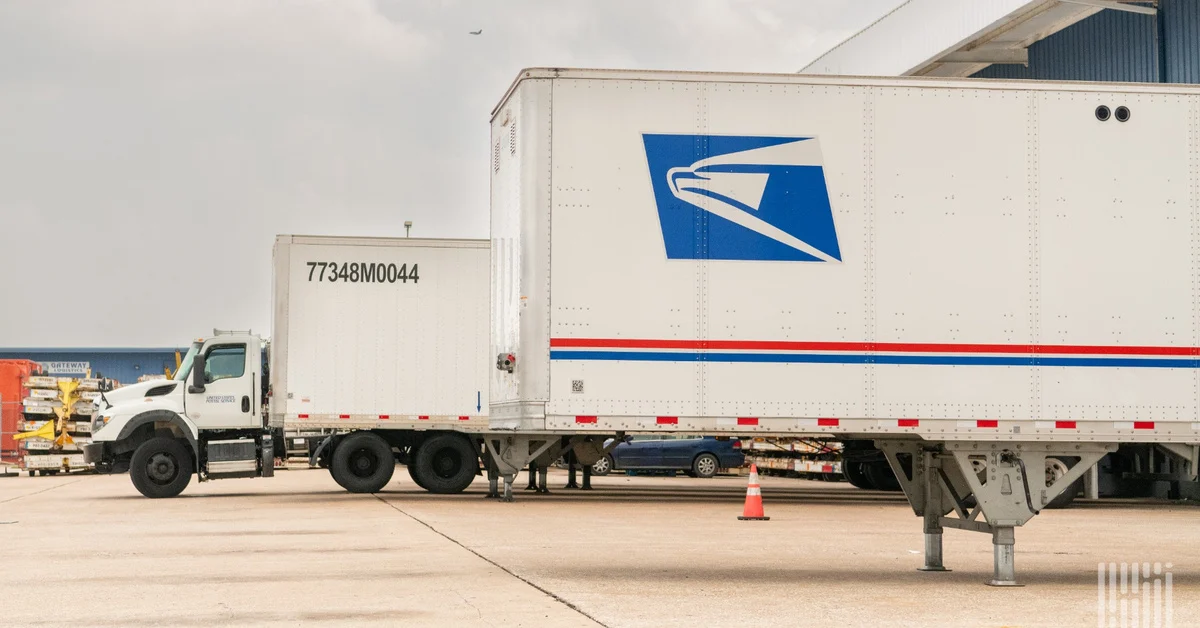
 Basiran

 Iffa Jayyana
 Raul Delapena Setiawan
 Rifan Muazin
 Asro
Asro