
 Suro Senen
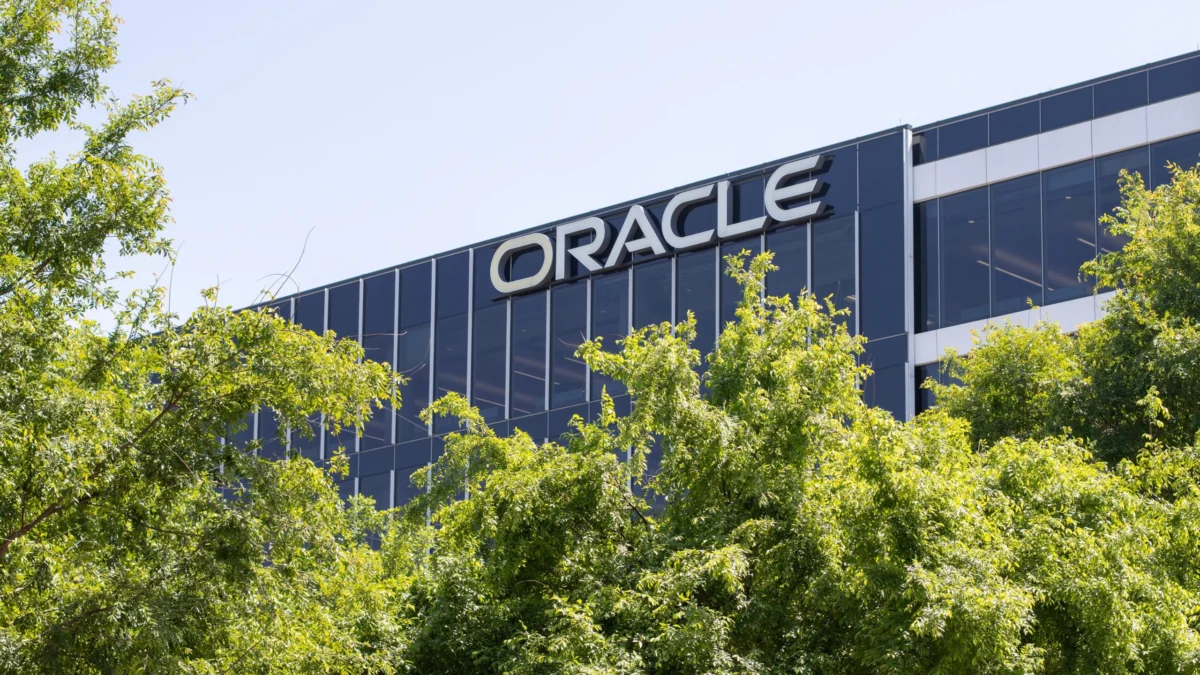
In a significant expansion of its data management strategy, Oracle has unveiled a series of major updates to its Autonomous AI Lakehouse. Designed to address the perennial enterprise challenges of AI hallucination, data fragmentation, and sluggish decision-making, these enhancements introduce a Business Semantic Layer, a Business Simulation Engine, and deepened support for the Apache Iceberg open table format. By integrating these capabilities, Oracle aims to transform the lakehouse from a passive data repository into an active, intelligent environment where AI agents operate with a high degree of business context and accuracy.
Main Facts: The Pillars of the New Update
The core of Oracle’s announcement, made at the company’s annual AI World conference, focuses on three primary technical advancements designed to modernize enterprise analytics:
- The Business Semantic Layer: This feature acts as a bridge between raw enterprise data and AI agents. By utilizing catalog and SQL annotations—alongside AI-suggested analytic views—the layer creates a unified, reusable model of business logic. It encapsulates complex hierarchies, KPIs, dimensions, and measures, ensuring that when an AI agent queries the data, it understands the "business meaning" rather than just the raw table structure.
- The Business Simulation Engine: By integrating the legendary Oracle Essbase multidimensional planning technology directly into the Autonomous AI Lakehouse, Oracle is enabling advanced forecasting. This engine supports complex “what-if” scenarios, write-back capabilities, and dynamic hierarchy rollups, allowing users to perform sophisticated financial and operational modeling directly on data stored in object storage or database tables.
- Expanded Apache Iceberg Integration: Oracle is further embracing open standards by enabling full CRUD (create, read, update, delete) capabilities for Apache Iceberg tables using standard SQL. This move is designed to reduce data movement, allowing organizations to maintain a "single source of truth" that remains interoperable with other major data platforms like Apache Spark, Snowflake, and Databricks.
Chronology: From Data Silos to Intelligent Agents
The evolution of Oracle’s data strategy has been a gradual move toward unification. Historically, enterprises struggled with the "last mile" of data analytics: the gap between raw data storage and actionable business insight.
- Pre-2023: Oracle focused primarily on the autonomy of its core database, reducing the administrative burden on DBAs.
- Early 2024: The launch of the Autonomous AI Lakehouse signaled Oracle’s intent to compete directly with cloud-native data platforms, emphasizing the integration of vector search and AI-driven SQL generation.
- Present Day: The introduction of the Business Semantic Layer and Simulation Engine marks the shift from "providing data to AI" to "guiding AI with business intent." These features are scheduled for rollout over the next 12 months, representing a maturation of the AI Lakehouse from a storage solution to an application development platform.
Supporting Data and Industry Context
The need for these tools is underscored by the current industry struggle with "agentic" AI. While Large Language Models (LLMs) are adept at processing natural language, they often fail when tasked with calculating specific corporate KPIs because they lack the underlying semantic context of the business.
According to Amit Kumar Jena, AI development head at Kanerika, the impact of context-aware modeling is measurable. In a recent project for a global pharmaceutical firm, Kanerika implemented a semantic layer on Microsoft Fabric to standardize 85-plus KPIs and 40-plus entities. The result was a 70% reduction in time spent on data reconciliation and investigation. This provides a compelling benchmark for what Oracle’s new Business Semantic Layer aims to achieve: the reduction of "AI noise" caused by inconsistent metric definitions.
Industry analysts suggest that the integration of planning and analytics—historically siloed—could yield similar efficiencies. By allowing finance teams to perform Excel-based analysis directly on lakehouse data, Oracle is removing the "data shuttle" process where files are exported, modified, and re-imported into corporate systems.
Official Perspectives: The Path to Scale
Oracle’s leadership positions these updates as essential infrastructure for the next phase of enterprise AI. The goal is to move beyond experimental chatbots toward production-grade "agentic applications" that can autonomously execute business workflows.
"These improvements in reliability will help CIOs scale agentic applications across business functions and rely on AI-driven decision-making with greater confidence," says Manoj Chandra Jha, principal analyst at Nord-IQ Research. The ability to perform complex calculations and simulations within the same environment where the data resides is a critical bottleneck currently hindering the enterprise adoption of generative AI.
From a data engineering perspective, the expanded Iceberg support is perhaps the most pragmatic update. By allowing developers to interact with Iceberg tables via SQL, Oracle is lowering the barrier to entry for teams already familiar with traditional relational databases, while simultaneously providing the portability required to participate in a multi-cloud ecosystem.
Strategic Implications for the Enterprise
While the technological benefits are significant, the implementation of these features brings a new set of responsibilities for IT and data governance teams.
The Governance Burden
The Business Semantic Layer is not a "set-it-and-forget-it" tool. It requires a disciplined approach to data governance. If the underlying business rules are not updated, the AI agents will simply scale incorrect insights faster. CIOs must prepare for a shift in resource allocation: instead of spending time on manual data integration, teams will need to focus on modeling, documentation, and the continuous validation of business metrics.
Competitive Positioning and Interoperability
The Business Simulation Engine pits Oracle against specialized performance management platforms like Anaplan and OneStream. The success of this engine will depend on how seamlessly it integrates into existing, entrenched planning workflows. Enterprises that have spent years building custom models in proprietary software may be hesitant to migrate, even if the integration of the lakehouse offers a more unified data architecture.
The "Open" Trade-off
While the support for Apache Iceberg is a major win for interoperability, analysts warn of a "vendor lock-in trap." Even when data is stored in an open format, the semantic layer and the cataloging tools used to interpret that data remain proprietary to Oracle. Consequently, while the data is technically portable, the business logic built on top of it may remain bound to the Oracle ecosystem.
Future Outlook: The Role of the Autonomous Lakehouse
As organizations look toward 2025, the competitive advantage will likely belong to those who can bridge the gap between their data and their AI models most efficiently. Oracle’s strategy is clearly defined: make the data lakehouse so intelligent that it becomes the natural home for both analytical and operational workloads.
For developers, the reduction in data movement and the simplification of table management via SQL represent a major win in productivity. For CIOs, the promise of higher-fidelity AI insights and reduced infrastructure complexity is an attractive proposition. However, the path to realization will require a shift in how enterprises manage the "semantic" side of their data—moving from a world of spreadsheets and isolated dashboards to one of governed, AI-ready data models.
As these capabilities arrive, the market will be watching closely to see if Oracle can maintain the balance between ease-of-use and the governance required for enterprise-grade decision-making. The technology is set to redefine the boundaries of the lakehouse, but the true test will be in the adoption of these new semantic standards by the broader business community.

 Sagoh

 Layla Zulfa


 Azzam Bilal Chamdy

 Asep Darmawan

 Nana Wu

 Nana
 Muslim
