
 Layla Zulfa
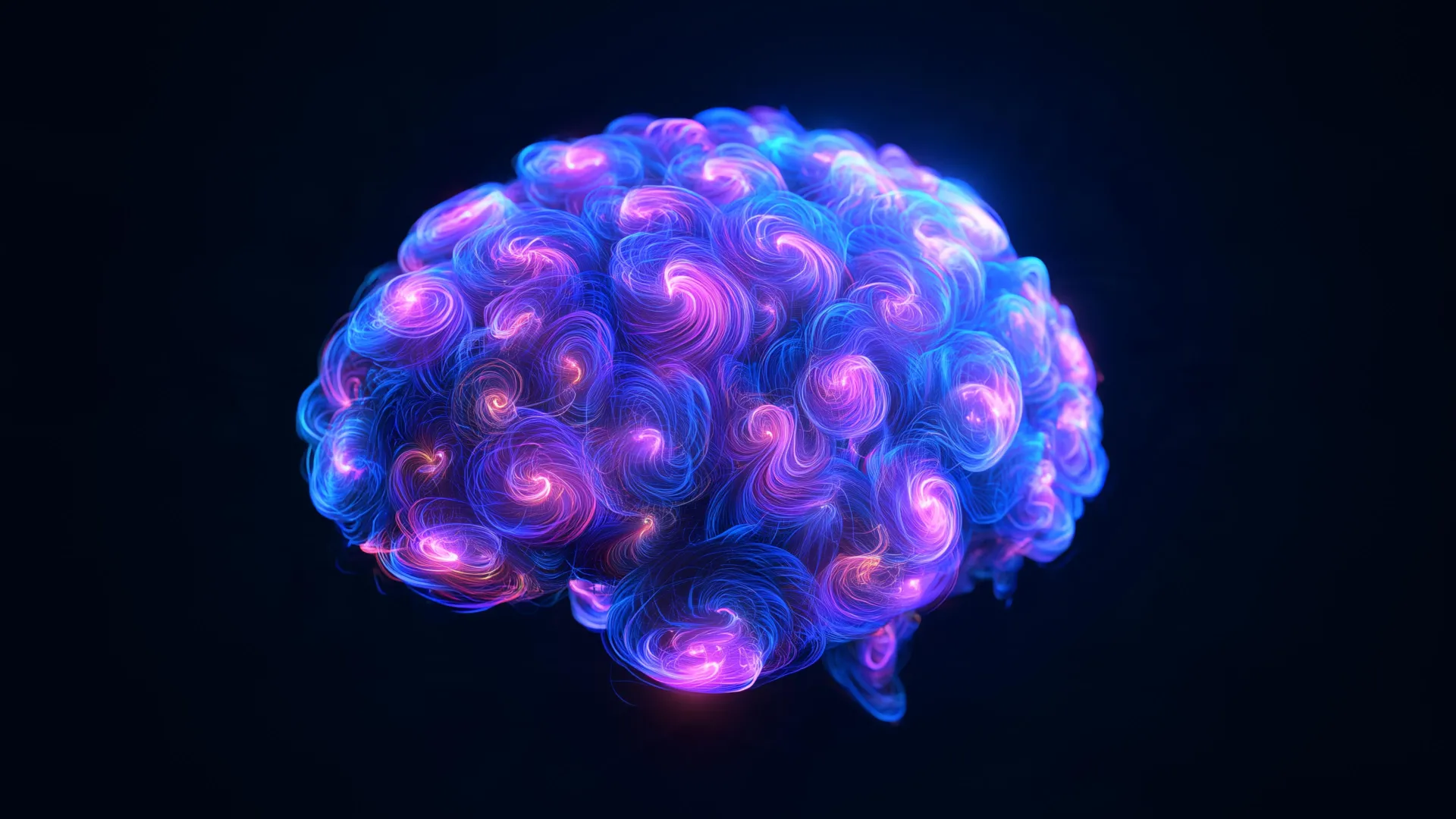
In the quiet, sub-zero laboratories where the future of information technology is being forged, a revolution is brewing on the nanoscale. Scientists have long sought a successor to the silicon-based transistor—a technology that has fueled the digital age but is now hitting fundamental physical limits. A breakthrough recently published in the journal Nature Nanotechnology has illuminated a path forward, centered on a peculiar, microscopic magnetic phenomenon known as a "skyrmion."
By successfully filming the "melting" of skyrmion lattices in real time while simultaneously manipulating individual vortices, researchers have opened a new door toward computers that do not merely calculate, but process information with the efficiency and architectural grace of the human brain.
The Core Innovation: What Are Skyrmions?
To the uninitiated, the term "skyrmion" may sound like something from the lexicon of high-energy particle physics, but its implications are rooted firmly in the world of material science and data storage. Skyrmions are, in essence, tiny magnetic vortices—swirling, stable patterns of magnetization that exist at the nanometer scale.
Unlike the binary bits of classical computing (the zeros and ones represented by electrical charges), skyrmions can be thought of as complex, topological textures. Because they are stable, small, and highly responsive to electrical currents, they represent an ideal medium for storing and moving information. If traditional computing is a rigid, energy-hungry highway, skyrmion-based computing is a fluid, high-speed rail system that requires a fraction of the power to operate.
Chronology of a Breakthrough
The path to this discovery was not linear. It required a cross-border collaboration between the Institute of Physics at Johannes Gutenberg University in Mainz, Germany, and the Centre for Quantum Spintronics (QuSpin) at the Norwegian University of Science and Technology (NTNU).
- Phase 1: Theoretical Foundation. For years, the scientific community hypothesized that skyrmions could be organized into lattices—repeating, crystalline structures that could hold vast amounts of data. However, the ability to control these structures remained theoretical.
- Phase 2: Developing the Imaging Technique. The research team developed advanced microscopy techniques capable of capturing the high-speed dynamics of magnetic vortices. The challenge was not just to see the skyrmions, but to witness their transition states.
- Phase 3: The "Melting" Experiment. In the landmark study, the team subjected skyrmion lattices to external stimuli, forcing them to "melt" from their ordered, crystalline state into a chaotic, disordered phase.
- Phase 4: Real-time Manipulation. The crowning achievement was the ability to modulate individual skyrmions during this phase transition. By adjusting their size and shape "on the fly," the researchers demonstrated a level of control that was previously considered impossible.
Supporting Data: Why Energy Efficiency Matters
The current trajectory of global computing is unsustainable. As artificial intelligence and big data analytics expand, the energy demands of data centers are skyrocketing. Conventional transistors generate significant heat as they switch states, a physical byproduct that wastes energy and limits processing density.
The Spintronic Advantage
Skyrmions fall under the umbrella of "spintronics," a field that utilizes the intrinsic spin of electrons rather than just their charge. Because skyrmions are magnetic, moving them requires significantly less energy than pushing an electron through a resistive silicon gate.
- Energy Reduction: Preliminary models suggest that skyrmion-based memory could operate with orders of magnitude less energy than current DRAM or Flash technologies.
- Density: Because skyrmions can be as small as a few nanometers, the theoretical storage density is vastly higher than current magnetic storage devices, potentially allowing for smartphone-sized drives with the capacity of massive enterprise servers.
- Non-Volatility: Skyrmions are stable. Once an information state is written, it does not require constant power to maintain, potentially eliminating the "standby" power drain that characterizes modern electronics.
Official Perspectives: The Brain-Like Paradigm
Asle Sudbø, a leading professor at NTNU’s QuSpin, views this research as more than a incremental step—it is a paradigm shift. "Skyrmions are small, magnetic vortices that can store information in a completely new way," Sudbø explains. "Instead of the current technology, where we constantly need more space and energy to process data, skyrmions could make it possible to build much smaller and more energy-efficient data storage systems."
However, the most ambitious goal for this technology is not just efficiency, but "neuromorphic" computing. Biological brains do not separate memory and processing into distinct silos like a Von Neumann computer; they process and store data simultaneously through synaptic connections.
"These nanoscale vortices could help develop computers that resemble biological brains," says Sudbø. "Rather than relying on conventional transistor-based computing, such systems could use magnetism to process information in a way that mimics the synaptic plasticity of neurons."
Implications for Future Technology
The ability to "film" the melting of a skyrmion lattice is more than a spectacle of physics; it is a diagnostic tool. By observing how these vortices behave when their orderly structure breaks down, scientists are learning the "rules of the road" for controlling them.
Overcoming Practical Barriers
Before we see "skyrmion chips" in our laptops, several hurdles remain:
- Thermal Stability: Scientists must ensure that skyrmions remain stable at room temperature for extended periods.
- Scalability: While the Mainz and NTNU teams have mastered the manipulation of individual skyrmions in a lab, mass-producing these structures on a commercial scale requires a new generation of lithography.
- Integration: Creating hybrid circuits that can communicate with existing electronic interfaces is a massive engineering challenge.
Despite these hurdles, the progress is rapid. The fact that researchers can now change the shape and size of individual skyrmions in real time suggests that the "writing" and "erasing" of data in a skyrmion-based computer is technically feasible.
A New Frontier in Quantum Technology
Beyond standard computing, skyrmions are becoming a focal point in the search for topological quantum effects. These are states of matter that are highly robust against external interference—the "holy grail" for quantum error correction. By mastering the topological nature of skyrmions, researchers are not just building better computers; they are laying the groundwork for the quantum internet and secure, fault-tolerant information systems.
The implications for the broader tech landscape are profound. We are moving toward a future where the heat-producing, rigid processors of the early 21st century may be replaced by cool, silent, and highly efficient magnetic architectures.
"This could revolutionize the way we think about computers," Sudbø concluded. The research published in Nature Nanotechnology provides the foundational visual and mechanical evidence that such a revolution is not only possible but is already unfolding in the microscopic world.
Conclusion: The Road Ahead
While the practical application of skyrmions in everyday devices remains on the horizon, the leap from theory to real-time, high-speed control of magnetic vortices marks a definitive turning point. As we continue to push the boundaries of miniaturization and energy efficiency, the humble skyrmion—a tiny, magnetic swirl—may well become the building block of the next digital era.
By mirroring the efficiency of the biological brain, these structures offer a glimmer of hope that the future of computing will be defined by elegance and sustainability, rather than the relentless consumption of power. The laboratory in Mainz and the halls of NTNU have provided the spark; the coming decade of engineering will determine how bright this magnetic fire will burn.

 Sagoh

 Laily UPN

 Suro Senen

 Azzam Bilal Chamdy

 Asep Darmawan

 Nana Wu

 Nana

 Muslim
