
 Jia Lissa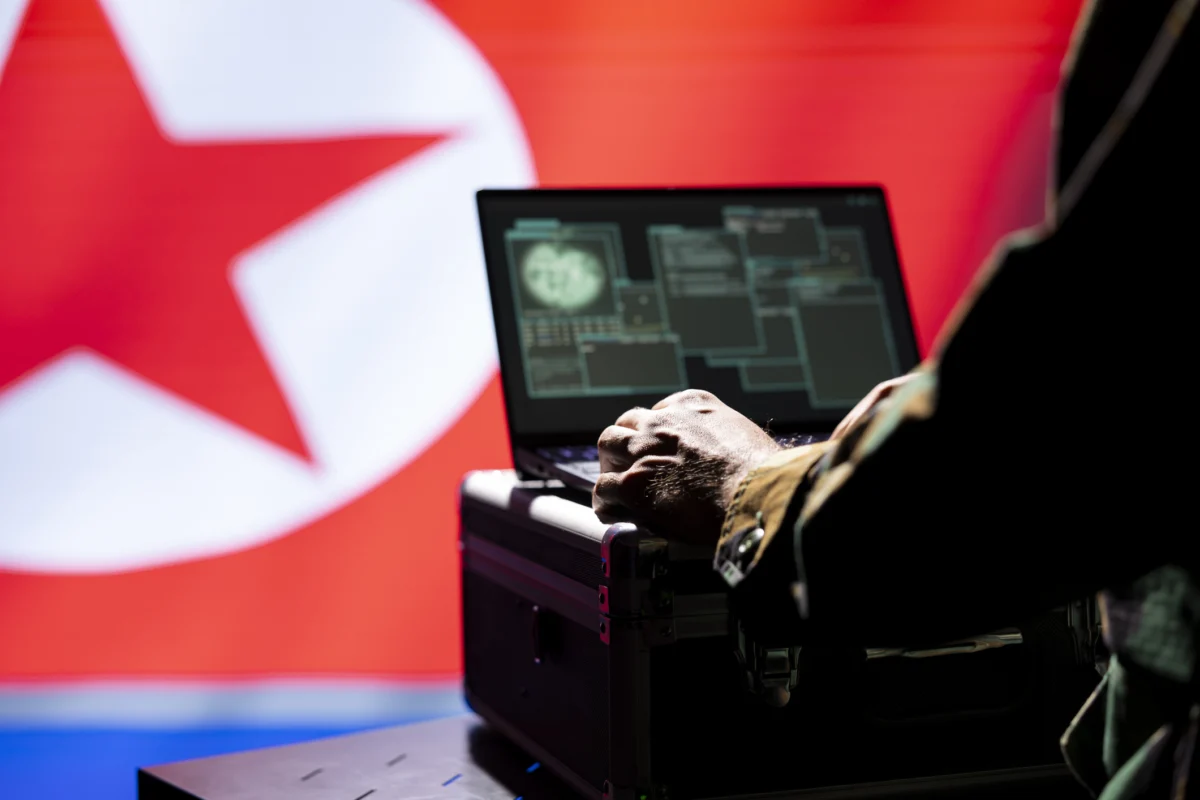
In a major blow to Pyongyang’s illicit revenue streams, U.S. federal authorities have launched "Operation Lonestar Roundup," a sweeping crackdown on a sophisticated network of "laptop farms" used to funnel millions of dollars to North Korea. The operation has resulted in the indictment of 14 individuals and the seizure of approximately 187 computers across the United States. This coordinated effort marks the latest escalation in the ongoing cat-and-mouse game between American law enforcement and North Korean agents who exploit the post-pandemic remote-work landscape to bypass international sanctions.
The Anatomy of the Scheme: How "Laptop Farms" Operate
At the heart of the investigation are residential locations in Texas and beyond that served as the operational backbone for North Korean IT workers. These "laptop farms"—often unassuming suburban homes—acted as physical hubs for digital subterfuge.
The modus operandi was deceptively simple yet highly effective: North Korean engineers, operating from overseas, secured remote software development and IT roles at over 70 U.S. companies. To avoid detection, they required a physical presence in the United States to handle the employer-issued hardware. U.S.-based facilitators, such as those charged in this indictment, agreed to house these laptops in their homes. By connecting these machines to KVM (Keyboard, Video, Mouse) switches and remote-access software, the facilitators allowed North Korean workers to operate the computers as if they were sitting at a desk in the United States.
These facilitators, including Michael James Bostelle of Pennsylvania and Juan Cecilio Pena Carrillo of Texas, were essential cogs in a machine that successfully siphoned approximately $3 million in wages back to the North Korean regime.
Chronology of the Infiltration (2019–2025)
The scope of this operation spans six years of sustained infiltration into the American private sector.
- 2019–2021: As remote work became the global standard due to the pandemic, the North Korean regime began aggressively scaling its IT worker program. The strategy shifted from individual freelancing to a systematic, enterprise-level operation.
- 2022–2023: Law enforcement began noticing a spike in suspicious background check applications. The conspirators increasingly utilized stolen identities—often of unsuspecting U.S. citizens—to bypass identity verification protocols.
- 2024: Following a series of federal indictments targeting similar facilitators, the North Korean network evolved, incorporating more complex obfuscation techniques, including the use of "proxy" interviewers to handle video calls.
- October 2026 (Present Day): The unsealing of the indictment in the Northern District of Ohio signals the culmination of "Operation Lonestar Roundup." Authorities executed raids on over 40 residences, dismantling the physical infrastructure that supported the illicit remote workers.
The Role of Facilitators and Identity Theft
The indictment paints a grim picture of how these facilitators exploited both the U.S. labor market and vulnerable individuals. According to federal prosecutors, the defendants did not merely host laptops; they actively engaged in large-scale identity theft.
Evidence shows that the defendants filed fraudulent records with the Department of Homeland Security, the IRS, and the Social Security Administration using the identities of more than 25 innocent victims. By assuming these identities, the conspirators could open bank accounts, pass background checks, and legitimize the flow of $3 million in salary payments.
Trey Michael Nolte, an Ohio resident named as a co-conspirator, allegedly played a pivotal role by maintaining two dozen company-issued laptops. His operation involved complex money laundering, moving over $320,000 through accounts established under false pretenses. Similarly, Carrillo is accused of receiving $190,000 from five different employers, all while keeping the hardware running in his home to ensure the North Korean "engineers" could maintain their 9-to-5 schedules regardless of time zones.
Official Responses and Strategic Implications
The U.S. government has framed this operation as a critical matter of national security. Ryan Raybould, a U.S. attorney in the Northern District of Texas, emphasized that the scheme is not just a white-collar crime, but a mechanism for state-sponsored proliferation.
"Every laptop farm we dismantle shuts down a revenue stream that the North Korean government relies on to fund weapons programs that threaten global stability," Raybould stated. The Department of Justice, working alongside the FBI, is sending a clear message: the U.S. will not allow its business ecosystem to be weaponized against itself.
The State Department has reinforced this stance by offering a reward of up to $5 million for information leading to the further disruption of this network. The goal is to make the cost of operating these schemes higher than the profit they generate, essentially pricing the North Korean regime out of its own illicit venture.
Cybersecurity Challenges: Why Detection Remains Elusive
While the FBI and private sector firms like CrowdStrike have achieved a tactical victory, experts caution that the threat is far from neutralized. The FBI’s updated advisory highlights a concerning shift in tactics. North Korean actors are now:
- Weaponizing Financial Strain: Recruiting U.S. citizens under financial duress to act as "mules" for their hardware and identities.
- Global Outsourcing: Subcontracting the actual IT labor to freelancers in India, Pakistan, and Nigeria, further masking the true identity of the primary worker.
- Physical Intimidation: Moving beyond digital threats, the group has been documented sending paid associates to confront former managers or intimidate companies in person if their payments are withheld.
- Hardware Spoofing: Using advanced techniques, such as making a video capture card appear as a standard webcam, to bypass AI-driven monitoring software.
CrowdStrike, which assisted in the investigation, warned that the "Famous Chollina" group (the moniker often associated with these North Korean actors) is highly resilient. While this takedown limits their footprint in specific geographic areas, it does not permanently disable their infrastructure. The report notes that these actions are "unlikely to have a lasting effect" without a fundamental change in how companies verify the integrity of remote employees.
Future Outlook: A Call for Layered Defense
The FBI has urged U.S. companies to move away from relying on single-factor verification. Because the North Korean actors mimic the habits of legitimate remote workers, "blunt filters" often fail to detect them. Instead, the agency recommends:
- Layered Identity Verification: Conducting video-based interviews that utilize advanced liveness detection to ensure the person on the screen is the person who applied for the job.
- Behavioral Analytics: Monitoring for unusual login times, recurring IP addresses, and the use of unauthorized remote-access software.
- Hardware Integrity Checks: Implementing more stringent device management policies (MDM) that prevent the use of unauthorized peripheral devices or virtual machine environments.
As North Korea continues to face economic isolation, the regime is expected to double down on these creative, low-risk, high-reward digital infiltration tactics. Operation Lonestar Roundup stands as a testament to the fact that while the battle is global, the front lines are increasingly located within the remote-work infrastructure of ordinary American corporations. The security of the nation’s financial and technological systems, it seems, now depends as much on the vigilance of HR departments and IT managers as it does on the intelligence community.

 Siti Muinah
 Raul Delapena Setiawan
 Nana Wu
 Asro
Asro

 Neng Nana
 Dwi Wanna
