Rifan Muazin
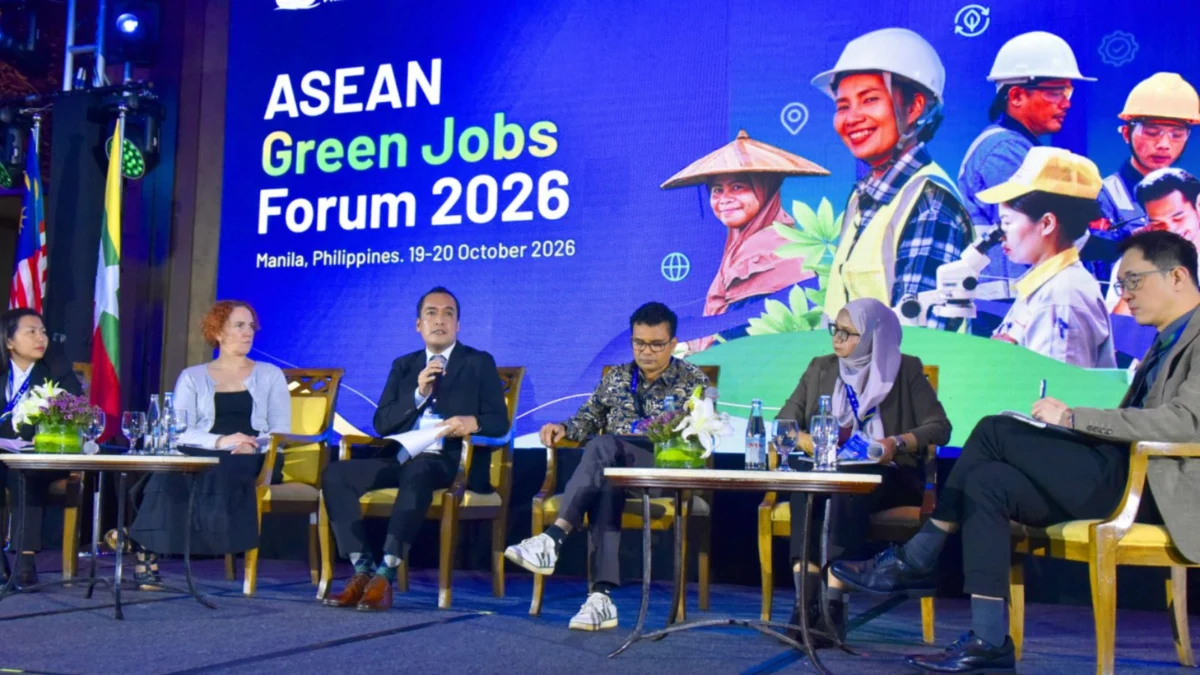
MAKATI CITY, PHILIPPINES – As the global community accelerates its shift toward environmental sustainability, the Association of Southeast Asian Nations (ASEAN) has signaled a decisive move to ensure that the region’s workforce is not only prepared for the transition but is its primary beneficiary. The 2026 ASEAN Green Jobs Forum, which concluded on October 20, 2026, in Makati City, served as a landmark assembly for policymakers, labor leaders, and industry stakeholders to chart a course for an inclusive, green economic future.
Under the theme “Creating Green Jobs, Building Future Skills: Transforming ASEAN’s Economies and Workforce for a Just and Inclusive Future,” the forum underscored a critical regional consensus: the transition to a low-carbon economy must be synonymous with the creation of "decent work." The event culminated in a call for massive investment in green industries, the synchronization of educational curricula with emerging market demands, and the fortification of social safety nets to protect the region’s most vulnerable workers.
I. Main Facts: A Regional Mandate for Green Growth
The forum, held under the Philippines’ ASEAN Chairship, acted as the primary vehicle for operationalizing the ASEAN Framework and Action Plan for a Just and Inclusive Transition to Green Jobs 2025-2030. This framework represents a strategic pivot for the ten-member bloc, moving beyond environmental rhetoric toward a concrete labor-market roadmap.
The Three Pillars of the Makati Consensus
Delegates at the forum identified three non-negotiable priorities to ensure the success of the regional transition:
- Investment in Green Infrastructure: Mobilizing both public and private capital to stimulate industries that reduce environmental impact.
- Skills Alignment: Bridging the gap between traditional vocational training and the specialized technical requirements of the green economy.
- Social Protection: Implementing a "social protection floor" to ensure that workers displaced by the decline of carbon-intensive industries are not left behind.
The forum was organized in collaboration with the Australian Government through the Australia for ASEAN Futures Initiative and the ASEAN Secretariat, highlighting the international significance of Southeast Asia’s labor market evolution.
II. Chronology: From Framework to Action
The journey toward the 2026 Forum began years prior with the initial drafting of the ASEAN Declaration on Promoting Green Jobs. However, the Makati event served as the critical "implementation" milestone.
Day 1: Identifying the Gap
The first day of the forum focused on the current state of the ASEAN labor market. Participants from government agencies and labor unions discussed the "skills gap" currently hindering the growth of renewable energy and sustainable agriculture sectors. Discussions highlighted that while "green" commitments were present in national policies, the actual workforce lacked the certification and technical training to fill high-value roles.
Day 2: Strategic Solutions and the Closing Mandate
On October 20, the focus shifted to solutions. The Philippines proposed the establishment of an ASEAN Green Jobs Centre of Excellence. This day was characterized by intense dialogue between Micro, Small, and Medium-sized Enterprises (MSMEs) and development partners. The forum concluded with a powerful closing message from the Philippine Department of Labor and Employment (DOLE), setting the deadline for measurable progress by 2030.
III. Supporting Data: The Economic and Environmental Stakes
The urgency of the forum’s agenda is backed by the staggering economic realities of the Southeast Asian region. ASEAN is one of the world’s most vulnerable regions to climate change, yet it also possesses some of the fastest-growing labor forces.
Defining "Green Jobs" in the ASEAN Context
According to the ASEAN framework, a job is classified as "green" only if it meets two criteria:
- Environmental Contribution: It must substantially improve environmental quality, whether in new sectors (like electric vehicle manufacturing) or traditional sectors (like sustainable textile production).
- Decent Work Standards: It must offer adequate wages, safe working conditions, social dialogue, and the full respect of workers’ rights.
The Scale of the Transition
Data presented during the forum suggested that the transition to a circular economy could create up to 30 million new jobs in the region by 2030. However, this is balanced by the potential displacement of millions of workers in the coal, oil, and traditional manufacturing sectors.
The forum emphasized that MSMEs, which account for nearly 97% of all businesses in ASEAN, are the "engine room" of this transition. For the green shift to be successful, these small businesses require specific financial incentives and technical assistance to "green" their operations without shedding staff.
IV. Official Responses: Voices of Leadership
The forum featured high-level addresses from regional leaders, most notably Carmela I. Torres, Undersecretary of the Philippine Department of Labor and Employment (DOLE). Her closing remarks served as a manifesto for the region’s labor policy.
The "Core Responsibility" of Government
Undersecretary Torres emphasized that the green transition is not a luxury but a fundamental economic necessity. "Our core responsibility is to ensure that this transition creates decent work opportunities for our people, while providing a social protection floor to those whose jobs and livelihoods may be affected," she stated.
Torres was clear that the transition must be inclusive of both formal and informal workers. In many ASEAN nations, the informal economy represents a significant portion of the workforce; leaving these individuals out of the green transition would result in increased poverty and social instability.
A Call for Regional Synergy
The Philippines’ support for the ASEAN Green Jobs Centre of Excellence was a highlight of the official responses. Torres noted that the center would serve as a hub for:
- Technical Cooperation: Sharing best practices in green technology between member states.
- Mutual Recognition of Skills: Allowing a certified solar technician in Indonesia, for example, to have their skills recognized and valued in the Philippines or Vietnam.
- Policy Development: Helping member states draft national laws that align with the regional 2025-2030 Action Plan.
Support from the Australian Government
Representatives from the Australia for ASEAN Futures Initiative reiterated their commitment to the region. They noted that the stability of the ASEAN labor market is vital for Indo-Pacific regional security and economic prosperity. Their support is specifically aimed at helping the administration of Philippine President Ferdinand R. Marcos Jr. in expanding livelihood opportunities amidst rapid technological changes.
V. Implications: The Road to 2030 and Beyond
The conclusions of the 2026 ASEAN Green Jobs Forum have far-reaching implications for businesses, educators, and the 330 million-strong ASEAN workforce.
For the Business Community
Companies operating within ASEAN must now view "greenness" not just as a CSR (Corporate Social Responsibility) initiative, but as a core operational requirement. The push for green jobs implies that future government contracts and investment incentives will likely be tied to a firm’s ability to demonstrate "decent work" practices and environmental sustainability.
For Education and Training Institutions
The forum’s call for "skills alignment" suggests a massive overhaul of Technical and Vocational Education and Training (TVET) systems. There will be an increased demand for curricula focused on:
- Renewable energy systems installation and maintenance.
- Sustainable urban planning and "green" construction.
- Waste management and circular economy logistics.
- Digital literacy, as many green jobs are also high-tech jobs.
For the Individual Worker
The "just transition" framework offers a promise of protection. For workers in declining industries, the implication is a shift toward "upskilling" and "reskilling" programs funded by regional and national initiatives. The establishment of a social protection floor means that the transition aims to prevent the "economic shock" that often accompanies industrial shifts.
The Global Context
By taking a proactive stance on green jobs, ASEAN is positioning itself as a leader among emerging markets. This regional unity provides a stronger bargaining position in global climate negotiations, such as COP (Conference of the Parties) summits, where the "Just Transition" has become a central theme.
Conclusion: A Shared Vision for 2030
As Undersecretary Torres noted, the true test of the Makati forum will be the measurable progress seen by the end of the decade. "By 2030, we should be able to demonstrate progress in creating green jobs, preparing workers for changing labor markets, and ensuring that the benefits of transition are shared more broadly," she concluded.
The 2026 ASEAN Green Jobs Forum has successfully moved the needle from theoretical planning to a pragmatic framework for action. With the support of international partners and a unified regional vision, Southeast Asia is attempting to prove that environmental sustainability and economic prosperity are not mutually exclusive—provided that the worker remains at the heart of the equation.
About the Forum:
The 2026 ASEAN Green Jobs Forum was a key event under the Philippines’ ASEAN Chairship, organized with the support of the Australian Government and the ASEAN Secretariat. It brought together a diverse coalition of government officials, MSMEs, and civil society to implement the ASEAN Framework and Action Plan for a Just and Inclusive Transition to Green Jobs 2025-2030.


 Pevita Pearce


 Nana Muazin

 Siti Muinah

 Layla Zulfa