
 Pevita Pearce
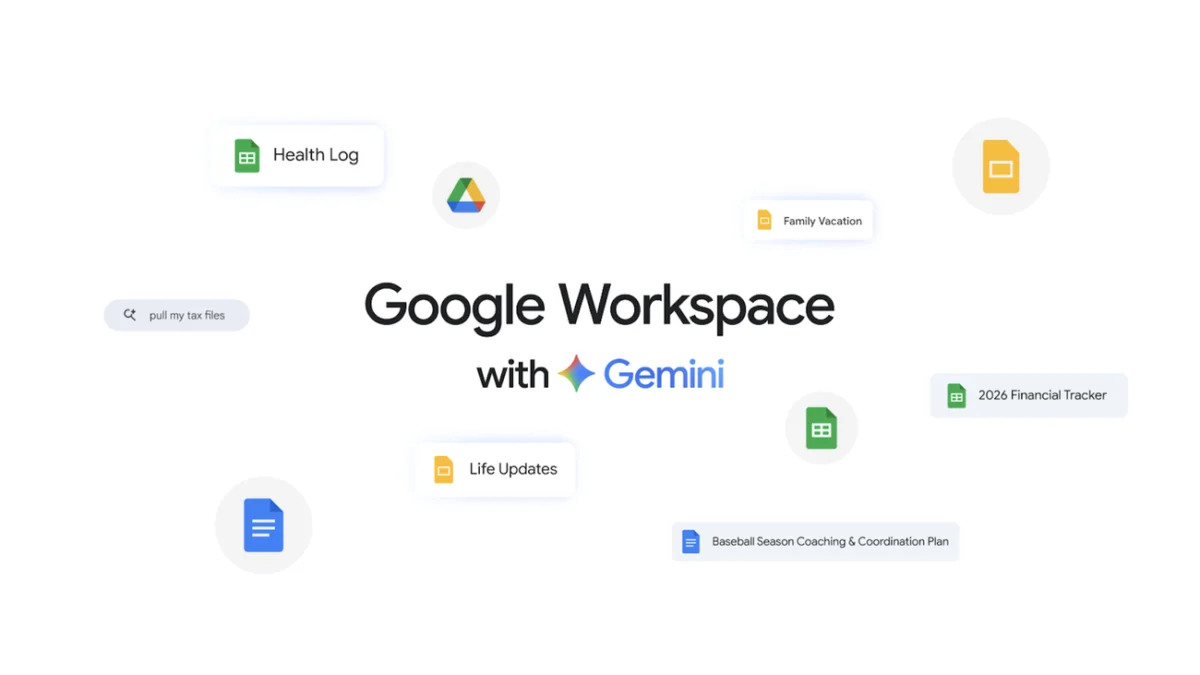
For decades, the “blank page syndrome” has been the silent adversary of productivity. Whether it is a blank document, an empty spreadsheet, or a sterile slide deck, the initial friction of creation has long been a bottleneck for professionals, students, and creatives alike. Today, Google is fundamentally shifting that paradigm.
In a significant expansion of its AI-driven capabilities, Google has announced a suite of powerful new features for Gemini within Google Workspace. Designed to make the creation process more intuitive, collaborative, and context-aware, these updates aim to transform the suite from a passive set of tools into an active, intelligent partner. By pulling information securely from across a user’s ecosystem—including emails, existing files, and the vast resources of the web—Gemini is moving beyond simple text generation to become a sophisticated synthesizer of information.
The Core Philosophy: Contextual Intelligence
The hallmark of this update is "contextual awareness." In the past, generative AI tools often operated in isolation, requiring users to copy-paste information or manually bridge the gap between their data and the AI interface.
Yulie Kwon Kim, VP of Product for Google Workspace, emphasizes that the goal is to make these tools more personal and capable. “Whether you’re planning a trip, organizing an event, or launching a side project, getting started is often the hardest part,” says Kim. By allowing Gemini to securely access a user’s internal data, Google is solving the problem of fragmentation. Gemini can now connect the dots between a scattered email thread, a legacy spreadsheet, and a current draft, surfacing relevant insights without the user needing to leave their workspace.
Chronology of the Gemini Workspace Integration
The integration of AI into Google Workspace has been a strategic, multi-year rollout, reflecting Google’s broader shift toward an “AI-first” company.
- Initial Phase: Google introduced the foundational "Help me write" features, allowing users to generate text drafts in Docs and basic templates in Slides.
- The Pro Evolution: With the introduction of the Gemini Ultra and Pro models, Google began layering more complex reasoning capabilities into the ecosystem, enabling the AI to handle more nuanced prompts and larger datasets.
- Current Milestone: The current rollout represents the shift from "generative assistant" to "collaborative agent." Gemini can now create entire documents, manage complex data analysis in Sheets, and design visual presentations from scratch.
- The Beta Launch: Starting today, these features are entering a global beta phase, specifically targeting Google AI Ultra and Pro subscribers. This phased approach allows Google to refine the user experience based on real-world feedback before a broader, localized rollout.
Deep Dive: Transforming the Core Applications
Google Docs: The Adaptive Writing Partner
Gemini in Docs is no longer just a text generator; it is a stylist. By pulling data from existing files and emails, it can create personalized documents that mirror the user’s specific requirements. For instance, a coach could feed last season’s notes into the AI, and Gemini would synthesize them into a structured, ready-to-use plan. Furthermore, the new editing capabilities allow for tone adjustment—turning a dry, technical introduction into a warm, welcoming, or professional narrative with a single prompt.
Google Sheets: From Data Silos to Intelligent Analysis
Perhaps the most dramatic leap is in Sheets. Users can now move beyond manual data entry and basic formulas. Gemini acts as an analyst that can structure data from scratch. By describing a goal—such as "create a personal finance tracker that tracks my monthly spending against my savings goals"—Gemini generates the layout, labels, and analytical structures required. It can also auto-populate tables by pulling information from the web or existing documents, effectively turning a static spreadsheet into a dynamic dashboard.
Google Slides: The Design Collaborator
Design is often the most time-consuming aspect of presentation creation. Gemini in Slides is designed to handle the heavy lifting of layout, formatting, and diagramming. Users can provide rough notes or a document, and Gemini will generate professional-grade slides, ensuring the visual output aligns with the core message. By automating the design process, Google enables the user to focus on the narrative arc of their presentation rather than the pixel-perfect placement of text boxes.
Google Drive: The Active Knowledge Hub
Perhaps the most utilitarian update is the "Ask Gemini" feature within Google Drive. Drive has traditionally been a storage locker—a repository of files that required manual searching. Now, it is an active knowledge hub. Users can ask complex, synthesis-based questions like, "Compare the catering proposals for the upcoming event and highlight the key cost differences and contract clauses." Gemini scans the files, extracts the data, and provides a clear, comparative summary, drastically reducing the time spent on administrative "hunting."
Supporting Data and Security
Google has placed a heavy premium on data governance. A common concern regarding AI integration is the risk of data leakage or privacy violations. According to the company, these features are built with strict security protocols. When Gemini accesses files, emails, or data to provide insights, that information is kept within the security perimeter of the user’s Workspace account.
The performance of these tools is powered by Google’s latest Gemini Pro and Ultra models, which are specifically optimized for "state-of-the-art" performance in reasoning, summarization, and data extraction. By grounding the AI in the user’s specific data (often called Retrieval-Augmented Generation or RAG), the likelihood of "hallucinations" is significantly reduced, as the AI is constrained to the information provided in the user’s own files.
Official Responses and Strategic Implications
Industry analysts view this move as a direct challenge to the traditional "siloed" productivity software model. By integrating AI at the infrastructure level, Google is attempting to create a "sticky" ecosystem where the value of the platform increases exponentially with the amount of data stored within it.
"We are essentially witnessing the end of the ‘manual’ era of office productivity," says a senior industry consultant. "The shift from ‘user-driven’ to ‘AI-assisted’ workflows means that the value proposition for the end-user is no longer just the tools they have, but the intelligence that connects them."
However, this transition is not without its challenges. The reliance on AI requires a shift in user behavior—learning how to "prompt" effectively is becoming as vital as learning how to type or use formulas. Google’s commitment to refining these experiences suggests they are aware that the technology is only as good as the human ability to command it.
Future Outlook: The Road to General Availability
As the beta period progresses, the industry will be watching closely to see how effectively these tools scale. Google has stated that the features are currently available in English globally for Docs, Sheets, and Slides, with Drive-specific AI features currently focused on the U.S. market.
The implications for the future of work are profound. If these tools perform as intended, the time-to-output for professional tasks—from report writing to financial forecasting—could be slashed by a significant margin. For the enterprise, this represents a massive opportunity to reclaim "lost" hours spent on administrative tasks.
For now, the message from Google is clear: the blank page is no longer an obstacle; it is simply the starting point for a conversation with the machine. As these tools continue to evolve, the distinction between "doing the work" and "directing the work" will continue to blur, ushering in a new era of AI-augmented productivity.
For those looking to get started, the integration is available now for Google AI Ultra and Pro subscribers. As Google continues to refine the experience, users can expect more language support and even deeper integration across the entire Google Cloud ecosystem in the coming months. The era of the intelligent workspace has officially arrived.


 Nana Muazin

 Siti Muinah

 Layla Zulfa


 Nila Kartika Wati
