
 Lina Hope
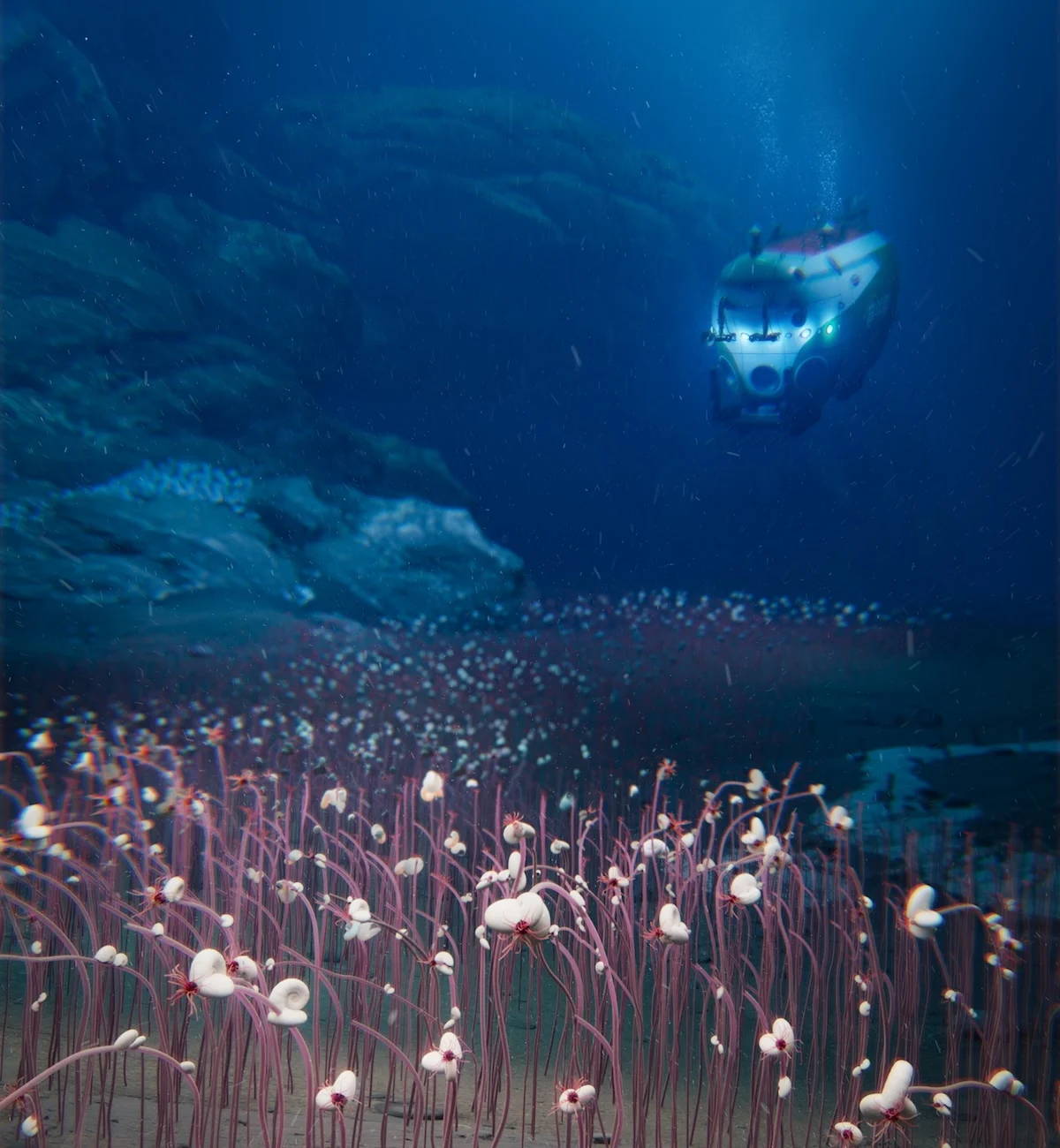
In a monumental achievement for marine biology, an international team of researchers, led by the Chinese Academy of Sciences’ Institute of Deep-sea Science and Engineering, has discovered a sprawling, vibrant oasis of life nearly six miles beneath the surface of the western Pacific Ocean. The discovery, detailed in the journal Nature, documents the most extensive and deepest chemosynthesis-based community ever observed, challenging long-held assumptions about the biological limits of the Earth’s hadal zones.
Using the manned submersible Fendouzhe, scientists navigated the crushing pressures and absolute darkness of the Mariana, Kuril-Kamchatka, and western Aleutian trenches. What they found was not the desolate, "alien" wasteland once described by early deep-sea explorers, but a thriving ecosystem of mollusks, tubeworms, and crustaceans, all sustained by the Earth’s internal chemistry rather than the sun.
The Main Facts: A New Frontier of Biology
For decades, the hadal trenches—the deepest parts of the ocean—were considered biological deserts. The extreme hydrostatic pressure, reaching over 1,000 times that of sea level, combined with near-freezing temperatures and total darkness, led scientists to believe that complex life could not sustain itself in such isolated pockets.
The Fendouzhe expedition has effectively debunked this narrative. The study reveals that these communities span a staggering 1,553.4 miles, existing at depths ranging from 3.6 to 5.92 miles. This is not merely a collection of isolated microbes; the team documented fields of siboglinid polychaeta (tubeworms) reaching up to a foot in length, dense mounds of bivalves, spiky crustaceans, sea lilies, and sea cucumbers.
These organisms rely on chemosynthesis—a biological process where bacteria convert inorganic chemicals, specifically hydrogen sulfide and methane, into energy. Isotopic analysis performed by the research team suggests these fluids are transported along deep-seated geological faults. As organic matter is deposited and buried, microbial action deep within the sediment layers produces methane, which then seeps through the ocean floor to feed the waiting colonies.
Chronology of the Expedition
The road to this discovery began with the development of high-pressure engineering capabilities. The Fendouzhe submersible, a triumph of modern oceanographic technology, was designed specifically to withstand the extreme conditions of the hadal zone.
- 2012: Director James Cameron completes his historic solo descent into the Challenger Deep of the Mariana Trench, describing the environment as a desolate, "alien" world.
- 2024: The research team initiates a series of 23 rigorous dives into the Mariana Trench and surrounding geological formations.
- 2025 (Early): Data collection concludes, with the team identifying vast clusters of microbial mats and associated fauna.
- July 2025: The findings are officially published in Nature, titled "Flourishing chemosynthetic life at the greatest depths of hadal trenches," marking a paradigm shift in our understanding of deep-sea carbon cycling.
The consistent presence of the submersible in these depths allowed the team to map the "vibrant oasis" over multiple dives, providing the most detailed visual and chemical record of the hadal floor in history.
Supporting Data: Why This Changes Everything
The discovery of these communities forces a re-evaluation of deep-ocean carbon cycling models. Previously, scientists believed that deep-sea life was largely dependent on "marine snow"—the steady rain of organic detritus falling from the sunlit surface waters. However, the sheer abundance of biomass found by the Fendouzhe team cannot be supported by marine snow alone.
The Role of Methane and Hydrogen Sulfide
The isotopic signatures found at the site confirm that these animals are primary consumers of methane-derived carbon. This suggests that hadal trenches are not just passive depressions in the Earth’s crust, but active biological engines. The tubeworms, in particular, appear to cluster around microbial mats that act as the foundation of the local food web.
Scale and Diversity
The distance covered by this discovery—over 1,500 miles—suggests that these communities are not rare anomalies. Lead author Xiatong Peng noted that given the geological similarities across the world’s various hadal trenches, these chemosynthetic communities may be a global phenomenon, far more widespread than previously anticipated.

Official Responses and Expert Perspective
The scientific community has reacted with a mix of awe and renewed caution. Co-author Mengran Du, a marine geochemist, emphasized that the discovery is groundbreaking precisely because of its scale. "Unlike isolated pockets of organisms, this community thrives like a vibrant oasis in the vast desert of the deep sea," Du stated during the release of the findings.
The footage captured by the submersible has circulated widely, showing a serene, almost rhythmic landscape of marine life moving in the darkness. Nature’s official documentation of the find highlighted the "surprisingly relaxing" nature of the footage, which stands in stark contrast to the volatile, high-pressure reality of the environment.
However, the discovery also brings to the forefront the geopolitical tension surrounding the "Blue Economy." With nations and private corporations eyeing the ocean floor for rare-earth minerals, the existence of these fragile, slow-growing ecosystems complicates the regulatory landscape.
Implications: The Looming Shadow of Deep-Sea Mining
The timing of this discovery is critical. As the International Seabed Authority (ISA) continues to debate the rules governing deep-sea mining, environmental advocates are using this new study as a rallying cry.
The Ecological Risk
Deep-sea mining involves the removal of manganese nodules and the disturbance of seafloor sediments. Because these organisms rely on precise fluid seeps and microbial mats, even minor sediment plumes could smother these delicate communities. Researchers warn that we are at a crossroads: we have only just begun to understand the complexity of these trenches, and yet, we are on the verge of allowing industrial activity that could destroy them before they are fully mapped.
Challenging Regulatory Models
The study’s authors argue that current models of deep-ocean health are insufficient. If the deep sea is home to expansive, interconnected communities of life, the impact of industrial extraction will not be localized; it could have cascading effects on the health of the entire ocean. The discovery provides "compelling evidence" that the deep sea is a far more active participant in the Earth’s biological stability than previously assumed.
A Hidden World Unveiled
The Fendouzhe mission has done more than just find new species; it has fundamentally changed the geography of life on Earth. By proving that complex, abundant ecosystems can thrive at nearly six miles depth, researchers have opened a new chapter in biology.
As Du remarked, the process of diving into these trenches feels like "traveling through time." With each descent, we are not only discovering creatures that have existed in isolation for millions of years, but we are also uncovering the mechanisms that sustain the planet.
As we look toward the future, the challenge will be to balance our human drive for exploration and resource acquisition with the stewardship of these newly discovered, fragile realms. The "vibrant oasis" of the Mariana Trench stands as a reminder that the most significant mysteries of our planet do not lie in the stars above, but in the dark, pressurized depths of the world beneath our feet. The question remains: will we choose to protect these deep-sea frontiers, or will we trade their existence for the minerals that drive our surface-level technological advancement? For now, the tubeworms and clams of the deep continue to thrive in the dark, indifferent to the debates raging miles above their heads.


 Ammar Sabilarrohman

 Neng Nana

 Asep Darmawan

 Asro

 Layla Zulfa

 Nila Kartika Wati

 Muslim
