
 Raul Delapena Setiawan
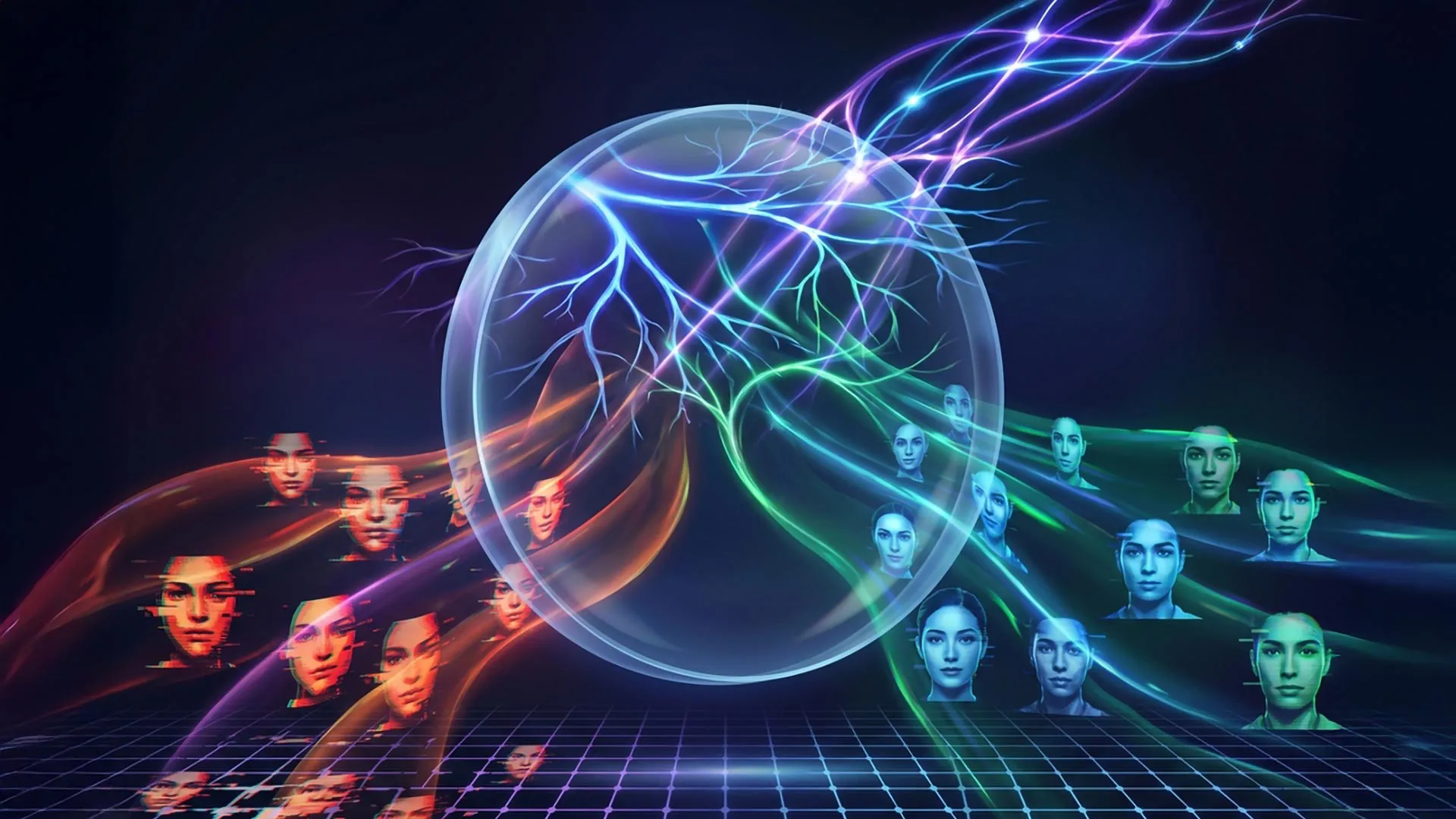
In an era where the boundary between reality and digital fabrication is rapidly dissolving, the weaponization of generative AI has created a crisis of trust. As deepfake technology becomes increasingly sophisticated—moving beyond simple face-swaps to the seamless generation of hyper-realistic, AI-authored video—the digital infrastructure tasked with detecting such content is reaching its breaking point. Traditional detection systems, reliant on power-hungry, sequential digital computation, are struggling to keep pace with the sheer volume of synthetic media flooding the internet.
However, a team of researchers at the University of California, Los Angeles (UCLA) has unveiled a paradigm-shifting solution. By moving beyond the binary constraints of traditional electronics, the team has developed a novel optical-neural processor that utilizes the physical properties of light to identify deepfakes with unprecedented speed, energy efficiency, and security.
The Main Facts: A New Optical Architecture
The technology, detailed in a study titled "Scalable, Energy-Efficient Optical-Neural Architecture for Multiplexed Deepfake Video Detection," published in the journal eLight, represents a fundamental departure from conventional AI hardware.
At its core, the UCLA system is a hybrid digital-optical processor. Unlike standard systems that process video frames through a serial digital pipeline—a process that consumes significant electricity and time—the UCLA processor performs the heavy lifting of inference through the physical propagation of light.
By leveraging "multiplexing," the system can analyze 15 or more video streams simultaneously in a single optical pass. The process begins with a lightweight digital encoder that extracts spatial, spectral, and temporal features from incoming video streams. This data is converted into a phase pattern and projected onto a programmable spatial light modulator. The resulting optical wavefront then passes through a passive, free-space diffractive decoder. At the output, specialized optical detectors provide an immediate authenticity score for each video. This physical "calculation" replaces the massive computational load typically required by deep neural networks, offering a high-throughput, energy-efficient solution to modern content moderation.
Chronology of a Breakthrough
The journey toward this hybrid architecture began with the recognition of a two-fold bottleneck in artificial intelligence. First, the "computational wall": as deepfake detectors grow more accurate, they require hundreds of billions of floating-point operations per video, leading to massive energy consumption and latency. Second, the "vulnerability gap": traditional digital models are often susceptible to adversarial attacks, where malicious actors subtly alter pixels to trick AI detectors.
Under the leadership of Professor Aydogan Ozcan, the UCLA team spent years exploring the intersection of diffractive optics and neural network design. The researchers sought to offload the most demanding layers of a neural network into the physical domain.
In early experimental phases, the team focused on establishing the viability of passive diffractive layers—static structures that can modulate light to perform mathematical operations without drawing electrical power. By 2023, the team successfully demonstrated that these layers could be optimized to solve complex classification tasks. The final integration, tested against standard benchmarks like the Celeb-DF dataset and, more recently, Google’s advanced VEO-3 generative model, confirmed that their optical-neural approach could maintain high precision while scaling across multiple concurrent streams.
Supporting Data: Precision Under Pressure
The performance metrics of the UCLA optical processor are striking. In initial experiments involving 15 simultaneous video streams, the system achieved a detection accuracy of 97.79%. Perhaps more critical for a security-focused tool is its sensitivity—the ability to flag genuine fakes—which stood at an impressive 99.86%. This translates to a false-negative rate of only 0.14%, ensuring that the vast majority of manipulated content is successfully intercepted.
Even when the researchers pushed the system to its limit, processing 18 videos in a single pass, the accuracy remained robust at 96.13%.
The researchers also demonstrated the power of "physical depth." By adding two optimized passive diffractive layers to the decoder, the team observed a 6.8% increase in accuracy, particularly when tackling complex, high-resolution manipulations. Because these diffractive layers are passive, they provide this performance boost without increasing energy consumption or inference latency.
When pitted against the cutting-edge Google VEO-3 model, which produces videos specifically designed to lack the common "tells" of earlier AI, the optical processor held its ground, achieving 94.80% accuracy and 97.61% sensitivity after minimal fine-tuning. These figures indicate that the system is not merely a static filter but a scalable platform capable of evolving alongside generative AI.
Official Perspectives: The Philosophy of Hardware Defense
The research team, led by Professor Aydogan Ozcan, emphasizes that this technology is not intended to replace existing digital detection software, but to act as a revolutionary "first layer" of defense.
"The goal is to filter the massive, overwhelming volume of content at the edge," the team notes. By utilizing the optical processor as a high-throughput sieve, entities like social media platforms or national security agencies can instantly screen vast swathes of data. Content flagged as suspicious by the optical processor is then routed to traditional, power-intensive digital models for a forensic, deep-dive assessment.
This hybrid model addresses the security flaws inherent in pure software. In a white-box attack scenario—where a hacker has access to the internal parameters of an AI model—digital systems are notoriously fragile. Because the UCLA system relies on physical diffraction to perform its inference, the "model parameters" are effectively locked into the hardware itself. Reconstructing these parameters through reverse engineering is significantly more difficult than modifying digital code, providing an inherent, physical layer of adversarial resistance.
Implications for the Future of AI Security
The implications of the UCLA study extend far beyond video detection. The successful deployment of this optical-neural processor suggests a future where artificial intelligence is no longer tethered to the constraints of transistor-based computing.
1. Large-Scale Content Moderation
As the volume of video content uploaded to the internet increases exponentially, current digital architectures face a scaling crisis. By enabling parallel, low-latency processing, the UCLA system could allow platforms to perform real-time verification of billions of videos, effectively stopping the viral spread of disinformation before it begins.
2. Energy Sustainability
The energy crisis associated with AI training and inference is well-documented. By shifting the computational burden to passive optical structures, the UCLA team has provided a blueprint for "Green AI." Since the diffraction process consumes no electricity, the system offers a pathway to high-performance AI that is fundamentally more sustainable.
3. Resilience to Adversarial Attacks
The "cat-and-mouse" game between deepfake creators and detection algorithms has reached a stalemate. Adversaries are constantly developing methods to evade detection, but the UCLA system’s hardware-embedded parameters offer a new, more rigid defense. By forcing attackers to contend with physical, rather than digital, properties, the barrier to creating undetectable deepfakes is raised significantly.
4. Surveillance and National Security
In security-critical applications—such as border control, biometric verification, and defense intelligence—the ability to perform rapid, accurate, and secure analysis is paramount. The UCLA processor’s ability to remain reliable in the face of image noise, blur, and compression makes it an ideal candidate for real-world field deployment in volatile environments.
Conclusion: A New Paradigm
The research, spearheaded by Parnian Ghapandar Kashani, Dr. Shiqi Chen, and Professor Aydogan Ozcan, marks a turning point in the field of computational optics. By proving that physical phenomena like light diffraction can perform high-level neural network tasks, the UCLA team has provided a sophisticated, scalable, and energy-efficient solution to one of the most pressing technical challenges of the 21st century.
As we look toward an future where AI-generated content may soon outnumber human-authored content, the marriage of optics and AI offers a beacon of hope. It suggests that the solution to the digital chaos of the future may not lie in more code, but in the fundamental, unalterable laws of physics. Through this breakthrough, UCLA has provided the foundational layer for a more secure, authenticated, and resilient digital world.


 Neng Nana
 Evan Lee Salim

 Iffa Jayyana
 Nana Wu

 Ammar Sabilarrohman

 Sagoh

 Basiran

 Nana Muazin
