
 Lina Hope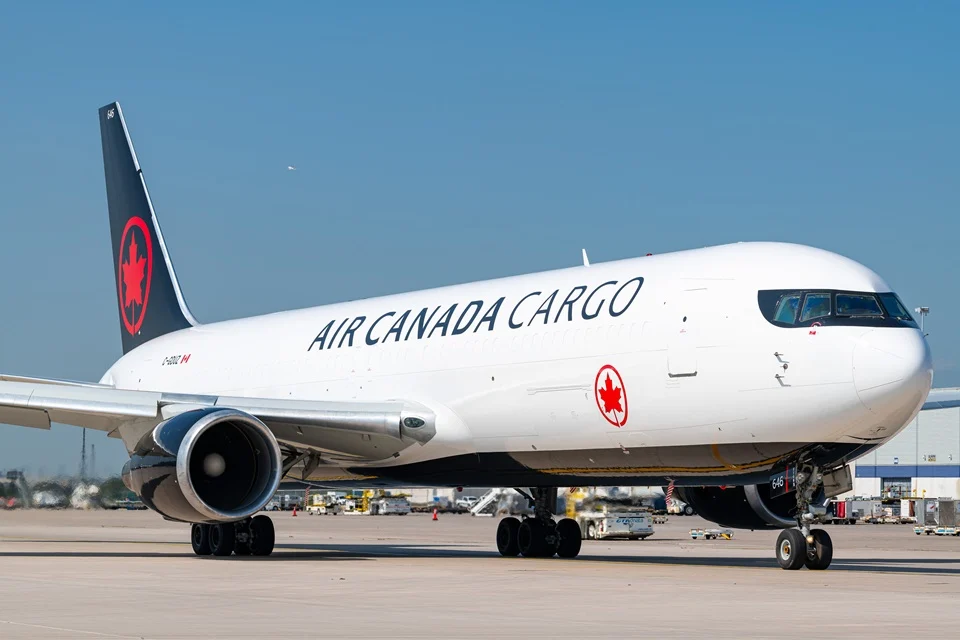
By Damian Brett
General Sales and Service Agent (GSSA) FlyUs has announced a significant expansion of its operational network with the opening of a new office in San Juan, Puerto Rico. This strategic move follows the formalization of a new contract with Air Canada Cargo, aimed at bolstering the Canadian carrier’s capacity and service reliability in one of the United States’ most critical pharmaceutical manufacturing hubs.
The Strategic Core: Bridging San Juan and Toronto
The partnership will see FlyUs provide comprehensive agency services for Air Canada Cargo’s dedicated freighter operations connecting Luis Muñoz Marín International Airport (SJU) with the airline’s primary hub at Toronto Pearson International Airport (YYZ). The service currently operates on a thrice-weekly schedule, utilizing Air Canada’s Boeing 767 freighter aircraft.
For FlyUs, the move into Puerto Rico is not merely a geographic expansion; it is a calculated effort to tap into the high-value bioscience sector. Puerto Rico holds the distinction of being the number one bioscience manufacturing hub in the United States by export volume. The island’s economy relies heavily on the efficient, temperature-controlled transport of sensitive pharmaceutical products, creating a robust and ongoing demand for specialized air cargo solutions.
Chronology of a Growing Partnership
The appointment of FlyUs as the GSSA for Puerto Rico represents the latest milestone in a long-standing and deepening relationship between the two organizations.
FlyUs has already established itself as a cornerstone partner for Air Canada Cargo across several international markets. Currently, the GSSA represents the Canadian airline in:
- Europe: Belgium, the Netherlands, and Luxembourg.
- South America: Ecuador.
- Central America: A network of several countries across the region.
The evolution of this partnership suggests a high level of institutional trust. As Air Canada Cargo has successfully integrated FlyUs into its operational framework in other regions, the decision to award the Puerto Rico contract was viewed by both parties as a logical, albeit strategic, next step. This expansion reflects a broader trend in the aviation industry where airlines are increasingly leaning on specialized, regional experts to manage complex supply chains, allowing the carriers to focus on flight operations while the GSSA manages local market intelligence, sales, and logistics requirements.
Supporting Data: Why Puerto Rico Matters
To understand the importance of this new office, one must look at the economic profile of Puerto Rico. The island’s pharmaceutical sector is a global powerhouse, home to many of the world’s largest medical technology and pharmaceutical companies.

The requirement for "cold chain" logistics—the process of transporting temperature-sensitive products within a specific temperature range—is paramount. With many pharmaceutical shipments requiring strict climate control, the ability of FlyUs to offer specialized handling is the primary value proposition.
FlyUs president and chief executive, Carlo de Haas, emphasized that the firm’s operational pedigree is perfectly suited for this specific market. "FlyUs has extensive experience handling temperature-controlled cargo, particularly pharmaceuticals, perishables, and flowers," de Haas noted. "Our team is well-positioned to support Air Canada and its customers with these sensitive shipments."
From an infrastructure perspective, the San Juan-Toronto route acts as a critical artery. By providing consistent freighter capacity, Air Canada Cargo is not just moving boxes; it is ensuring the continuity of global medical supply chains.
Official Perspectives on the Collaboration
The partnership has received strong endorsement from the leadership of both organizations. Matthieu Casey, managing director, commercial – cargo at Air Canada, highlighted that the decision was driven by performance metrics rather than just convenience.
"FlyUs has proven to be a trusted partner through the strong results they have achieved as Air Canada’s GSA in multiple markets," Casey said. "As our confidence in the partnership has grown, extending that relationship to Puerto Rico became a logical next step. Being able to provide reliable uplift from one of the US’s most significant export markets is an important part of our cargo offering, and we are glad to have FlyUs on board to support us in Puerto Rico."
For FlyUs, the expansion is part of a larger, aggressive growth strategy. The company currently represents 24 airlines across 28 global locations. The San Juan office is not the end of the road; the GSSA has confirmed plans for further office openings throughout the remainder of 2026 and into 2027.
"The opening of our Puerto Rico office is another step in growing the FlyUs global footprint and strengthening our ability to support airline partners wherever they need us," added de Haas. "Our strategy is to continue expanding into markets where our specialist cargo knowledge can add value, and Puerto Rico gives us another base from which to do that."
Implications for the Air Cargo Industry
The establishment of this route and the appointment of a specialized GSSA have several implications for the broader logistics landscape:

1. The Rise of Specialized GSSAs
The traditional role of the GSSA is being redefined. It is no longer just about filling cargo space on a plane; it is about providing end-to-end expertise. Airlines are increasingly seeking partners who possess specific technical knowledge—such as IATA CEIV Pharma certification or specialized handling protocols for perishables—to mitigate risk and ensure compliance. FlyUs’s move into Puerto Rico demonstrates that specialized knowledge is the new currency of the freight industry.
2. Resilience of the Pharmaceutical Supply Chain
The COVID-19 pandemic highlighted the fragility of global medical supply chains. Since 2020, there has been a global push to diversify manufacturing hubs and ensure more robust logistics routes. By cementing a dedicated freighter link between Puerto Rico and Toronto, Air Canada is reinforcing the resilience of the North American pharmaceutical supply chain, ensuring that even in times of market volatility, there is consistent, reliable capacity available for essential medical cargo.
3. Expansion of Regional Hubs
The success of this route could signal a shift in how major carriers view smaller but highly productive export markets. Instead of relying solely on major metropolitan hubs, carriers like Air Canada are showing a willingness to commit dedicated freighter capacity to specialized markets like San Juan. This creates a "hub-and-spoke" efficiency that benefits the local Puerto Rican economy, allowing manufacturers to ship directly to the North American mainland without relying solely on ocean freight or indirect air routing.
4. Continued Growth for FlyUs
With 24 airlines already in its portfolio, FlyUs is positioning itself as a "partner of choice" for mid-to-large-sized carriers looking to outsource their commercial activities in complex or niche markets. Their ability to replicate success across multiple, diverse regions—from Europe to Central America and now the Caribbean—suggests a scalable operational model that will likely see them increase their influence in the global air cargo market through 2027.
Looking Ahead: The Future of the Route
As the San Juan office begins its operations, the focus will likely remain on optimizing load factors and maintaining the high-quality handling standards required for bioscience shipments. For Air Canada Cargo, the challenge will be maintaining the thrice-weekly frequency while monitoring demand fluctuations.
Industry analysts will be watching to see if this partnership leads to an increase in flight frequency or a shift in the type of equipment utilized on the route. If the pharmaceutical export volume continues to grow, it is plausible that we may see an expansion of capacity or the introduction of additional specialized services tailored to the life sciences sector.
The collaboration between FlyUs and Air Canada serves as a blueprint for how airlines and GSSAs can work in concert to serve specific, high-value markets. By combining the wide-reaching network of a major airline with the granular, localized expertise of a specialized agent, both companies are setting themselves up for long-term success in an increasingly complex and demanding global trade environment.
As we move toward the close of 2026, the success of the San Juan office will serve as a key indicator of whether this model of "niche-market empowerment" remains the gold standard for global air cargo operations. For now, the stakeholders involved—and the pharmaceutical manufacturers of Puerto Rico—are poised to benefit from a more stable, more capable, and more specialized air logistics connection.


 Nila Kartika Wati
 Dwi Wanna
 Lina Irawan
 Nana
Nana
 Rifan Muazin
 Ali Ikhwan
 Evan Lee Salim
