
 Nila Kartika Wati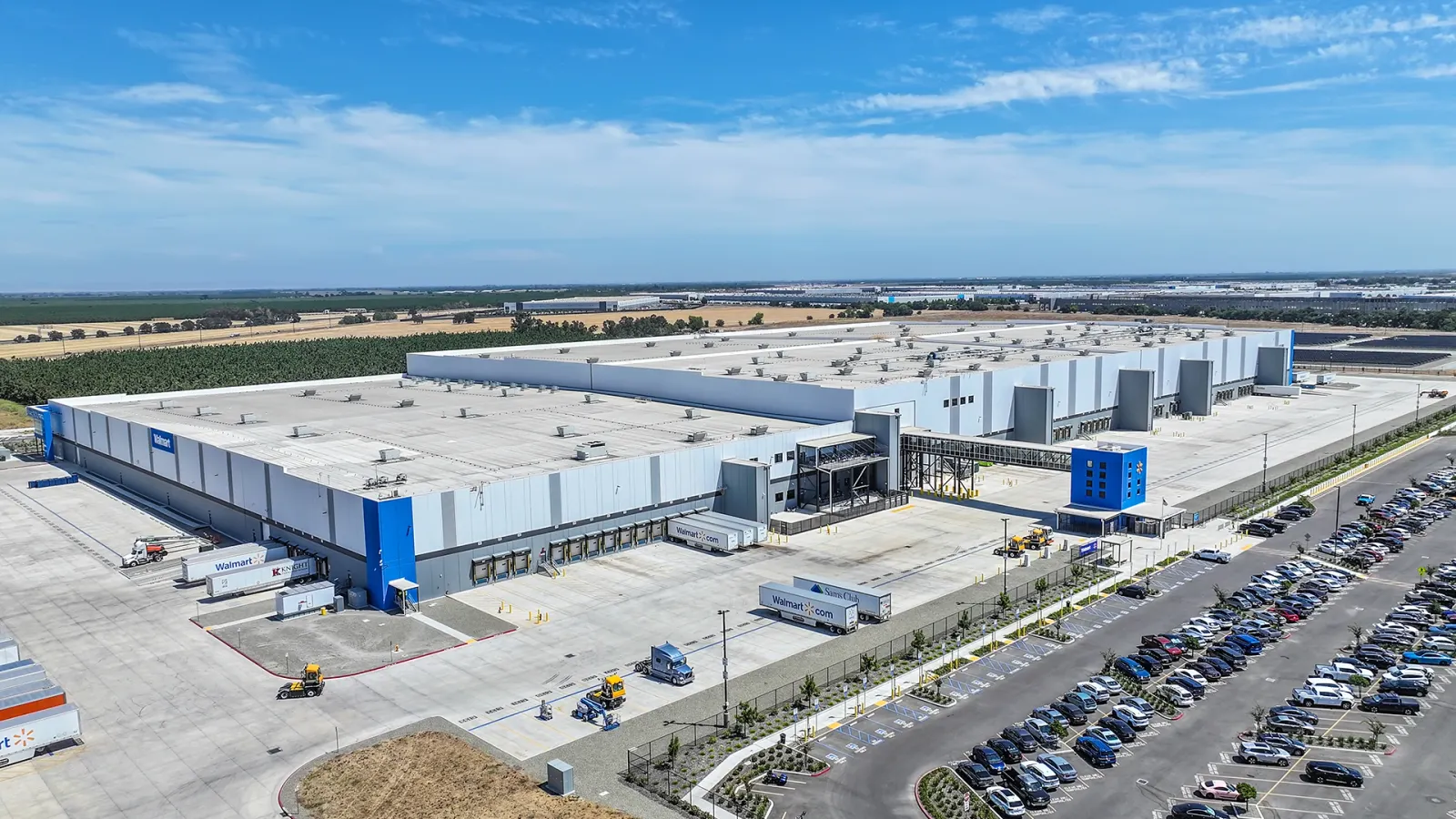
By Kelly Stroh | Supply Chain Dive
Published October 12, 2026
In a significant move to fortify its West Coast logistics infrastructure, Walmart has officially opened a massive, 900,000-square-foot “next-generation” fulfillment center in Stockton, California. The facility, which represents the latest evolution in the retail giant’s aggressive supply chain transformation, is designed to drastically increase order capacity while accelerating shipping speeds for customers across the region.
The Stockton site is the fifth of its kind in Walmart’s national network, signaling a decisive shift toward a high-tech, automated model of commerce. By integrating advanced machine learning, high-density robotics, and refined workflow processes, the retailer is attempting to rewrite the rules of modern logistics.
The Anatomy of a High-Tech Warehouse
The Stockton facility is not merely a larger version of a traditional warehouse; it is a fundamental redesign of the fulfillment process. At the heart of the operation is an automated storage and retrieval system (AS/RS) that functions as the site’s central nervous system.
In a conventional fulfillment center, the process of picking an item for a customer can involve a cumbersome 12-step journey. This often includes human associates walking long distances, navigating aisles, manually locating inventory, and performing repetitive physical labor. The Stockton site collapses this process down to just five steps.
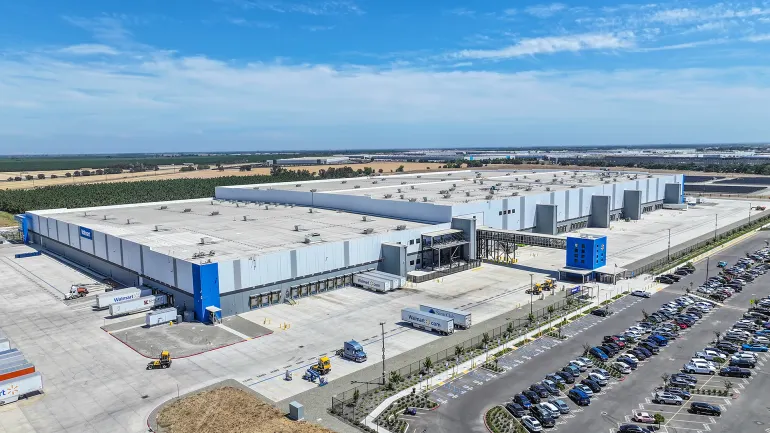
The system utilizes high-density storage modules that bring products directly to the associates. By eliminating the “walk time” and reducing the need for manual retrieval, the facility can process significantly higher volumes of inventory per hour. This, in turn, boosts the daily order capacity well beyond the limitations of legacy warehouses. The integration of machine learning allows the warehouse to anticipate demand, optimize the placement of high-velocity goods, and adjust storage density in real-time, ensuring that the facility remains agile in the face of fluctuating consumer demand.
A Chronology of Innovation: From Vision to Reality
The Stockton opening is the latest milestone in a strategic roadmap that Walmart first unveiled in 2022. Facing an increasingly competitive e-commerce landscape and rising consumer expectations for rapid delivery, the retailer announced a pivot toward “next-generation” facilities that would serve as the backbone of its national distribution network.
- June 2022: Walmart introduces the “next-generation” fulfillment concept, declaring that these high-tech sites—combined with its existing regional distribution centers—would eventually enable the company to offer next-day or two-day shipping to 75% of the U.S. population.
- September 2022: The first of these specialized facilities opens in Joliet, Illinois, providing a blueprint for future sites.
- Late 2022: The network expands to include a second high-tech hub near Indianapolis, Indiana.
- 2023–2025: Walmart continues the rollout, with strategic locations in Lancaster, Texas, and Greencastle, Pennsylvania, coming online. These locations were chosen specifically to bridge gaps in the regional supply chain, ensuring that key population centers had proximity to automated inventory nodes.
- October 2026: The Stockton facility goes live, completing a crucial piece of the puzzle for West Coast operations.
This phased rollout demonstrates a deliberate, calculated approach to capital expenditure. Rather than attempting a total, simultaneous overhaul, Walmart has spent the last four years refining the technology in smaller clusters, learning from the performance of the Joliet and Indianapolis sites to optimize the Stockton facility for maximum efficiency.
Data-Driven Growth: The Impact of Automation
The move toward automation is backed by substantial financial and operational data. Walmart has made it clear that its goal is to upgrade all 42 of its U.S. distribution centers with similar automation technology. Currently, more than 20 of these projects are in various stages of completion.
The financial commitment is staggering. In January of this year, for example, Walmart announced a $330 million investment in a Louisiana distribution center specifically to install robotics that would double the facility’s shipping throughput. These investments are not just about speed; they are about resilience. By shifting to a high-density, automated model, Walmart reduces its reliance on manual labor in roles that are prone to injury and turnover, thereby creating a more stable, predictable, and scalable supply chain.

Furthermore, these facilities are designed to handle an increasingly complex product mix. As Walmart continues to expand its third-party marketplace and broaden its e-commerce assortment, the ability to store and pick millions of SKUs (stock-keeping units) efficiently becomes a primary competitive advantage. The Stockton site is equipped to handle this complexity, leveraging data to keep the most popular items in the most accessible locations, while utilizing sophisticated inventory management software to track every unit with pinpoint accuracy.
Official Responses and Strategic Vision
In its October 8 press release, Walmart leadership emphasized that the Stockton facility is a direct response to evolving shopper habits. The company noted that as the digital and physical worlds continue to merge, the supply chain must become an engine of growth rather than a bottleneck.
“Our investment in Stockton is about more than just square footage,” a Walmart spokesperson noted. “It’s about deploying the right technology in the right locations to meet our customers where they are. By leveraging machine learning and advanced automation, we are creating a more responsive, faster, and more reliable supply chain.”
The company has also framed these investments as a way to improve the working environment for its associates. By removing the most physically taxing aspects of the job—such as heavy lifting and repetitive walking—the company aims to create a more ergonomic, tech-forward workplace that can attract and retain talent in a competitive labor market.
Wider Implications: The Future of Retail Logistics
The opening of the Stockton center carries broader implications for the retail industry. First, it sets a new benchmark for what is considered “standard” service. As major players like Walmart and Amazon continue to drive down the cost and time of fulfillment, smaller retailers will face immense pressure to modernize their own logistics or risk becoming irrelevant.

Second, the geographic distribution of these hubs suggests a shift away from centralized, mega-warehouses toward a more regionalized, decentralized network. By placing large, highly automated facilities in key geographic corridors, Walmart is minimizing the distance between the product and the doorstep. This reduces transportation costs—which have skyrocketed due to fuel volatility and driver shortages—and lowers the company’s overall carbon footprint, as fewer miles are traveled to deliver each package.
Finally, the Stockton project confirms that the era of “dumb” storage is effectively over. In 2026, a warehouse is not a place where items wait to be sold; it is a high-velocity processing plant where data and physical goods converge. As Walmart continues to iterate on this model, the lessons learned in Stockton will likely be applied to the remaining 20+ distribution centers currently awaiting upgrades.
Looking ahead, the retail giant’s supply chain will likely become increasingly autonomous. With the integration of AI, robotics, and predictive analytics, Walmart is moving toward a self-correcting supply chain that can reroute inventory and adjust labor allocations before a disruption even occurs. The Stockton facility is not just a building; it is a manifestation of the future of global retail.
As we look toward the remainder of the decade, the focus will undoubtedly shift from the construction of these facilities to the optimization of the network as a whole. For now, the Stockton fulfillment center stands as the latest proof that in the race for dominance, automation is the decisive factor.

 Dwi Wanna
 Asro
Asro
 Lina Irawan
 Nana
Nana
 Rifan Muazin
 Ali Ikhwan
 Evan Lee Salim
