
 Laily UPN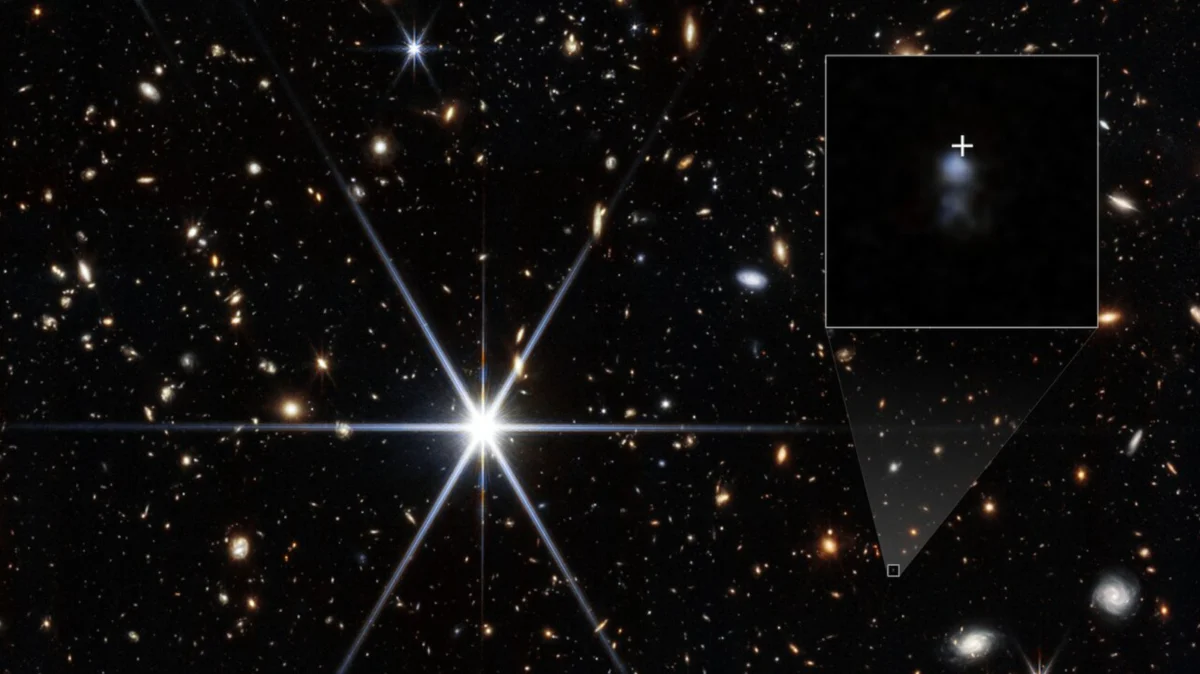
In a breakthrough that promises to reshape our understanding of the high-energy universe, astronomers using the James Webb Space Telescope (JWST) have successfully identified the host galaxy of the most distant Fast Radio Burst (FRB) ever recorded. This discovery, detailed in a study recently published in the journal Science, offers a tantalizing look into the violent, mysterious processes occurring in the early universe, providing a potential "smoking gun" for the origins of these enigmatic cosmic signals.
The Mystery of Fast Radio Bursts: A Cosmic Enigma
First discovered in 2007, Fast Radio Bursts (FRBs) remain one of the most compelling puzzles in modern astrophysics. These phenomena consist of intense, ultra-fast pulses of radio waves originating from deep space. Despite lasting only a fraction of a second—often milliseconds—an individual FRB can release as much energy in that fleeting moment as our Sun emits over the course of three entire days.
Since their discovery, astronomers have struggled to categorize them. Are they the result of cataclysmic collisions, the death throes of stars, or perhaps something even more exotic? Because these signals are so brief and originate from vast, unknown distances, pinpointing their exact "home address" in the cosmos has historically been a monumental challenge. However, the 2024 detection of a particularly distant FRB, captured by the MeerKAT radio telescope array in South Africa, provided a unique opportunity for the James Webb Space Telescope to turn its unparalleled infrared gaze toward the event’s origin.
Chronology of a Discovery
The journey to this discovery began in 2024, when the MeerKAT array—a precursor to the massive Square Kilometre Array—snapped the signal of an FRB from a region of space so distant it pushed the boundaries of current detection capabilities.
- The Detection (2024): The MeerKAT telescope array captures a signal of unprecedented distance. By measuring the "dispersion" of the radio waves—the way the signal is delayed and spread out as it travels through ionized gas across the universe—scientists confirmed this was the farthest FRB ever documented.
- The Hunt for the Host: Armed with the precise coordinates provided by MeerKAT, a team of international astronomers led by Manisha Caleb of the University of Sydney directed the James Webb Space Telescope toward the source.
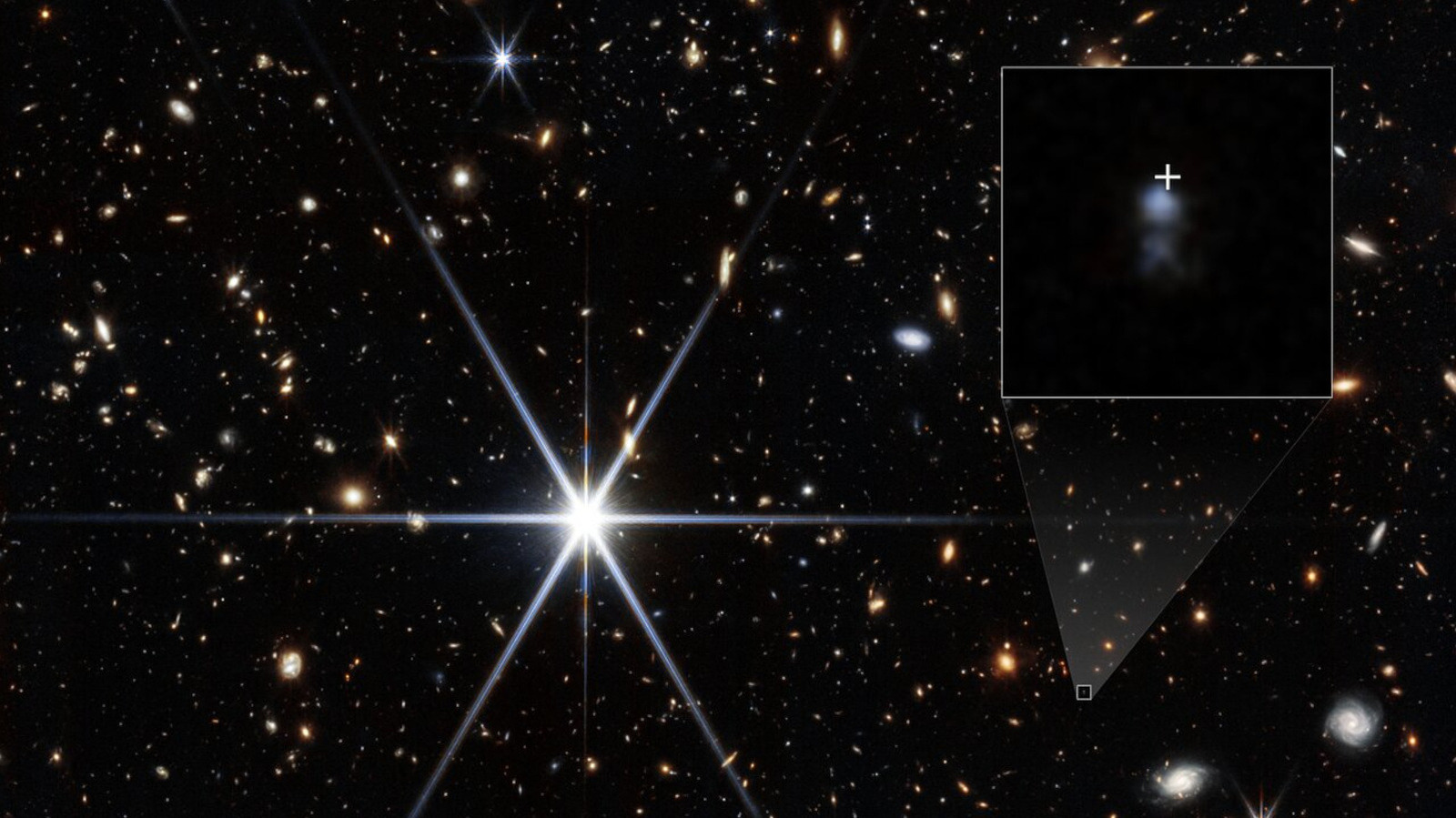
- The Infrared Breakthrough: Webb, utilizing its Near-Infrared Camera (NIRCam), peered through the obscuring dust and light of the intervening space. It successfully identified a faint, small galaxy at the exact location of the burst.
- Spectral Analysis: By analyzing the light from this galaxy, the team determined its "redshift"—the degree to which its light has been stretched by the expansion of the universe. This revealed that the burst occurred when the universe was only about 3 billion years old, placing the event in a cosmic epoch defined by intense, rapid star formation.
Supporting Data: Challenging the Conventional Wisdom
The data gathered by Webb has surprised the scientific community, primarily because the host galaxy does not fit the profile of previously studied FRB sources.
A Galactic Anomaly
Until this observation, the vast majority of FRBs had been traced back to massive, mature galaxies. These galaxies were typically identified as sites of ongoing, stable star formation, leading many researchers to believe that the mechanisms triggering these bursts required long timescales to evolve.
However, the galaxy identified by Webb is a stark outlier. It is roughly 1,000 times smaller than the galaxies associated with previous, closer-in FRBs. Furthermore, this galaxy existed during a period of the universe’s history where star formation was occurring at an accelerated, chaotic pace. Finding an FRB in such a young, small, and turbulent environment suggests that the trigger for these events does not necessarily require the long, slow evolution of a massive stellar system.
The Physics of the Pulse
The research team measured the burst’s characteristics against the current prevailing theories of FRB generation. There are two primary schools of thought:
- The Binary Merger Theory: This hypothesis suggests that FRBs are caused by the collision of two neutron stars. Neutron stars are the ultra-dense, collapsed remnants of massive stars. Because it takes billions of years for binary systems to spiral inward and merge, this theory inherently assumes that FRBs should only originate from older, evolved galaxies.
- The Magnetar/Supernova Theory: This theory posits that FRBs are the result of a massive star exploding in a supernova, leaving behind a "magnetar"—a neutron star with an exceptionally powerful magnetic field. Unlike the merger model, this process can occur much more rapidly following the birth of a massive star.
Official Responses and Scientific Implications
"Our work suggests that it’s very unlikely that this FRB was produced by a merger," said Dr. Manisha Caleb, lead author of the study. The implication of her team’s findings is significant: the presence of an FRB in a galaxy that is only 3 billion years old strongly favors the supernova/magnetar origin theory.
"If the burst came from a merger, we would have expected to see an older, more stable galactic environment," Caleb explained. "Instead, we are looking at a young, active, and compact system. This provides strong evidence that some FRBs are indeed the byproduct of the dramatic end-of-life cycle of massive stars."
The broader scientific community has lauded the study as a masterclass in multi-wavelength astronomy. By combining the radio sensitivity of the MeerKAT array with the infrared precision of the James Webb telescope, researchers have effectively created a new template for how to track the most elusive signals in the cosmos.
Implications for Future Research
The identification of this host galaxy is more than just a notch on a belt for astronomers; it opens a new window into the history of the universe.
Mapping the Early Universe
Fast Radio Bursts act as "cosmic probes." As they travel from their distant, ancient homes to our detectors, they pass through vast clouds of gas and dust. By analyzing the way these signals are modified by that matter, scientists can map the distribution of "missing" baryonic matter (normal matter) in the intergalactic medium. This helps bridge the gap in our understanding of how galaxies evolved from the early, turbulent state of the universe to the structured systems we see today.
Refining the "Magnetar" Model
If the scientific consensus shifts firmly toward the magnetar model, it will change how we view the life cycles of stars in the early universe. It suggests that the formation of extreme magnetic objects was a relatively common byproduct of the high-velocity star formation that occurred in the first few billion years of cosmic history. This has profound implications for our models of galaxy formation and stellar evolution.
The Next Steps
The team plans to use the James Webb Space Telescope to hunt for more distant FRBs. With every new host galaxy identified, the statistical sample grows. If the trend holds—that these bursts are consistently found in younger, smaller, and more active galaxies—it will confirm that our understanding of stellar death in the early universe has been, until now, incomplete.
Furthermore, this research underscores the vital importance of international collaboration. The synthesis of data from the MeerKAT array in South Africa, the analysis by the University of Sydney, and the imaging capabilities of the NASA/ESA/CSA-operated Webb telescope demonstrates how modern science requires a global infrastructure to capture events that occur in the blink of an eye, billions of light-years away.
Conclusion
The discovery of the host galaxy for this record-breaking Fast Radio Burst serves as a testament to human ingenuity. By peering into the deep past, we have found that the universe is far more violent and active in its youth than we previously dared to imagine. As we continue to refine our ability to track these "echoes from the dawn of time," we inch closer to solving the mystery of what these powerful, fleeting signals are trying to tell us about the fundamental laws of nature.
The silence of the deep cosmos is rarely truly silent; it is filled with the energetic remnants of stars that lived, died, and transformed their galaxies long before our own solar system was even a glimmer in the interstellar dust. With the James Webb Space Telescope leading the way, we are finally beginning to listen.


 Lina Irawan
 Suro Senen

 Iffa Jayyana
 Rifan Muazin

 Lina Hope