
 Ammar Sabilarrohman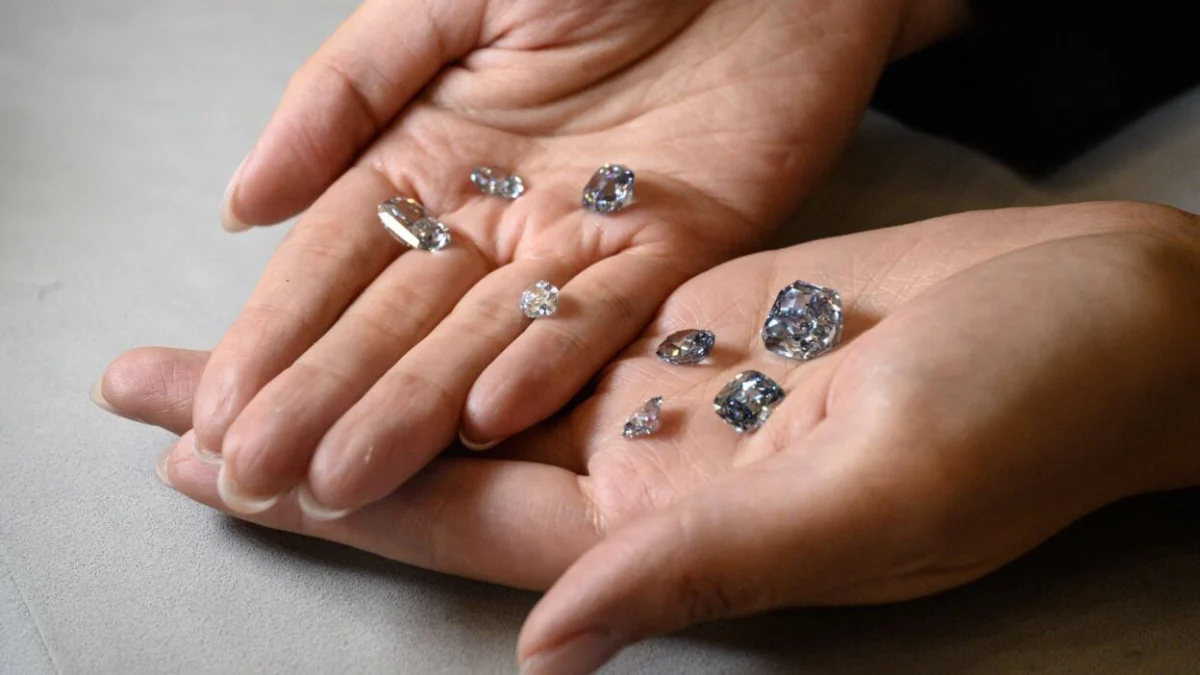
TikTok Shop, the e-commerce arm of the ubiquitous short-form video app, has successfully moved beyond selling niche pickle kits and questionable wellness supplements. Its latest, most glitzy obsession is far more permanent: loose, lab-grown diamonds.
In a digital landscape defined by the "scroll-to-buy" economy, these rapid-fire livestream auctions have transformed the typically formal, intimidating world of fine jewelry into an impulsive, late-night habit. For a new generation of consumers, purchasing a diamond is no longer a milestone reserved for engagements or major anniversaries; it is a 15-second decision made from the comfort of their beds.
The Mechanics of the "Diamond Rush"
The phenomenon is driven by high-energy, QVC-style livestreams that feel like a cross between a high-stakes auction house and a late-night variety show. Accounts such as Royale Diamonds have mastered the art of the "mega-live," utilizing bright studio lighting, fast-talking hosts, and a relentless sense of urgency to keep viewers glued to their screens.
The process is designed for maximum dopamine release. A host holds a loose, lab-grown stone under high-intensity lights, briefly flashes the International Gemological Institute (IGI) grading report, and initiates a countdown—often lasting as little as 10 to 30 seconds. Bids race across the screen as the host urges viewers to "keep tapping." When the clock expires, a winner is announced, and the next stone is immediately thrust into the frame. The transition is so rapid that viewers are often left with no time to second-guess their financial commitment.

A Chronology of the Trend
The ascent of TikTok diamond auctions didn’t happen overnight, but it has accelerated with startling velocity throughout the summer of 2026.
- June 2026: Reports begin to surface of users stumbling into "diamond-auction rabbit holes." Early adopters document their initial, tentative purchases, often expressing surprise at the ease of the process.
- July 2026: The trend gains cultural traction. Social media users start sharing videos of their growing collections, comparing carat weights, and debating custom jewelry settings. The language of "collecting" begins to replace the language of "buying."
- August 2026: The "mega-live" format is perfected. On August 23, 2026, Royale Diamonds hosted a nine-hour streaming marathon, treating the event like a telethon. By this point, the trend has become a recognized subculture, with buyers comparing themselves to "Thanos gathering Infinity Stones."
The Economics of Lab-Grown Affordability
The primary driver behind this shift is the proliferation of lab-grown diamonds. These stones possess the same chemical, physical, and optical properties as mined diamonds but are produced in controlled environments, significantly lowering the cost of entry. As manufacturing technology has advanced and scaled, market prices have plummeted, with many stones now trading for $100 to $200 per carat.
This price point has fundamentally altered the consumer relationship with fine jewelry. For many, the thrill isn’t just in the ownership, but in the "hunt." One buyer, who admitted to purchasing over 50 gemstones in a single month, noted that the addictive nature of the live-auction format creates a sense of competition that traditional retail simply cannot replicate.
However, the affordability of the stone is often a "gateway cost." Once a buyer possesses a loose diamond, they are often faced with the additional expense of setting the stone—a process that can easily cost more than the diamond itself. A 3.78-carat stone purchased for $500 might end up costing $1,600 once it is professionally set into a 14-karat gold ring.

Data and Market Implications
The diamond craze is merely a symptom of a much larger, more aggressive expansion of TikTok Shop. According to recent market data, global spending on the platform reached $50.3 billion in the first half of 2026—a staggering 92 percent increase year-over-year. In the United States alone, shoppers spent $11.8 billion in that same period.
Key Metrics of Success:
- Retail Dominance: By July 2026, TikTok Shop captured 2 percent of total U.S. online retail spending.
- Surpassing Giants: Spending on the platform has reportedly overtaken the individual online retail businesses of industry stalwarts like Target, Costco, and Home Depot.
- The Power-User Effect: A small cohort of "super-shoppers"—those who made at least 20 purchases in Q2—accounts for roughly 30 percent of total platform spending.
- Demographic Shift: While TikTok is traditionally associated with younger demographics, consumers over the age of 35 are currently the fastest-growing segment on the platform, lending credibility and purchasing power to the livestream shopping model.
Consumer Protection and Ethical Concerns
The ease of these transactions brings significant risks. TikTok’s policy requires sellers to provide documentation and prohibits fraudulent or misleading product descriptions. However, the nature of a live broadcast introduces variables that can be difficult to manage.
Industry experts warn that bright, artificial lighting can effectively mask inclusions, color tints, or cut imperfections that would be obvious in a physical store. Furthermore, while many of these stones come with IGI certification, the onus is on the consumer to verify these reports. The Federal Trade Commission (FTC) mandates that sellers must clearly disclose that lab-grown diamonds are not mined, a requirement that platforms must enforce to maintain legal compliance.
Perhaps most importantly, TikTok Shop categorizes these auction purchases as "final sales." If a buyer experiences "purchaser’s remorse"—a common occurrence given the impulsive nature of the auctions—there is often no recourse. A three-carat oval diamond, while beautiful, is a significant financial commitment that cannot simply be returned because the buyer decided it didn’t fit their aesthetic.

The Future of "Appointment Shopping"
The success of these auctions reveals a pivot in how we conceive of "appointment television." When families gather to watch a jewelry auction on a living room TV, they aren’t just shopping; they are being entertained. There is always the promise of a "better" stone coming next—a bigger carat, a rare pink or blue hue, or a unique cut—that keeps the audience engaged for hours.
TikTok has effectively gamified the retail experience. By merging the entertainment of a live broadcast with the instantaneous nature of a "Buy Now" button, the platform has created a feedback loop that thrives on immediacy.
As we look toward the future of e-commerce, the diamond auction model serves as a case study in behavioral psychology. It proves that consumers are willing to bypass traditional retail safeguards if the experience is sufficiently immersive and the price point is accessible enough to satisfy the impulse for "adult toys." Whether this is a sustainable business model for fine jewelry or a fleeting trend remains to be seen, but for now, the sparkle of a lab-grown diamond is proving to be the ultimate hook for the social media age.

 Reynand Wu
 Iffa Jayyana
 Raul Delapena Setiawan

 Sagoh
Sagoh

 Azzam Bilal Chamdy
 Ali Ikhwan