
 Lina Hope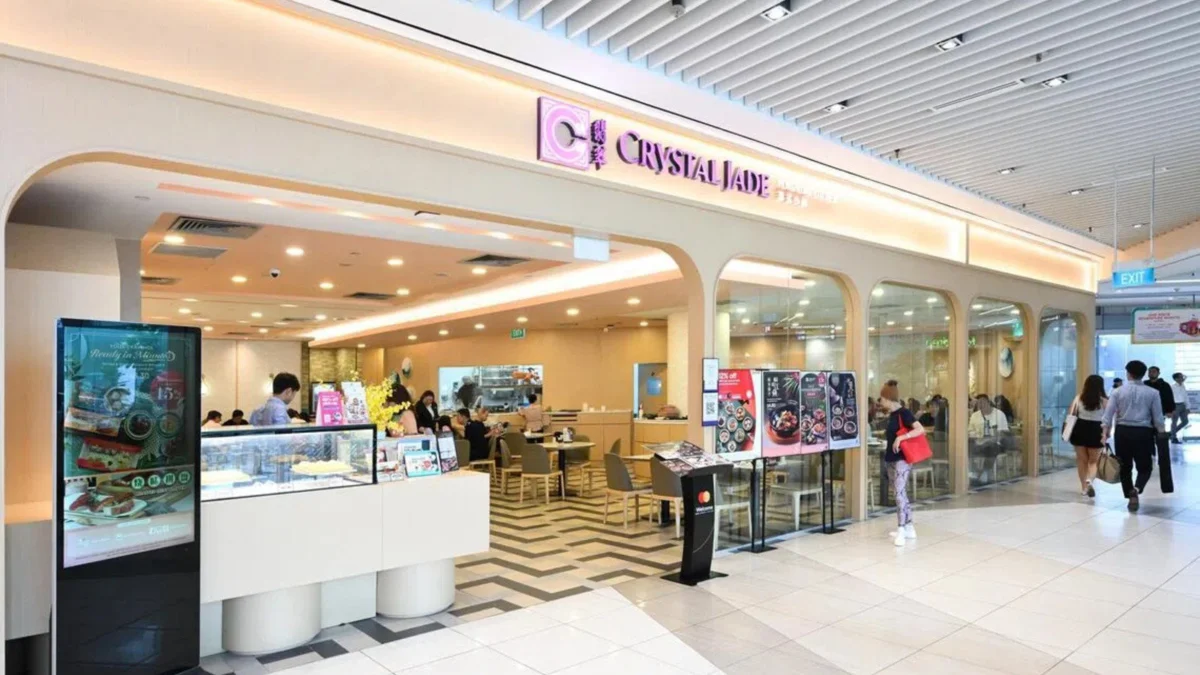
The Singapore food and beverage (F&B) landscape, long known for its vibrancy and resilience, has been shaken by the news of significant restructuring at one of its most iconic culinary institutions. Crystal Jade, a household name synonymous with high-quality Chinese cuisine and Michelin-starred excellence, has announced the closure of four major outlets and the retrenchment of approximately 120 employees. This strategic pivot, managed by court-appointed receivers, comes as the group prepares for a proposed sale of its business operations in Singapore and Hong Kong.
As the brand navigates this turbulent period of transition, the Food, Drinks and Allied Workers Union (FDAWU) and NTUC’s Employment and Employability Institute (e2i) have mobilized rapidly to provide a safety net for the affected workers. The situation underscores the volatile nature of the post-pandemic hospitality sector and the critical importance of tripartite support systems in managing large-scale corporate displacements.
Main Facts: A Strategic Downsizing
The restructuring measures, which were made public in early October, represent a significant reduction in Crystal Jade’s footprint within the city-state. The four affected outlets, which ceased operations on Tuesday, October 6, include:
- Crystal Jade La Mian Xiao Long Bao at Bugis Junction.
- Crystal Jade La Mian Xiao Long Bao at Toa Payoh (HDB Hub).
- Crystal Jade La Mian Xiao Long Bao at i12 Katong.
- Crystal Jade GO at Oasis Terraces in Punggol.
The closure of these venues resulted in the issuance of termination notices to roughly 120 staff members. Following these closures, Crystal Jade’s remaining presence in Singapore consists of nine operating outlets, supported by a consolidated workforce of approximately 210 employees.
This move is not merely an isolated operational decision but part of a broader financial restructuring overseen by Kroll, a global advisory firm. Representatives from Kroll were appointed as receivers over the holding companies of Crystal Jade’s operations in both Singapore and Hong Kong on September 29. According to Kroll, the primary objective of this restructuring is to streamline the business and stabilize its financial health ahead of a proposed sale to new ownership.
Chronology: From Receivership to Retrenchment
The timeline of events leading to the current situation highlights the speed at which corporate restructuring can unfold in the fast-paced retail environment:
- September 29 (Tuesday): Representatives from the advisory firm Kroll are formally appointed as receivers for the holding companies governing Crystal Jade’s Singapore and Hong Kong operations. This appointment signals a formal intervention to manage the company’s assets and liabilities.
- Early October: Internal assessments are conducted to identify underperforming or non-core outlets that could be liquidated to improve the brand’s overall valuation and operational efficiency.
- October 6 (Tuesday): The four identified outlets at Bugis Junction, Toa Payoh, i12 Katong, and Oasis Terraces officially cease operations. Affected staff members are briefed on the situation and provided with termination notices.
- October 7 (Wednesday): Kroll issues a public statement confirming that restructuring measures have been implemented for the Singapore business. Simultaneously, the Food, Drinks and Allied Workers Union (FDAWU) confirms its involvement in supporting the displaced workers.
- Post-October 7: A coordinated communications exercise is launched by Crystal Jade management, FDAWU, and e2i to facilitate immediate job placement and financial guidance for the 120 affected individuals.
Supporting Data: The Scale of Impact and Recovery Efforts
The retrenchment of 120 workers represents a nearly 36% reduction in the brand’s reported workforce in Singapore (based on the current figure of 210 remaining staff). To mitigate the impact of this sudden loss of livelihood, labor organizations have stepped in with substantial resources.
Job Placement Metrics
The FDAWU and e2i have curated a repository of more than 400 job opportunities specifically targeted at the skill sets of the displaced Crystal Jade staff. These roles span several critical sectors of the economy:
- Food Manufacturing: Production and quality control roles.
- Food Services: Service staff, kitchen crews, and management positions.
- Hospitality: Front-of-house and back-of-house roles in hotels.
- Wholesale and Retail: Customer service and logistics.
Direct Employer Engagement
Recognizing the immediate need for income stability, the union and e2i facilitated on-site interviews with major industry players. High-profile employer partners who participated in the recruitment drive included:
- Paris Baguette (Bakery and Cafe)
- Neo Group Bakery (Catering and Retail)
- Din Tai Fung (A direct competitor in the Chinese culinary space, signaling industry-wide solidarity)
Union Support Packages
Despite Crystal Jade being a non-unionized company, the FDAWU extended its full suite of services to affected members. This included:
- On-the-ground assistance: Union representatives were present during the termination briefings to answer legal and procedural queries.
- Care Packs: Distribution of daily essentials and groceries to provide immediate relief.
- Career Coaching: Access to e2i’s network of 28 touchpoints across Singapore for personalized career guidance.
Official Responses: A Tripartite Approach to Crisis
The response from labor and advisory bodies has focused on transparency and the proactive management of worker welfare.
Kroll’s Statement:
As the appointed receivers, Kroll emphasized that the restructuring was a necessary step to ensure the long-term viability of the brand. The firm noted that the measures were "implemented for the Singapore business" to optimize the portfolio ahead of the proposed sale, suggesting that the lean-down was intended to make the company more attractive to potential investors.
FDAWU’s Stance:
In a statement shared with Human Resources Online, the FDAWU expressed a sense of urgency and responsibility. "While Crystal Jade is a non-unionised company, FDAWU was approached by the appointed receivers to support affected union members and workers," the union stated. They further noted they were "heartened to have been proactively engaged by the receivers," which allowed them to act promptly during a period of intense uncertainty.
e2i’s Role:
NTUC’s e2i highlighted the availability of its career coaching services. They encouraged workers to utilize the 28 touchpoints across the island or contact their hotline for immediate assistance. The focus remains on "employability," ensuring that the culinary skills honed at Crystal Jade are quickly transferred to other growing brands in the F&B sector.
Implications: The Changing Face of Singapore’s F&B Sector
The restructuring of Crystal Jade is more than just a corporate headline; it serves as a bellwether for the broader challenges facing the "Mid-to-High" tier dining segment in Singapore.
1. The Reality of "Receivership"
The appointment of receivers often carries a negative connotation, but in the corporate world, it is a tool for preservation. For Crystal Jade, this process suggests a desire to save the brand rather than liquidate it entirely. By closing less profitable outlets and reducing headcount, the receivers are attempting to present a "clean" balance sheet to potential buyers. This is a common strategy in M&A (Mergers and Acquisitions) where a legacy brand needs a fresh start.
2. Labor Market Fluidity
The fact that 400 job openings were immediately available for 120 workers highlights the current tightness of Singapore’s labor market, particularly in F&B and hospitality. While the displacement is traumatic for the individuals involved, the high demand for skilled culinary and service staff means that most affected workers are likely to find new employment quickly. The involvement of Din Tai Fung—a primary rival—in the hiring process is particularly telling, as it shows that talent, rather than brand loyalty, is the primary currency in the current market.
3. The Non-Unionized Safety Net
The Crystal Jade case sets a significant precedent for labor relations in Singapore. It demonstrates that the NTUC and its affiliated unions (like FDAWU) are willing and able to intervene even in companies where they do not have a formal collective agreement. This "proactive engagement" model ensures that workers are not left to navigate complex retrenchment benefits and job searches alone, regardless of their company’s union status.
4. Broader Industry Pressures
Crystal Jade is not the only brand feeling the pinch. The recent closure of the last OldTown White Coffee outlet at Kallang Wave Mall after 12 years further illustrates the pressure of rising operational costs, including rent and raw materials. For a brand like Crystal Jade, which operates on high-quality ingredients and labor-intensive processes (such as the hand-folding of Xiao Long Bao), the margins are constantly under threat.
5. Future Outlook for the Brand
With nine outlets remaining, Crystal Jade is far from disappearing. However, the "new" Crystal Jade that emerges from this sale will likely be a leaner, more digitally-integrated, and perhaps more "fast-casual" oriented entity. The closure of the "GO" outlet at Oasis Terraces—a more casual concept—suggests that even newer experimental formats are being scrutinized for their return on investment.
In conclusion, while the closure of these four outlets marks the end of an era for many regular patrons at Bugis or Toa Payoh, the swift intervention of the FDAWU and e2i provides a blueprint for how corporate restructuring should be handled: with a focus on human dignity and rapid re-employment. As the sale of the business progresses, the industry will be watching closely to see who takes the reins of this storied culinary brand and how they plan to navigate the increasingly complex Singaporean dining scene.


 Pevita Pearce
 Suro Senen
 Laily UPN
 Iffa Jayyana
 Rifan Muazin


 Lina Irawan