
 Jia Lissa
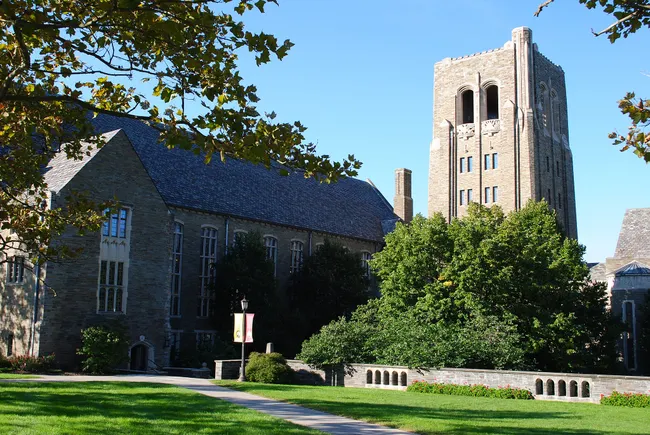
The halls of Cornell University, once synonymous with academic prestige and Ivy League tradition, are currently engulfed in a firestorm of controversy. At the center of this turmoil is a harrowing case of alleged sexual assault that has evolved from a private tragedy into a public referendum on the administration’s commitment to student safety, transparency, and institutional integrity. As the university faces a burgeoning faculty revolt, the leadership of Interim President Michael Kotlikoff is under unprecedented scrutiny.
The Genesis of the Allegations
The catalyst for the current crisis is a civil lawsuit filed this September by a former student, identified in court documents as Jane Doe. According to the filing, Doe was drugged and gang-raped at the Cornell chapter of the Chi Phi fraternity in October 2024. Doe, who reported the incident to university officials the following month, claims the trauma of the event was compounded by an administration that she alleges failed to handle her case with the necessary urgency, sensitivity, or procedural fairness.
The lawsuit names not only the alleged perpetrators—who have vehemently denied the claims—but also Cornell University itself, accusing the institution of systemic failures in its Title IX adjudication processes. The case brought the incident into the national spotlight, forcing the university to confront long-standing criticisms regarding how it manages campus sexual violence.
A Chronology of the Conflict
October 2024: The Incident
The alleged assault occurred at the Cornell chapter of the Chi Phi fraternity. In the weeks that followed, social media discussions regarding the incident began to circulate among the student body, yet the university’s official response remained largely opaque.
Late 2024–Early 2025: Administrative Investigation
Following Doe’s report, Cornell initiated a Title IX investigation. While the university claims it imposed "temporary suspensions and other restrictive measures" during the probe, it has remained tight-lipped regarding the final outcomes. The Chi Phi fraternity’s chapter was ultimately closed and barred from campus, a move the administration points to as evidence of accountability.
September 2026: The Lawsuit and Public Outcry
The filing of the civil suit against the alleged perpetrators and the university brought the issue to the forefront of the academic year. The lawsuit coincided with a surge in student activism, with many calling for a complete overhaul of the university’s disciplinary apparatus.
October 2026: The Faculty Revolt
On October 14, the Cornell faculty senate began formal deliberations regarding a potential vote of no-confidence in President Kotlikoff. The tension was exacerbated by an open letter from faculty members, who accused the administration of "concealing its workings and protecting its perpetrators."
The situation took a turn for the controversial when it was revealed that a letter sent by Doe to faculty leadership—detailing a conversation in which she alleged Kotlikoff questioned the timing of her reporting—was reportedly withheld from the faculty senate members by the administration. The letter was eventually published by The New York Times, fueling accusations of institutional suppression.
The Structural Critique: Faculty and Student Perspectives
The discontent at Cornell extends beyond a single case; it reflects a deeper, systemic frustration with the university’s governance. The open letter penned by faculty members this month serves as a searing indictment of the current campus climate.
"We will not allow the horrific sexual violence experienced by Jane Doe and others in our community to be swept under the rug," the letter stated. The faculty signatories drew a pointed comparison between the university’s handling of sexual assault cases and its response to nonviolent student protesters, noting that students who engaged in civil disobedience during campus demonstrations often faced harsher disciplinary consequences than those accused of sexual violence.
The faculty further argued that Cornell’s restrictive policies regarding free speech and expression have cultivated a "chilling effect" on the campus community. By prioritizing institutional reputation over transparency, the administration has, according to the letter, fostered a culture of "unquestioned loyalty" that encourages groupthink and inevitably leads to victim-blaming.
The student body, represented by the editorial board of The Cornell Daily Sun, has mirrored these sentiments. In a scathing editorial published last month, the board described the situation as part of a "morbid pattern" of institutional failure. "Administrators have allowed the idea that enough ambiguity, enough he-said-she-said, enough familial connections, enough money will allow you to get off scot-free," the board wrote, calling for external, independent investigations as the only remedy for what they perceive as a broken internal system.
Official Responses and Defensive Maneuvers
The administration has found itself on the defensive, attempting to balance legal obligations with the growing demand for accountability. In a series of statements, Cornell has maintained that its actions were bound by federal privacy laws, which prohibit the disclosure of specific details regarding student disciplinary records, including the number of expulsions or the specific nature of sanctions issued.
Regarding the specific allegations made by Jane Doe in her letter to faculty—that Kotlikoff had questioned why she waited to report the assault—a university spokesperson offered a firm rebuttal. The administration claimed that the account was "incorrect" and that the President’s question was directed at bystanders who had failed to utilize the university’s anonymous tip line, rather than at the survivor herself. "He was not questioning Jane Doe’s reporting," the spokesperson insisted.
In an effort to mitigate the public relations crisis, the university announced that former U.S. Deputy Attorney General Sally Yates would lead an independent review into the university’s policies on sexual misconduct. Furthermore, the administration suspended all social events at fraternity houses for the remainder of the academic year and pledged to bolster the staff within the university’s civil rights office.
In an October 10 video message, President Kotlikoff acknowledged the disconnect between the administration and the community. "There are real legal and privacy limits on what we can say, but we will make a greater effort to explain what we can, to provide context about the actions Cornell has taken and to be more transparent," he stated. However, for many students and faculty members, these measures have been viewed as "too little, too late."
Broader Implications for Higher Education
The crisis at Cornell is emblematic of a broader struggle within American higher education: the tension between protecting an institution’s legal interests and meeting the moral imperative of protecting students.
The reliance on Title IX as a primary vehicle for investigating sexual assault has been criticized by advocates who argue that universities lack the investigative expertise and impartiality to handle cases of criminal magnitude. When universities act as both judge and jury, they often prioritize the avoidance of litigation over the pursuit of justice, leaving survivors feeling marginalized and the accused questioning the validity of the process.
Furthermore, the "chilling effect" cited by the faculty points to a crisis of governance. When faculty lose faith in their leadership, the university’s ability to function as a space for open inquiry is compromised. The debate at Cornell is no longer just about a single fraternity house or a single case of assault; it is a fundamental debate about what a university owes its students.
As the Faculty Senate continues its deliberations, the administration’s future remains precarious. Whether the appointment of an outside investigator like Sally Yates will be enough to restore trust remains to be seen. For now, Cornell stands as a cautionary tale for institutions across the country, illustrating that in the absence of absolute transparency, the perception of protectionism can be just as damaging as the failures themselves.
The road ahead for Cornell will likely require more than just procedural changes; it will require a complete cultural reckoning. As the faculty noted in their apology for failing to protect students in the past, the path to integrity is rarely found in silence, but in the difficult, often uncomfortable work of public accountability. For Jane Doe and the thousands of students watching, the university’s next steps will define the legacy of the current administration and the future of the Cornell community.


 Layla Zulfa

 Ali Ikhwan

 Ammar Sabilarrohman

 Asep Darmawan

 Asro


 Nila Kartika Wati

 Muslim
