
 Azzam Bilal Chamdy
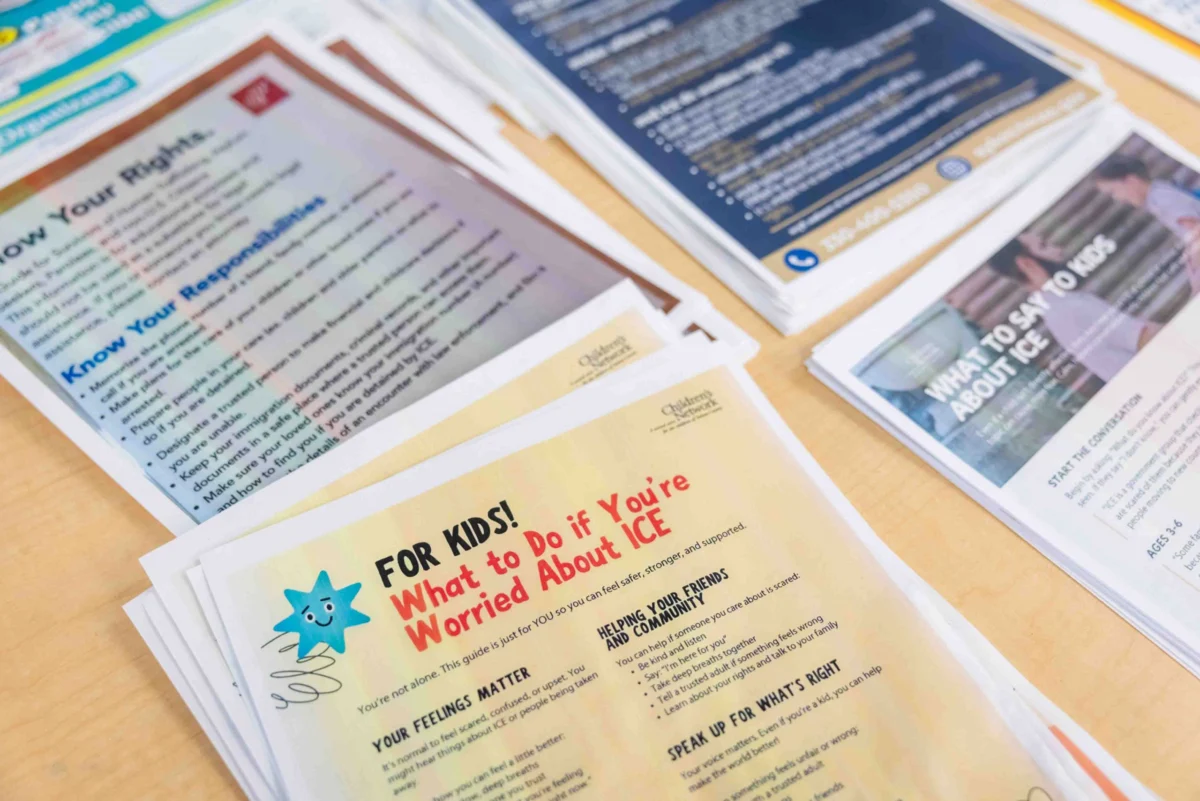
In the quiet, dusty corners of a Southern California elementary school, the simple game of foursquare serves as a microcosm for a much larger, more volatile national crisis. For most third graders, the rules of the game are absolute: hit the ball, stay in the square, accept the out. But for nine-year-old “Emma,” every game is a reminder that the rules of her world are not just arbitrary—they are existential.
When Emma is called out, she doesn’t just lose a game; she experiences a visceral, tear-streaked rejection of fairness. As an educator who has watched her grow, I know that her frustration is not merely about a ball hitting the pavement. It is the grief of a child whose family has spent years attempting to navigate a labyrinthine legal system, only to be met with shifting goalposts and the constant, chilling threat of deportation. In the classroom, I am tasked with being the steady hand, the voice of reason that insists rules matter. But how do I reconcile that instruction when, in the world outside our gates, the rules are being dismantled by those who view children as nothing more than political leverage?
The Fractured Reality of the Modern Classroom
The anti-immigrant movement in the United States has successfully reduced millions of children to constitutional hypotheticals and cold demographic statistics. By framing immigration through a lens of national security and economic grievance, political architects have effectively stripped the human element from the discourse. However, the consequences of these policies are not confined to the halls of Congress or the sanitized pages of government reports. They ripple directly into our neighborhoods, our classrooms, and our playgrounds.
For teachers, this creates an impossible cognitive dissonance. We are trained to provide consistency, structure, and emotional safety to our students. We are the “adults in the room” intended to shield children from the anxieties of the adult world. Yet, when a child like Emma looks at me with eyes that have seen the fear of a potential ICE raid at her kitchen table, my insistence that “rules matter” feels like a cruel irony.
The chaotic, legally blurry reality created by modern immigration policy shapes the developmental landscape for millions of children. If the state is an entity that changes its mind about a family’s right to exist within its borders, how can a child possibly find the internal security required to learn, play, and take risks?
Chronology of a Policy Shift: From Protection to Scapegoating
The current climate of instability is not a sudden phenomenon but the culmination of decades of organized political messaging. For years, immigrants have been positioned as convenient scapegoats for a host of complex, systemic social issues—inflation, the erosion of the middle class, the burden on public health infrastructure, and even moral panics regarding public safety.
Under the Trump administration, this rhetoric was codified into aggressive policy. The strategy was twofold: first, to expand the machinery of deportation, and second, to systematically restrict legal pathways for immigration. This transition shifted children from being collateral victims of policy to being direct, intentional targets of state pressure.
The timeline of this escalation is marked by significant, traumatic milestones:
- The Era of Separation: The implementation of "zero tolerance" policies at the border saw thousands of children forcibly separated from their parents, a move that human rights organizations and pediatricians have condemned as a form of state-sanctioned trauma.
- The Erosion of Asylum: The systematic narrowing of asylum criteria has left vulnerable families in legal limbo, often stranded in dangerous conditions while their cases languish.
- The Legislative Assault: Recently, state-level efforts have begun to openly defy established legal precedents, most notably Plyler v. Doe.
The Threat to Plyler v. Doe: A Moral Pivot Point
Perhaps the most dangerous development in current education policy is the coordinated attempt by various states to overturn the 1982 Supreme Court ruling Plyler v. Doe. This landmark decision established that all children, regardless of immigration status, are entitled to a public education. The logic was simple and profound: the state has a vested interest in an educated citizenry, and children should not be penalized for the legal status of their parents.
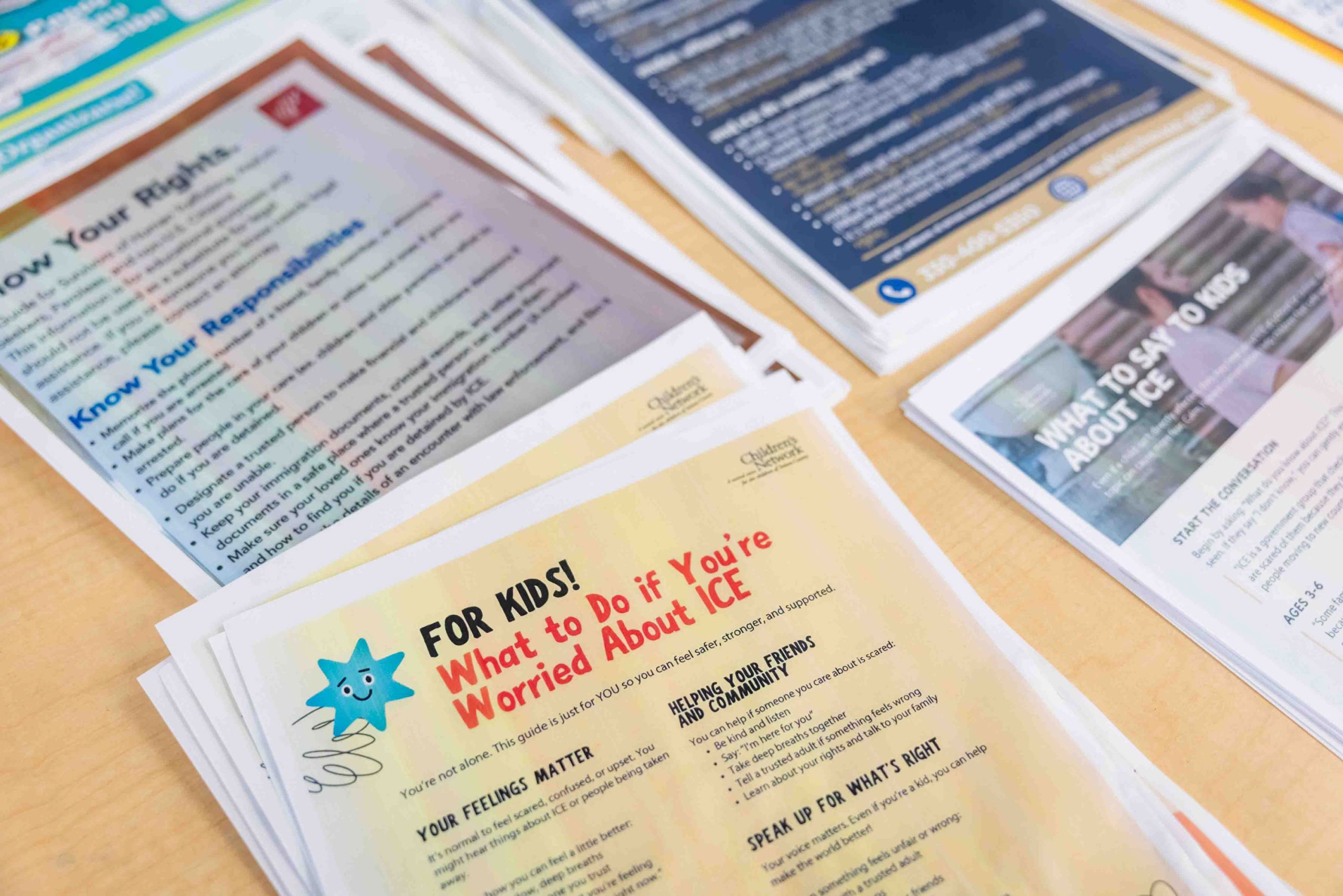
Today, however, the GOP is actively courting a legal challenge to this precedent. By proposing laws that require schools to identify and report the immigration status of students, proponents hope to force a case to the Supreme Court. The explicit goal is to fundamentally rewrite the social contract regarding the rights and value of children in America.
The rhetoric supporting these initiatives is as inflammatory as it is exclusionary. Figures like Oklahoma state Republican Rep. Mike Ritze have openly questioned the state’s obligation to educate noncitizens, suggesting that schools should act as enforcement arms for ICE. Such language transforms the sanctuary of the classroom into a site of surveillance, fundamentally altering the relationship between the teacher, the student, and the state.
Supporting Data: The Psychological Cost of Enforcement
The implications of this hostility are backed by a growing body of psychological and sociological evidence. Educators report that ICE operations—or even the mere rumor of them—cause immediate, measurable harm to the school environment.
- Declining Enrollment: Schools in communities with high immigrant populations report significant drops in attendance when enforcement actions are announced, as families withdraw children from public spaces to protect them.
- Cognitive and Emotional Trauma: The “toxic stress” associated with the constant threat of family separation has been shown to impair cognitive development, executive function, and long-term emotional regulation in children.
- Diminished Pathways: By creating an atmosphere of fear, these policies limit the academic aspirations of immigrant students. When a child is preoccupied with the possibility of a parent not returning home, the pursuit of a high school diploma or a college degree becomes a secondary, and often abandoned, concern.
Implications: The Role of the Educator as Advocate
If we, as a nation, claim that our primary goal is to protect and nurture the next generation, we must confront the hypocrisy of our current immigration policies. We cannot simultaneously advocate for the well-being of children and support policies that traumatize them, threaten their family units, and deny them their right to an education.
For teachers, the path forward is both difficult and essential. We must continue to be the steady, reliable adults that children like Emma can count on. Our classrooms must remain, as much as possible, zones of psychological safety where children are allowed to be children—to lose at foursquare, to grumble about the rules, and to dream of a future.
However, being a "steady adult" is no longer enough. We must also act as a buffer against the cruelty of the current political environment. Educators must stand in principled opposition to policies that seek to turn schools into holding pens or detention centers. We must advocate for the understanding that, regardless of the rhetoric pushed by pundits or the policies enacted by politicians, immigrant children are children first.
Conclusion: Reclaiming the Playground
The modern anti-immigrant movement relies on our collective desensitization. It counts on the public becoming so accustomed to the sight of political footballs being kicked around that we stop seeing the children themselves. But when I look at Emma, I do not see a statistic or a legal headache. I see a child who wakes up every morning in a state of uncertainty, yet still chooses to run out to the playground.
The resilience of these children is not an excuse for us to abandon them; it is a call to action. We must decide what kind of nation we wish to be. Do we want to be a country that forces nine-year-olds to navigate the complexities of international law, or one that honors the basic, universal right of a child to grow up without the shadow of the state hanging over their head?
As long as I am in the classroom, I will continue to hold the line. I will teach the rules, I will facilitate the games, and I will be the steady presence that provides order. But I will also be the one to remind the world that for these children, the rules are broken—and it is our responsibility to fix them.

 Layla Zulfa
 Ali Ikhwan

 Ammar Sabilarrohman

 Asep Darmawan

 Asro


 Nila Kartika Wati

 Muslim
