
 Evan Lee Salim

In the complex, often contentious landscape of American pedagogy, few names polarize educators quite like Siegfried "Zig" Engelmann. While the modern education system grapples with falling literacy rates and a crisis of instructional efficacy, a pivotal moment from the late 20th century—the Project Follow Through experiment—serves as both a blueprint for success and a cautionary tale of institutional inertia.
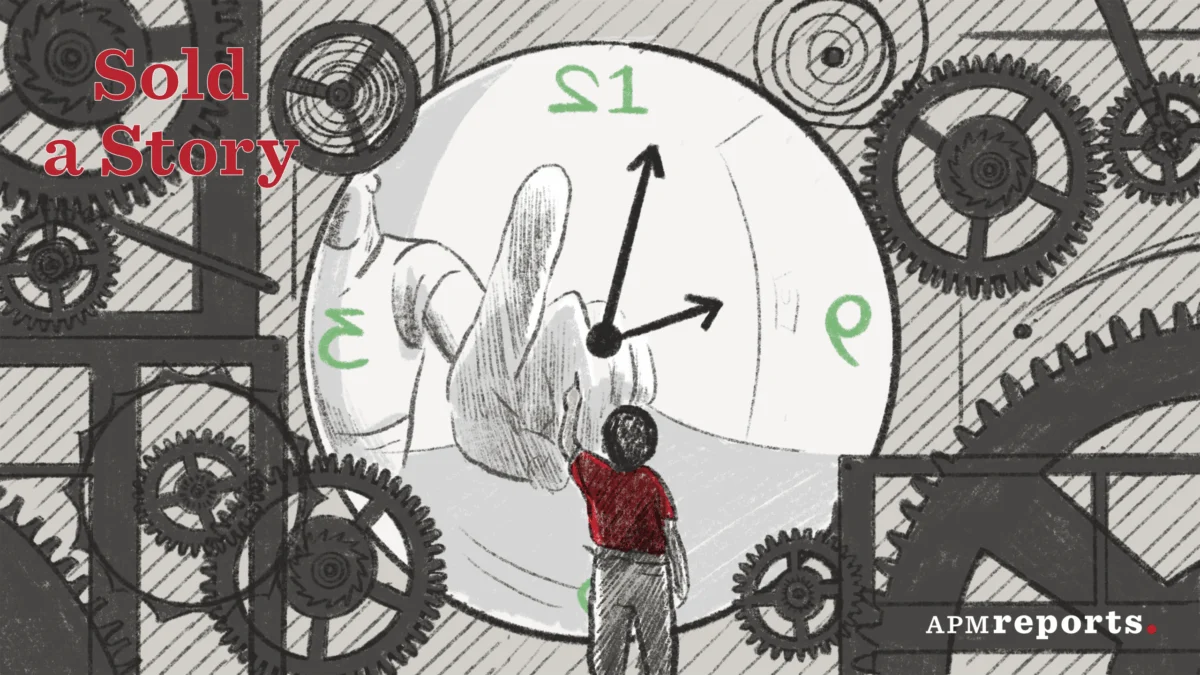
In the third episode of the second season of the investigative podcast Sold a Story, produced by APM Reports, listeners are taken back to a time when American education stood at a crossroads. At the center of this narrative is "The Forgotten Experiment," a massive, federally funded study that once promised to settle the debate over how children learn. Instead, the results were buried, the findings were contested, and the most successful teaching model in the history of the study was systematically marginalized.
The Genesis of an Educational Revolution
To understand the significance of "The Forgotten Experiment," one must first understand the state of American education in the late 1960s. The federal government, under the auspices of the "War on Poverty," launched Project Follow Through to determine which teaching methods were most effective for children from low-income families. It remains, to this day, one of the most ambitious and comprehensive educational experiments ever conducted.
Zig Engelmann, a former advertising executive turned educational theorist, proposed a method known as "Direct Instruction" (DI). Unlike the "child-centered" or "discovery-based" learning models that were gaining traction at the time, DI was built on a rigorous, scripted, and highly structured framework. Engelmann believed that if you controlled the variables—the pacing, the feedback, and the clarity of instruction—you could teach any student to mastery, regardless of their background.
Chronology of a Failed Consensus
The implementation of Project Follow Through began in 1967 and spanned over a decade, involving approximately 200,000 children across 180 communities. The scope was unprecedented.
- 1967–1968: The launch phase. Various educational models, including Direct Instruction, were deployed in diverse classroom settings across the United States.
- 1970–1975: Data collection and longitudinal tracking. As the years progressed, it became increasingly clear that students in Direct Instruction classrooms were significantly outperforming their peers in reading, math, and general cognitive development.
- 1976–1977: The release of the "Stanford Evaluation." The data revealed that Direct Instruction was the only model that consistently produced superior results across all three measured domains: basic skills, cognitive conceptual skills, and affective measures (self-esteem and attitude toward school).
- 1978 and Beyond: The political backlash. Rather than embracing the evidence, the educational establishment reacted with hostility. Critics argued that the scripted nature of the program was "dehumanizing" or "mechanistic." The federal government, pressured by the dominant educational theory of the time, moved to dilute the impact of the findings.
The Evidence: Why Direct Instruction Worked
The data emerging from Project Follow Through was staggering. The Stanford Research Institute (SRI) analyzed the results and found that the Direct Instruction model was the most effective in every category.
Supporting data highlighted that students who received Direct Instruction were not just "test-takers"; they showed marked improvements in critical thinking and complex problem-solving. By removing the guesswork from instruction, teachers were able to provide consistent, high-quality lessons. Despite this, the professional consensus in teacher training colleges remained firmly rooted in constructivist theories—the idea that children learn best by "discovering" knowledge on their own rather than having it explicitly taught.
The disconnect between the empirical evidence provided by the experiment and the ideological preferences of the educational elite created a chasm that would define the next half-century of American school performance.
Official Responses and Institutional Resistance
When the results of Project Follow Through were finalized, the reaction from the Department of Education was lukewarm at best. There was no widespread national rollout of the most successful program. Instead, the findings were subjected to endless re-analysis, secondary critiques, and eventually, a quiet burial.

Many educational administrators felt threatened by the implications of the study. If Direct Instruction was the objective "best" way to teach, it would render much of the existing teacher training curriculum obsolete. Furthermore, it undermined the autonomy that many school districts valued.
Critics from the pedagogical establishment—many of whom were deeply invested in the "Whole Language" or "Discovery Learning" movements—argued that the data was flawed because it didn’t account for the "affective" experiences of the students. They prioritized the feeling of the classroom over the achievement of the student, a choice that effectively silenced the loudest success story in American educational history.
Implications for Modern Education
The legacy of the "Forgotten Experiment" is not merely historical; it is a live issue. In the first season of Sold a Story, listeners learned how the abandonment of phonics and explicit instruction led to the literacy crisis currently plaguing our schools. Season two, through the lens of Zig Engelmann’s work, asks the deeper question: Why do we ignore science when it contradicts our preferences?
The implications are severe:
- The Persistence of Ineffective Methods: We continue to cycle through "new" educational fads, ignoring the fact that the fundamentals of effective instruction were proven decades ago.
- The Opportunity Gap: By failing to implement evidence-based practices like Direct Instruction in under-resourced schools, the system continues to fail the very students it was designed to help.
- The Professionalization of Pedagogy: We have prioritized educational theory over educational results, leading to a teacher training pipeline that often leaves educators ill-equipped to handle the rigors of the classroom.
Conclusion: The Path Forward
The story of Zig Engelmann and the Project Follow Through experiment serves as a mirror for the contemporary education system. It reminds us that progress is not always linear and that "innovation" is often just a repackaging of ideas that have already failed, while proven methods are discarded because they are inconvenient to the status quo.
As we look toward the future of education, the message of Sold a Story is clear: we must be willing to interrogate our own beliefs about teaching. We must value rigorous data over institutional comfort. The experiment was "forgotten" not because it failed, but because it succeeded too well—threatening the foundations of an educational ideology that had become too big to fail.
To change the trajectory of American education, we do not need a new miracle cure. We need to remember the lessons of the past, acknowledge the efficacy of direct, explicit instruction, and demand that our schools reflect the evidence of what actually works for the children who need it most.
For those interested in the full scope of this investigation, Episode 3 of Season 2 of "Sold a Story," titled "The Forgotten Experiment," is available now. The Hechinger Report remains dedicated to covering the complexities of education, and we encourage our readers to examine these historical findings as we continue to advocate for evidence-based reform in classrooms nationwide.

 Nana Muazin

 Layla Zulfa

 Raul Delapena Setiawan

 Reynand Wu

 Sagoh


 Azzam Bilal Chamdy

 Ali Ikhwan
