
 Ali Ikhwan
Introduction: Climate at the Core of Governance
In the intricate architecture of Chinese policymaking, the "Five-Year Plan" (FYP) serves as the definitive compass for the nation’s economic and social trajectory. As China navigates the pivotal 2026–2030 period—a stretch of time critical to its global climate commitments—new analysis reveals that sustainability has moved from the periphery to the very center of governmental planning.
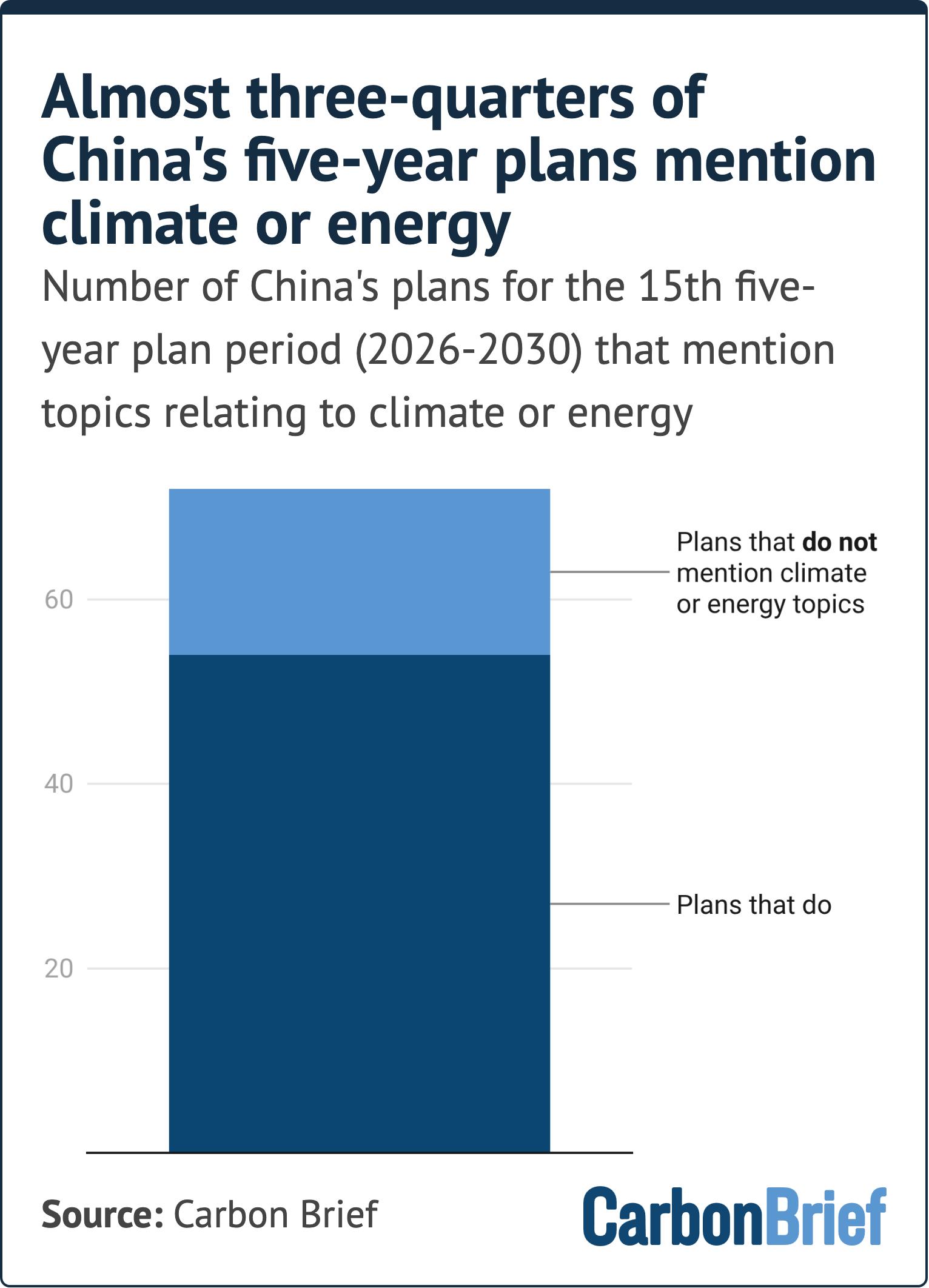
According to a comprehensive analysis by Carbon Brief, nearly 75% of the 72 sectoral and thematic five-year plans released to date explicitly incorporate policies or targets related to climate change and energy. This unprecedented alignment suggests that Beijing is embedding its "Dual Carbon" goals—peaking carbon dioxide emissions before 2030 and achieving carbon neutrality by 2060—into every facet of its industrial and social apparatus.
Main Facts: The Scope of the 15th FYP
The 15th Five-Year Plan, unveiled in March 2026, serves as the overarching blueprint for China’s development through the end of the decade. Unlike previous cycles, where climate policy might have been siloed under the Ministry of Ecology and Environment, the current cycle sees ministries from transportation to agriculture integrating carbon-reduction strategies into their operational mandates.
Key takeaways from the current policy landscape include:
- Widespread Integration: Out of 72 central government plans scrutinized, 54 feature specific climate or energy-related targets.
- Economic Transformation: The core numerical target in the overarching plan mandates a 17% reduction in "carbon intensity"—the volume of CO2 emitted per unit of GDP—over the five-year period.
- Sectoral Diversity: Climate language is now standard in documents ranging from the coal industry and electric vehicle manufacturing to niche sectors like tourism, traditional Chinese medicine, and even national archive management.
This shift signifies that China’s decarbonization is no longer merely an environmental objective; it is a structural economic imperative intended to drive innovation, industrial upgrading, and energy security.
Chronology: The Path to 2030
The 15th FYP period is arguably the most significant five-year window in China’s modern history. The timeline is shaped by several key milestones:
- March 2026 (The Kick-off): The overarching 15th FYP is published during the "Two Sessions" in Beijing, establishing the foundational targets for the nation’s socio-economic development.
- Q2–Q4 2026 (Thematic Rollout): Central ministries and agencies begin publishing specific, granular plans. This period saw the release of crucial documents on renewable energy deployment, new-type power systems, and the "Beautiful China" initiative.
- 2027–2029 (Implementation & Adjustment): This middle phase is marked by the operationalization of these targets. Policies such as the "Action plan for peaking carbon emissions" serve as the tactical manuals for regional governments to meet the 2030 deadline.
- 2030 (The Target Horizon): The year China aims to reach its peak in CO2 emissions. The current planning cycle is designed to front-load the infrastructure investments required to hit this peak, followed by a trajectory of sustained decline.
Supporting Data: Mapping the Climate Transition
The data collected by Carbon Brief provides a visual and quantitative map of how Beijing conceptualizes its transition. The plans are categorized into four tiers:
1. The Overarching Plan
This document defines the "macro" goals. By setting a 17% reduction in carbon intensity, it forces every provincial and local government to justify their industrial growth against their carbon footprint.
2. Core Climate & Energy Plans
These are the heavy hitters. Documents focused on "New-type Energy Systems" and "Renewable Energy Development" provide the quantitative targets for grid capacity, battery storage, and clean power generation. These plans are typically drafted by the National Development and Reform Commission (NDRC) and the National Energy Administration (NEA), ensuring that energy policy remains tethered to economic reality.
3. Action and Implementation Plans
Distinct from general five-year plans, these documents (e.g., "Action plan for peaking carbon emissions") function as specific regulatory directives. They provide the "how" rather than the "what," outlining the mechanisms for energy conservation in public institutions and the coordination of digital and green transitions.
4. Peripheral Plans
Perhaps most telling is the presence of climate policy in "unrelated" sectors. For example, plans for "Urban Renewal" and "Agricultural Development" now include mandates for green building standards and low-carbon farming practices. This suggests that the central government expects climate-conscious decision-making to be a default setting for every civil servant.
Official Responses and Strategic Rationale
Chinese officials have framed this "green integration" as a necessity for high-quality development. The rhetoric from Beijing consistently highlights that the climate transition is synonymous with "modernization."
In recent policy briefings, representatives from the Ministry of Ecology and Environment have emphasized that the 15th FYP is not a departure from economic growth, but a redirection of it. By focusing on "new energy vehicles" (NEVs), "smart grids," and "circular economy" models, China aims to capture a dominant share of the global green technology market.
Furthermore, the government’s focus on "energy security" has led to a dual-track strategy. While massive investments in renewables are prioritized, the "Coal Industry Development" plan reveals a pragmatic approach to maintaining grid stability through "cleaner" coal use—a move that has drawn both support for its stability and criticism for its longevity.
Implications: A Global Perspective
The implications of China’s 15th FYP extend far beyond its borders. As the world’s largest emitter and largest investor in renewable energy, China’s domestic success—or failure—in meeting these targets will dictate the global trajectory of climate change.
The "Dual-Carbon" Challenge
The 2030 peak is a "hard" target in the eyes of international observers. By embedding this target into 75% of its internal plans, Beijing is signaling to its domestic bureaucracy that missing these goals is not an option. The sheer scale of this administrative integration is likely unmatched by any other nation.
Technological Leadership
The focus on "digitalization and greening" indicates that China intends to use the climate transition to drive the next wave of its digital economy. By standardizing the "new-type power system," China is creating a domestic market that will likely export its technical standards and hardware to the Global South, effectively setting the global template for the energy transition.
The Risk of Complexity
However, the breadth of these plans presents a potential challenge: implementation. Managing 72 interconnected plans requires a degree of coordination that tests the limits of any bureaucracy. If provincial governments prioritize industrial growth over carbon targets, or if the "cleaner coal" transition moves too slowly, the ambitious goals of the 15th FYP may face significant headwinds.
Conclusion: A Blueprint for the Future
The 15th Five-Year Plan is more than a list of goals; it is a manifestation of China’s attempt to reconcile its massive industrial base with the constraints of a warming planet. By weaving climate policy into everything from healthcare to transportation, Beijing is attempting to re-engineer its economy from the inside out.
As we move toward 2030, the global community will be watching to see if this highly centralized, policy-heavy approach can deliver on its promises. For now, the evidence is clear: for China, the future of development is undeniably, and irreversibly, green.
Data source: This analysis is based on the comprehensive tracker maintained by Carbon Brief, which provides ongoing updates and summaries of China’s 15th five-year plan series. For further exploration of specific sectoral targets, readers are encouraged to consult the official policy archives.


 Pevita Pearce
 Rifan Muazin
 Dwi Wanna
 Lina Hope
 Layla Zulfa
 Asep Darmawan
 Azzam Bilal Chamdy