Jia Lissa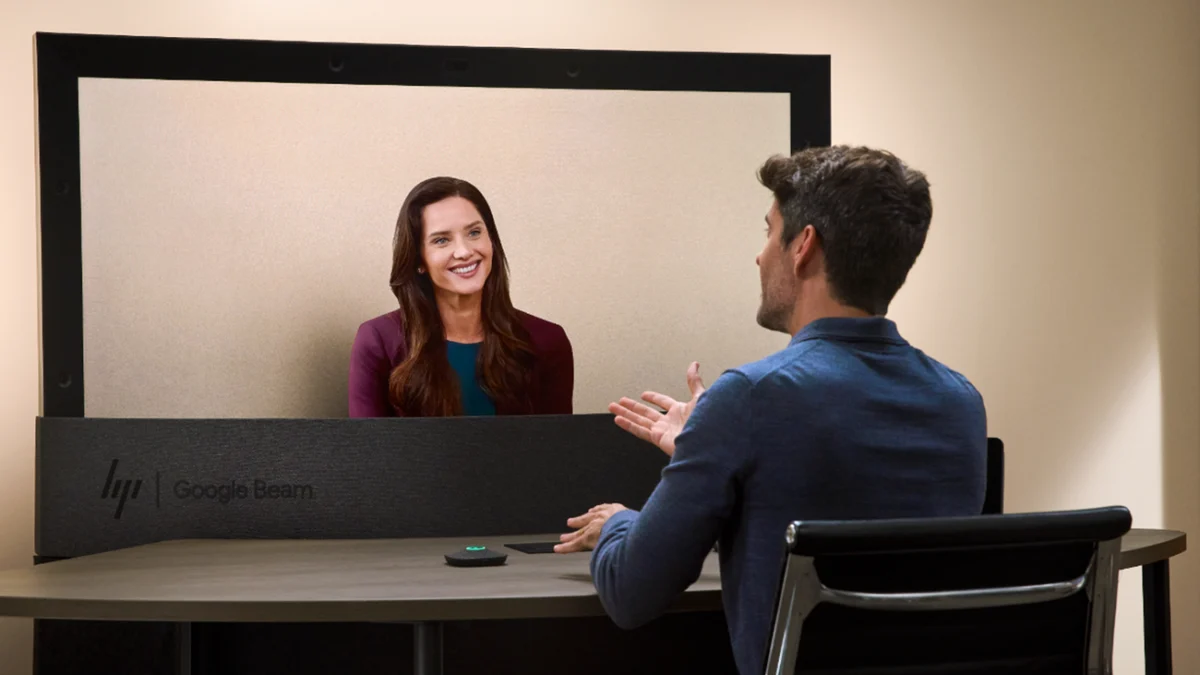
In an era where remote and hybrid work have become the new corporate standard, the "Zoom fatigue" phenomenon has left a void in professional communication. While digital tools have enabled productivity, they have often struggled to replicate the nuanced, non-verbal cues essential to building trust, mentorship, and high-stakes collaboration. Google is now aggressively moving to fill that gap with the expansion of Google Beam, a sophisticated telepresence solution designed to restore the "human" element to digital interaction.
Aaron Luber, Director of Business Development for Google Beam, announced this week that the platform is entering a phase of rapid global scaling. By expanding into five new countries and establishing a strategic partnership with flexible workspace giant Industrious, Google is positioning Beam not just as an experimental tool, but as a core pillar of the future enterprise infrastructure.
The Core Vision: Beyond the Screen
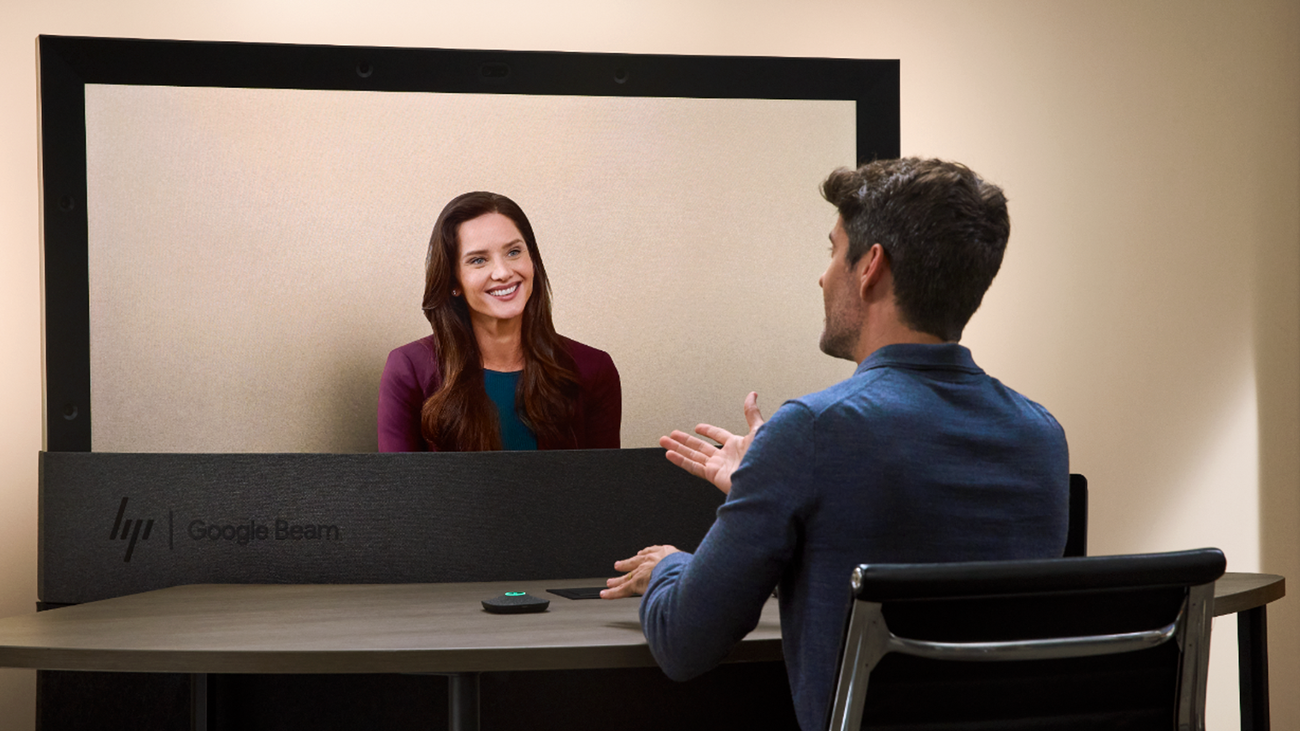
At its inception, the vision for Google Beam was singular: to facilitate genuine, face-to-face connection regardless of geographical distance. Unlike traditional video conferencing, which relies on two-dimensional screens and flat perspectives, Google Beam utilizes high-fidelity hardware—marketed as HP Dimension with Google Beam—to create a sense of "co-presence."
By integrating with enterprise-grade platforms like Google Meet and Zoom, the technology allows users to maintain eye contact, read body language, and engage in the spontaneous, fluid interactions that define a physical boardroom. This is not merely an improvement in resolution; it is a fundamental shift in how human beings process virtual communication.
A Global Rollout: The Infrastructure of Connection
The expansion marks a significant milestone in the product’s life cycle. Google Beam units are now shipping to customers across six major markets: the United States, Canada, the United Kingdom, France, Germany, and Japan.
To support this deployment, Google has cultivated a robust ecosystem of 18 channel partners. These audiovisual integrators and distributors are tasked with the heavy lifting of installation, maintenance, and technical support. This channel strategy is critical for enterprise adoption; it ensures that large-scale organizations can deploy the technology across global offices without relying solely on internal IT resources.
Chronology of Development
- The Pilot Phase: Google first tested Beam internally, using its own global offices as a sandbox. The goal was to prove that the technology could withstand the rigors of daily corporate use.
- Proof of Concept: Early partnerships, most notably with Bain & Company, served as the testing ground for real-world high-stakes use cases. Bain utilized the technology to streamline campus recruiting, finding that the depth of connection provided by Beam was superior to standard video calls.
- Market Expansion: Following the success of internal and pilot testing, Google transitioned to the current phase, focusing on hardware partnerships (HP) and physical network expansion (Industrious).
- Present Day: The platform has moved into full commercial availability, with support for major third-party video conferencing software, ensuring that companies do not have to migrate their entire tech stack to benefit from the hardware.
The Data: Why "Co-presence" Matters
The shift toward Beam is backed by compelling internal metrics. In a rigorous eight-week internal study conducted at Google, teams utilizing the Beam technology reported a 50% increase in feelings of interpersonal connection compared to traditional video methods.
More importantly, the study highlighted measurable operational improvements:
- Clarity: Participants found it 33% easier to ensure their feedback was clearly understood, reducing the ambiguity that often leads to errors in virtual project management.
- Efficiency: The need for follow-up meetings dropped by 21%. When communication is clearer and more authentic, the "back-and-forth" required to resolve misunderstandings is significantly curtailed.
- Recruitment Efficacy: For companies like Bain & Company, the ability to assess candidates—who are often hundreds or thousands of miles away—with the same nuance as an in-person interview has changed their talent acquisition strategy. As Keith Bevans, EVP at Bain & Company, noted: "There are so many nuances in body language and eye contact, and Google Beam allows us to virtually understand how people will engage in person."
Bridging the Access Gap: The Industrious Partnership
One of the most significant barriers to new communication technology is the capital expenditure required for individual office installations. To democratize access, Google is launching the first-ever Beam extended network in collaboration with Industrious.
Starting this October, businesses of all sizes—from high-growth startups to distributed enterprise teams—can book HP Dimension with Google Beam suites at select Industrious locations in major hubs, including Atlanta, Chicago, New York City, and Palo Alto.
This model essentially creates a "telepresence-as-a-service" framework. By placing these units in flexible workspaces, Google is enabling organizations to access high-end, face-to-face meeting technology on an as-needed basis, rather than requiring a permanent, high-cost installation in every remote office.
Implications for the Future of Work
The implications of this expansion are far-reaching.
1. The Death of Distance in Recruiting
The traditional "fly-in" interview process is expensive and environmentally taxing. With the Beam network, firms can maintain a "global-first" hiring strategy without sacrificing the ability to vet candidates for cultural fit and soft skills.
2. Revitalizing Mentorship
Mentorship often suffers in remote environments because it relies on "osmotic learning"—watching how a senior leader interacts with a client or handles a crisis. Beam provides the visual fidelity required to replicate this mentorship in a virtual setting, potentially solving one of the biggest challenges facing remote-first Gen Z workers.
3. Enterprise Interoperability
By supporting both Google Meet and Zoom, Google is acknowledging the fragmented nature of the modern software landscape. This "platform-agnostic" approach is a departure from the "walled garden" strategy of the past, signaling that Google is serious about becoming the hardware standard for the hybrid office.
A Maturing Technology
While other telepresence solutions have existed in the past, they were often cumbersome, prohibitively expensive, and required proprietary, closed-loop networks. The HP Dimension with Google Beam solution differentiates itself through its focus on integration. It is designed to fit into the workflows that employees are already using, rather than forcing them to adopt a new, standalone portal.
Industry leaders like Netflix and Capital Group have already begun exploring the technology, indicating that early adopters in the tech and finance sectors are prioritizing "connection density" as a key performance indicator for their global workforces.
Conclusion
As the boundaries of the workplace continue to dissolve, the quality of our digital interactions becomes the defining factor in organizational health. Google Beam represents a bridge between the physical and the virtual—a way to ensure that as our offices move to the cloud, we do not lose the humanity that drives innovation.
With a footprint expanding across six nations, a strategic partnership with Industrious, and data that proves a tangible improvement in communication efficiency, Google is setting the stage for a new era of professional interaction. The future of work is not just about being "connected"; it is about feeling present, and for the first time, that reality is accessible on a global scale.
For organizations looking to bridge the gap between their distributed teams, the path forward is increasingly clear. Whether through permanent hardware installations or the new extended network, the tools to foster genuine human connection are finally within reach.
To explore how your organization can integrate Beam into its collaborative strategy, visit beam.google.

 Lina Hope
 Reynand Wu
 Nila Kartika Wati

 Basiran
 Sagoh
Sagoh