
 Basiran
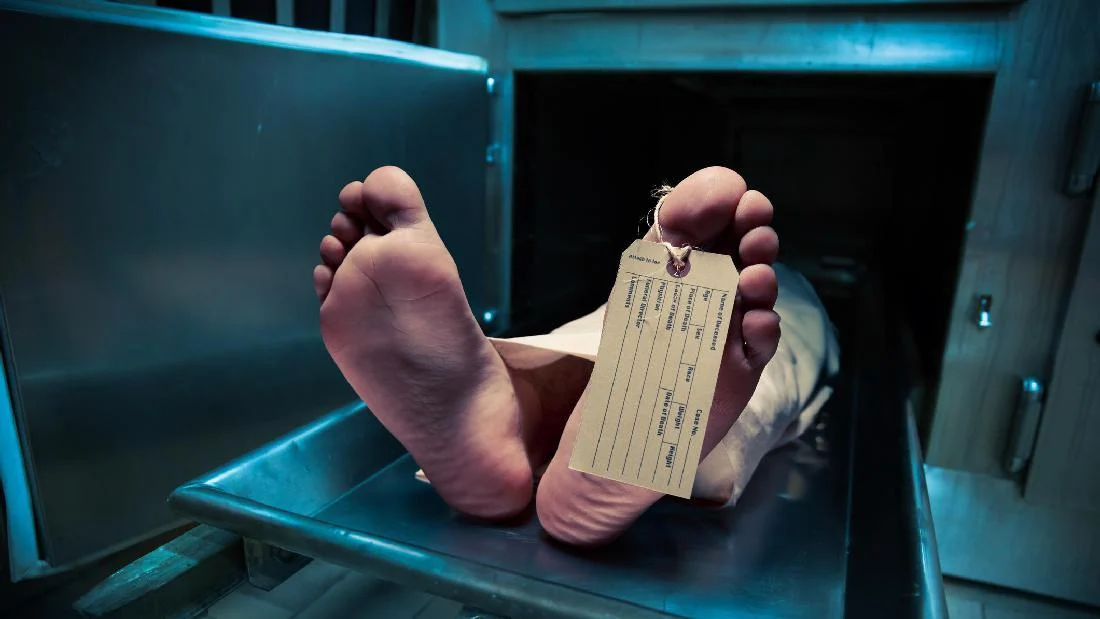
Jakarta, Indonesia – The cessation of breath and heartbeat marks the definitive moment of death, yet it does not signify an immediate, complete halt to all biological processes within the human body. In a phenomenon that can be unsettling to the uninitiated, deceased individuals may exhibit movements or emit sounds long after life has departed. Far from the eerie depictions found in horror films, these occurrences are rooted firmly in scientific principles, offering a fascinating glimpse into the complex stages of decomposition. This article delves into the biological realities behind these post-mortem phenomena, dispelling myths and providing a clearer understanding of what transpires after death.
Main Facts: Death’s Unseen Aftermath
The human body, even in death, remains a dynamic biological entity, undergoing a series of transformations that can manifest as subtle, and sometimes startling, physical changes. Contrary to popular belief, a deceased body does not immediately become inert. Scientists and forensic anthropologists have meticulously documented instances where cadavers shift position or produce sounds, a reality often misinterpreted as supernatural.
The primary driver behind these post-mortem activities is the intricate and multi-stage process of decomposition. From the initial stiffening of muscles to the eventual breakdown of tissues and the generation of gases, each phase contributes to alterations in the body’s form and, occasionally, its outward expression. A groundbreaking study conducted in Australia, for example, utilized time-lapse photography to monitor human cadavers over extended periods, revealing that movements persisted for at least 16 months post-mortem. These movements, while gradual and often imperceptible to the naked eye without continuous observation, demonstrated significant cumulative shifts, with some body parts relocating by as much as 20 inches (approximately 51 centimeters).
Similarly, the emission of sounds from a deceased body is a purely physiological event. The accumulation and movement of gases and fluids generated during decomposition can lead to noises ranging from gurgles and bubbles to moans or sighs. These phenomena, though potentially alarming, are entirely natural and devoid of any mystical connotation. Understanding these post-mortem processes is not only crucial for forensic science but also serves to demystify death, replacing fear with factual knowledge.
The Unsettling Reality: Post-Mortem Phenomena Explained
The perception of a deceased body as utterly still and silent immediately after death is a common misconception, often fueled by cultural narratives and cinematic portrayals. In reality, the journey of decomposition is an active one, characterized by a series of biological and chemical reactions that can profoundly alter a cadaver’s appearance and even its physical orientation.
Subtle Shifts: The Science of Post-Mortem Movement
The term "post-mortem movement" refers to the changes in a cadaver’s position or posture after death, a phenomenon extensively studied in forensic taphonomy. These movements are typically not sudden or dramatic, as often sensationalized, but rather slow, gradual shifts resulting from the intrinsic processes of decay.
The Australian study, published under the title "Quantifying human post-mortem movement resultant from decomposition processes," provided unprecedented insights into this phenomenon. Researchers employed time-lapse cameras at a decomposition facility, meticulously capturing the subtle alterations in body position over many months. The findings were significant, demonstrating that cadavers continued to move for well over a year. The cumulative displacement of limbs and other body parts, reaching up to 51 centimeters, underscores the dynamic nature of decomposition. This research has profound implications for forensic investigations, particularly in accurately reconstructing crime scenes and determining the time and circumstances of death.
Derek Boyd, a biological anthropologist and co-leader of the Forensic Anthropology and Bioarchaeology Laboratory at the University of Nevada, Las Vegas, emphasizes the understated nature of these movements. "The body can move, but not necessarily in the ways most people imagine. The movements are very subtle," Boyd explained, as quoted by Popular Science. He clarifies that these shifts are not akin to a body suddenly sitting upright or turning its head, as frequently depicted in horror genres. Instead, they are minor, progressive changes that occur as tissues decompose and gases accumulate and dissipate. Without specialized observation techniques like time-lapse photography, these subtle adjustments might go unnoticed, reinforcing the illusion of complete stillness.
A Biological Chronology of Post-Mortem Changes
The movements observed in cadavers are a direct consequence of the sequential stages of decomposition, each contributing uniquely to the body’s changing form and position.
Rigor Mortis: The Initial Stiffening
One of the earliest and most recognizable post-mortem changes is rigor mortis, or the stiffening of muscles. This process begins within a few hours of death, typically peaking around 12-24 hours, and then gradually subsiding. After the heart stops pumping blood and oxygen, cellular respiration ceases. Without oxygen, the body can no longer produce adenosine triphosphate (ATP), the energy molecule vital for muscle relaxation. Muscle fibers, specifically actin and myosin, become irreversibly locked in a contracted state.
During the onset and resolution of rigor mortis, the tension within muscles and connective tissues undergoes significant changes. This alteration in tension can cause slight shifts in the position of limbs or the torso. For instance, a limb might stiffen in a slightly flexed position, and as rigor resolves, the muscles might relax, allowing gravity or environmental factors to induce minor movements. Boyd notes that these early movements are primarily due to this muscular rigidity. "You’re not necessarily going to see (movement) unless you are really focused on the body for the first 48 hours and even then, what you’re seeing is tension, the body being stiff," he states.
Autolysis and Putrefaction: The Onset of Decomposition
Following rigor mortis, the body enters the more overt stages of decomposition, primarily autolysis and putrefaction. Autolysis is the self-digestion of cells by their own enzymes, which are released from lysosomes after cellular death. This process begins almost immediately after death and contributes to the breakdown of tissues.
Simultaneously, putrefaction commences, driven by the proliferation of bacteria and microorganisms that were naturally present in the gut and on the skin during life. These microbes begin to consume and break down the body’s tissues, a process that generates various gases, including methane, hydrogen sulfide, and carbon dioxide.
Gas Accumulation and Release: Internal Pressures
The accumulation of these decomposition gases within the body is a major contributor to post-mortem movement and sound. As bacteria metabolize tissues, particularly in the gastrointestinal tract, large volumes of gas are produced. This gas becomes trapped within the body cavities, leading to significant bloating and distension. The abdomen and other soft tissues can expand dramatically, altering the body’s overall shape and volume.
"This process causes the body to become bloated or start to distend, and that distension can lead to dramatic enlargement," Boyd explains. This expansion can exert pressure on limbs and joints, causing them to shift position. For example, the swelling of the torso can push the arms or legs outwards or cause the head to tilt.
As decomposition progresses, these accumulated gases eventually find an escape route. They can be expelled through natural orifices such as the mouth, nose, anus, or even through tears in the skin. When the gases are released, the body deflates, and its shape and volume decrease. This reduction in size can cause further minor shifts and adjustments in the cadaver’s position, as previously distended parts settle back.
Desiccation: The Drying and Contraction of Tissues
In later stages of decomposition, particularly in dry environments, the process of desiccation (drying) plays a role in post-mortem movement. As soft tissues, including ligaments and tendons, lose moisture, they begin to shrink and contract.
Ligaments connect bones to each other, and tendons connect muscles to bones. "We have ligaments connecting bones to each other, tendons connecting muscles to bones, and in these later stages of decomposition, those connective tissues can shrink and tighten and, thereby, can pull our skeleton in various ways," Boyd elaborates. This contraction of connective tissues can exert tension on the skeletal structure, leading to subtle movements or changes in the articulation of joints, further contributing to the overall repositioning of the cadaver.
A Symphony of the Deceased: Understanding Post-Mortem Sounds
Beyond physical movement, deceased bodies can also produce sounds, a phenomenon that can be equally disquieting to those unaware of its biological basis. These sounds are directly related to the physical processes occurring during decomposition, primarily the formation, accumulation, and movement of gases and fluids.
During life, the human body is a constant source of sound, from the rumblings of digestion to belches and flatulence. After death, the same principles apply, albeit under different circumstances. As bacteria break down tissues during putrefaction, they generate gases. These gases, along with any remaining bodily fluids, move through the internal channels and orifices of the body.
Sarah Chavez, Executive Director of the Order of the Good Death, sheds light on this phenomenon. She explains that the buildup of gas during decomposition can lead to sounds such as gurgling, bubbling, groaning, or even a sigh-like exhalation. When these gases and fluids are expelled through the mouth or nose, they can vibrate vocal cords or simply create unexpected auditory effects.
For individuals unfamiliar with these post-mortem processes, hearing such sounds emanating from a deceased person can be profoundly shocking and, understandably, terrifying. The natural inclination might be to interpret these noises as signs of reanimation or communication from the deceased. However, Chavez unequivocally states that these sounds are purely physical manifestations of biological decay. "It can be startling if you don’t anticipate it, but there’s nothing supernatural happening," she asserts. The sounds are an incidental byproduct of the body’s tissues breaking down and gases and fluids moving through its structures, a testament to the ongoing, albeit terminal, biological activity.
Forensic Implications and Broader Understanding
The scientific understanding of post-mortem movement and sounds extends far beyond mere curiosity; it holds critical importance in various fields, particularly in forensic science and public education.
Enhancing Crime Scene Investigations
For forensic anthropologists and crime scene investigators, knowledge of post-mortem movement is indispensable. The position of a body at a crime scene is often a crucial piece of evidence, providing clues about the manner of death, potential struggles, or post-mortem manipulation. If investigators are unaware that a body can subtly shift position due to natural decomposition, they might misinterpret the scene, leading to erroneous conclusions.
For instance, a body found in a particular pose might be assumed to have died in that position, when in fact, natural processes of decomposition, such as gas accumulation and subsequent deflation, could have caused limbs to move or the torso to reorient itself. Understanding the extent and nature of these movements allows forensic experts to more accurately reconstruct the events surrounding a death, differentiate between primary and secondary body placements, and refine estimates of the post-mortem interval (time since death). This nuanced understanding ensures that evidence is interpreted correctly, preventing miscarriages of justice.
Psychological Impact and Education
Beyond the scientific community, education about post-mortem phenomena plays a vital role in mitigating fear and distress among the general public, as well as first responders and medical professionals. Encountering a deceased body that moves or makes sounds can be a deeply traumatic experience, especially for individuals not prepared for such eventualities. Family members, funeral home staff, emergency medical technicians, and law enforcement officers may all come into contact with bodies exhibiting these characteristics.
By providing clear, scientific explanations, institutions can help normalize these processes, reducing the psychological burden and preventing the propagation of supernatural fears. Training for professionals who regularly interact with the deceased should include comprehensive modules on decomposition, including post-mortem movement and sounds. This education fosters a more rational and compassionate approach to death, allowing individuals to process grief and manage situations involving deceased persons with greater understanding and less anxiety.
Historical Context and Cultural Interpretations
Throughout history, societies have grappled with the mysteries surrounding death. Without the benefit of modern scientific understanding, observations of post-mortem movement and sounds likely contributed to various cultural beliefs and folklore. Tales of "revenants," "undead," or "restless spirits" might have originated, in part, from witnessing these natural phenomena. A body that groans, gurgles, or subtly shifts in its coffin could easily be interpreted as a sign of lingering life, a soul trapped, or a malevolent spirit.
In some cultures, rituals involving watching over the deceased were common, which would have increased the likelihood of observing these processes. This historical context highlights the enduring human quest to comprehend death and the critical role science plays in replacing ancient fears with empirical knowledge.
Conclusion: Demystifying Death’s Final Processes
The journey of the human body after death is a testament to the intricate and persistent nature of biological processes. Far from being inert, a deceased body continues to undergo a series of transformations, driven by cellular breakdown, microbial activity, and the laws of physics. The phenomena of post-mortem movement and sounds, while potentially unsettling, are not mysterious or supernatural; they are predictable, albeit complex, stages of decomposition.
Through rigorous scientific inquiry, researchers continue to demystify these aspects of death, providing invaluable insights for forensic science, public health, and a broader understanding of life’s ultimate transition. By embracing knowledge over fear, we can cultivate a more informed and respectful approach to death, recognizing it not as a sudden end to all activity, but as a fascinating and intricate final chapter in the biological narrative. The "whispers" and "shifts" of the deceased are not calls from another realm, but rather the final echoes of a body returning to the earth, a natural and profound part of the cycle of life.


 Neng Nana

 Siti Muinah
 Rifan Muazin

 Pevita Pearce

 Nana Muazin

 Iffa Jayyana
