
 Iffa Jayyana
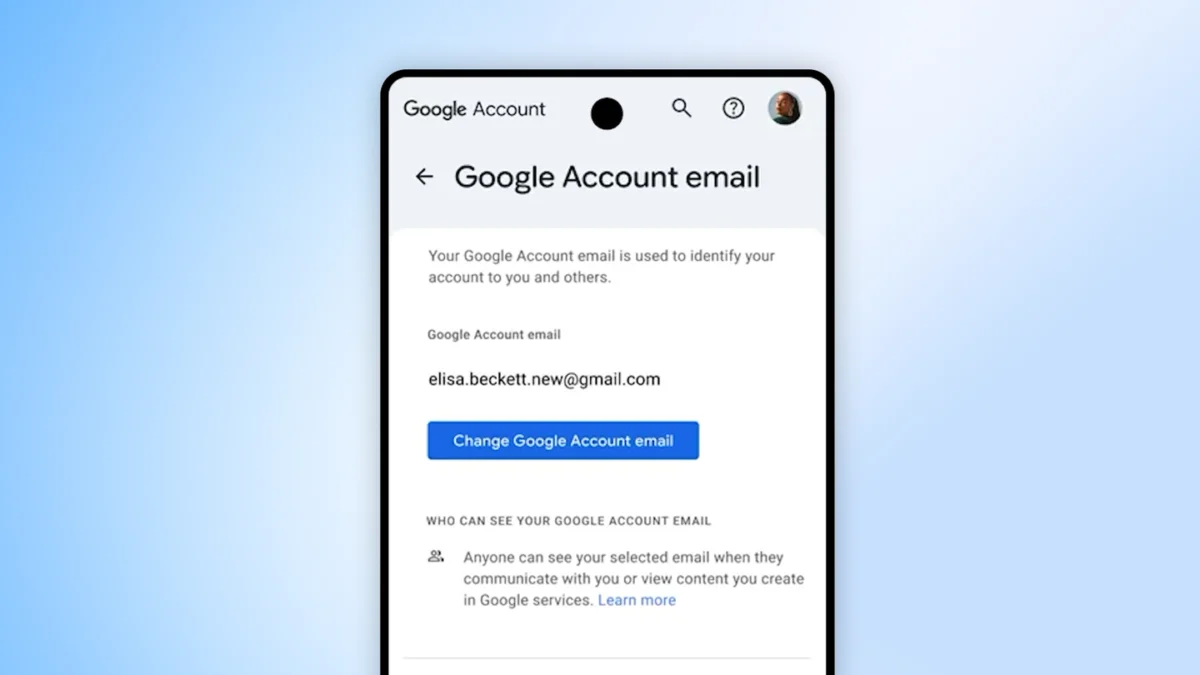
In a significant shift toward user-centric digital identity management, Google has officially expanded its account customization suite, allowing users to modify their primary Gmail username—the unique identifier preceding the "@gmail.com" domain. This long-awaited functionality, which began as a staggered rollout last year, is now accessible to the full spectrum of Google Account holders across the United States.
For decades, the Gmail address was considered a permanent digital anchor. Once a user selected an email handle, they were effectively tethered to it for the lifespan of the account. Today’s update fundamentally alters that paradigm, acknowledging that as digital personas evolve, so too should the professional and personal identifiers associated with them.
Main Facts: What Has Changed?
The core of this update centers on the flexibility of the primary sign-in identifier. Historically, users wishing to change their email address were forced to create an entirely new account, a laborious process that required migrating emails, re-syncing photos, and losing access to years of historical data in Drive, Maps, and YouTube.
The New Capability
- Username Modification: Users can now edit the string of text before the "@gmail.com" domain.
- Integrated Access: The change applies immediately to all Google services, including Gmail, Photos, Drive, Calendar, and Google Workspace.
- Universal Sign-in: Because the username serves as the primary gateway to Google’s ecosystem, the change updates the credentials required for third-party apps that utilize "Sign in with Google."
While this update addresses a major pain point for users who may have created "unprofessional" handles in their youth or those looking to rebrand for career purposes, Google notes that there are specific technical guardrails in place to ensure system stability and prevent identity spoofing.
Chronology: The Evolution of Google Account Management
The journey to this announcement has been marked by a transition from a rigid, static infrastructure to a more fluid, modular identity system.
- 2004–2010 (The Static Era): At the inception of Gmail, the account username was synonymous with the Google Account itself. Changing an address was technically impossible due to the deep integration of the email string with the backend authentication database.
- 2015–2020 (The Rise of Aliases): Google introduced "email aliases," allowing users to receive mail at different addresses, but the primary sign-in handle remained immutable. This left many users frustrated, as they still had to log in with their original, often outdated, credentials.
- 2023 (The Pilot Phase): Google quietly initiated a phased rollout for a subset of users, testing the impact of username modification on secondary security protocols, such as 2FA (Two-Factor Authentication) and recovery email syncing.
- 2024 (The Current Standard): Following successful testing, the feature has been standardized for the U.S. market, with the expectation that international markets will follow as local data regulations and infrastructure allow.
Supporting Data: Why Identity Flexibility Matters
The demand for this feature is rooted in a shift in digital demographics. Research indicates that the average user keeps a primary email account for over a decade. During that time, professional trajectories change, and the "casual" usernames created during a user’s teenage years often become professional liabilities.
Key Metrics and User Trends
- Professionalism Gap: Studies suggest that approximately 34% of Gen Z and Millennial users report embarrassment when using older, informal email addresses in professional or academic correspondence.
- The "Account Migration" Problem: Previously, the difficulty of migrating data—specifically in Google Photos, which often contains over a decade of high-resolution personal archives—prevented users from abandoning old accounts. Estimates suggest that the average active Google user stores over 15GB of data across their ecosystem, making a clean break nearly impossible.
- Security Integration: The shift to an editable username also aligns with Google’s ongoing effort to improve account security. By allowing users to change their username rather than creating a secondary "burner" account, Google reduces the risk of users relying on insecure, third-party email providers.
Official Responses and Security Considerations
Google’s engineering team has been careful to frame this rollout within the context of security and account integrity. During a technical briefing, a spokesperson for Google’s Identity and Security division noted that while user convenience was the primary driver, the integrity of the "@gmail.com" namespace remained the highest priority.
The Official Stance
"We understand that digital identity is fluid," the statement read. "Our goal is to provide tools that allow users to manage their presence without the friction of data silos. By enabling username changes, we are empowering users to take control of their online professional image while maintaining the robust security architecture that Google users expect."
Security Protocols
To prevent potential abuse, such as "account squatting" or malicious impersonation, Google has implemented a strict verification process. Once a username is changed, the old handle may be held in a "cooling-off" period to prevent others from claiming it, effectively neutralizing the risk of phishing attempts based on abandoned handles. Furthermore, users are required to re-verify their identity through multiple security checkpoints before a username change is finalized.
Implications: The Future of Digital Identity
The ability to change one’s username is more than a quality-of-life improvement; it is a structural change in how we perceive digital permanence.
Professional and Academic Impacts
For the workforce, this update provides an immediate benefit. Freelancers, contractors, and job seekers can now align their personal email addresses with their professional branding without losing access to their historical Google Drive files or existing email correspondence chains. This eliminates the "double-account" dilemma, where users are forced to juggle two separate identities to maintain a professional appearance.
The Shift Toward "Identity Fluidity"
As we move toward a Web3-integrated future and more sophisticated digital ecosystems, the concept of a "static handle" is becoming obsolete. Google’s move acknowledges that the digital identity of a 15-year-old is rarely appropriate for a 30-year-old. This evolution suggests that future updates may include even more granular control over account identifiers, potentially allowing for the linking of multiple identities under a single management umbrella.
Long-term Challenges
While the update is a win for user experience, it presents challenges for account recovery and third-party integrations. Developers of apps that rely on Google Sign-In must ensure their systems can handle a change in the primary user ID without breaking the user’s history or permissions. Google has provided extensive documentation in their Help Center to assist developers in updating their API integrations to account for these changes.
Conclusion: How to Proceed
For users looking to capitalize on this new functionality, the process is streamlined but intentional. Google recommends the following steps to ensure a smooth transition:
- Visit the Help Center: Review the specific documentation regarding the "Change your username" feature to ensure your account type is eligible.
- Audit Connected Apps: Before changing your username, list the most critical third-party apps that use "Sign in with Google," as you may need to re-authenticate with these services post-change.
- Initiate the Change: Navigate to the "Personal Info" tab within your Google Account settings.
- Verification: Complete the multi-factor authentication steps to confirm your identity.
- Monitor Correspondence: Ensure that your recovery email and contact information remain up-to-date to prevent any loss of access to the account during the propagation period.
As Google continues to refine its ecosystem, this update serves as a reminder that the tech giant is increasingly responsive to the feedback of its massive user base. By bridging the gap between historical data retention and modern branding needs, Google has successfully modernized the foundational element of its service, ensuring that for the vast majority of its users, their account can finally grow in tandem with their life.


 Ali Ikhwan

 Nana Muazin

 Lina Hope

 Siti Muinah
 Rifan Muazin

 Lina Irawan

 Raul Delapena Setiawan
