
 Pevita Pearce
Introduction: The Fragmentation Crisis
In the rapidly evolving landscape of 21st-century advertising, the primary enemy of brand growth is not necessarily the competition—it is fragmentation. As marketing channels proliferate and consumer touchpoints become increasingly decentralized, the traditional "siloed" approach to media buying has reached a breaking point. For Bruce Williams, CEO of Dentsu X North America, the solution lies in a fundamental structural shift: moving away from disjointed "experience planning" toward a cohesive model of "experience platforming."
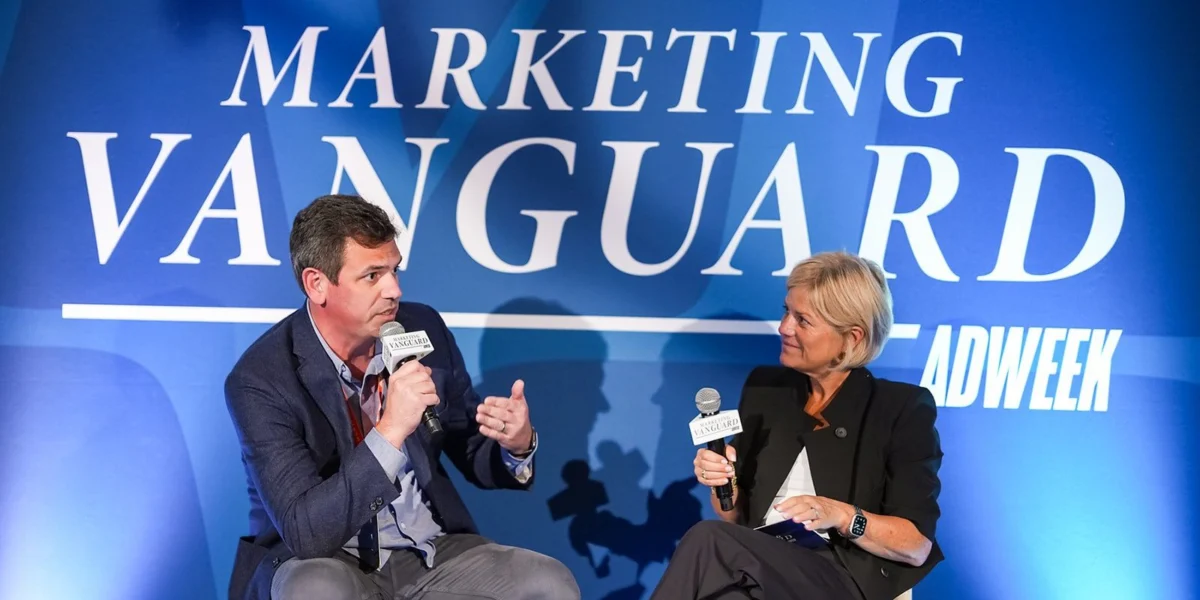
Speaking at ADWEEK’s Brandweek 2026 in Atlanta, Georgia, Williams laid out a vision for the future of the industry, where media acts not as a standalone department, but as a central "flywheel" that drives business growth through integrated, cross-channel innovation.
Main Facts: The Shift from Planning to Platforming
The central thesis of Williams’ presentation, delivered during the "Media As a Flywheel For Growth" session, is that modern brands are failing because they treat media, data, content, and technology as separate workstreams that are loosely stitched together at the end of the creative process.
Williams argues that this "experience planning" method creates friction. When a brand plans media separately from its creative content, or develops technology stacks that don’t communicate with store-level data, the consumer journey becomes disjointed. To rectify this, Dentsu X is advocating for "experience platforming"—a methodology that requires the total integration of teams and capabilities from the outset.
Instead of sequential execution, platforming mandates that all departments work systematically, creating a shared ecosystem where data, media, and creative intelligence flow bidirectionally between the agency and the brand.
Chronology: The Evolution of Media Strategy
To understand the significance of Williams’ mandate, one must look at the recent trajectory of digital marketing.
- 2020–2022 (The Digital Pivot): Following the global pandemic, brands rushed to digitize their consumer interactions. This led to a surge in specialized, siloed tools—social media ad managers, CRM software, and programmatic platforms—that functioned in isolation.
- 2023–2024 (The Integration Hurdle): As marketers realized that these disparate tools were causing campaign inefficiency, the industry began experimenting with "omnichannel" strategies. However, most of these were superficial integrations rather than structural changes.
- 2025 (The Data-Tech Synthesis): AI and machine learning began to allow for faster data processing, but the human element—the agency-client relationship—remained traditional and hierarchical.
- 2026 (The Era of the Flywheel): As highlighted at Brandweek 2026, the current focus has shifted toward building "flywheel" systems where media is the engine. By integrating competitive data with real-time store-level intelligence, brands are now capable of localized activation at global scales.
Supporting Data: The Heineken Case Study
The most compelling evidence for this shift is found in Dentsu X’s recent work with Heineken. The brewing giant faced a classic challenge: how to maintain a consistent global brand identity while empowering local markets to respond to hyper-local competitive pressures.
The Systemic Approach
Under the guidance of Dentsu X, Heineken moved away from centralized, top-down directives. Instead, they implemented a bidirectional information network.
- Data Aggregation: The team integrated competitive retail data, local market intelligence, and consumer sentiment analysis into a single, accessible platform.
- Decision-Making: Because this platform was shared between the agency and the brand, the feedback loop was shortened. Insights gathered from a regional store promotion could be fed back into the system in real-time, allowing the brand to pivot its media strategy within days, rather than months.
- Activation: The output was not just a media buy; it was an integrated outcome that touched franchisees, stakeholders, and retail outlets simultaneously.
By functioning as a unified team, the brand and the agency removed the "middleman" delay that often cripples large-scale campaigns.
Official Responses and Strategic Perspectives
During his fireside chat with ADWEEK chief brand and community officer Jenny Rooney, Williams emphasized that this transformation is as much about corporate culture as it is about software.
"It’s just different ways in which we can think about using scale solutions and point ourselves to, ‘How are we building for that?’ But also be scrappier and nimbler," Williams remarked.
His sentiment highlights a growing tension in the marketing world: the need for massive enterprise-level scale versus the need for startup-style agility. Williams posits that the only way to achieve both is to remove the "layers" of management that typically exist between the data scientists, the media buyers, and the brand managers. By putting them in the same "platform," the bureaucracy is replaced by collaborative execution.
Implications: The Future of Media Agencies
The implications of this shift are profound for both agency business models and the broader marketing industry.
1. The Death of the "Retainer-Silo" Model
Traditionally, agencies have been compensated based on the number of hours or the specific service provided (e.g., "we are your media buying agency"). In the "flywheel" model, the value proposition shifts to the efficiency of the ecosystem. Agencies must become true technical partners, capable of building and maintaining these complex, interconnected data platforms.
2. The Power of Localized Scale
For multinational corporations, the "Heineken model" provides a blueprint for global relevance. By building a system that allows for "local intelligence" to influence "global scale," brands can avoid the pitfalls of tone-deaf global campaigns. This effectively turns every local retail outlet into a data point, transforming the brand’s entire footprint into a living, breathing laboratory.
3. Closing the Gap Between Creative and Media
Perhaps the most significant implication is the eventual reunification of creative and media. If media is the "flywheel" that drives growth, it can no longer be the last step in the process. The content must be designed with the media platform’s capabilities—and the data it generates—already in mind. We are entering an era where "experience platforming" will become the default, and those who fail to break down their silos will find themselves unable to compete with brands that operate as unified, agile machines.
Conclusion: The Road Ahead
As we look toward the remainder of 2026 and beyond, the message from industry leaders like Bruce Williams is clear: complexity is not an excuse for fragmentation. While the marketing landscape is undeniably more complicated than it was a decade ago, the tools to master that complexity are now available.
The challenge for CMOs and agency leads is to move beyond the comfort of the silo. It requires a fundamental redesign of how teams interact, how data is shared, and how media is deployed. By treating media as a flywheel—a central, driving force that powers every part of the business—brands can transform their fragmented interactions into a seamless, meaningful, and highly effective consumer experience.
The future belongs to those who can bridge the gap between their data, their technology, and their creative vision. As the Dentsu X approach demonstrates, when those pieces finally click into place, the results are not just better campaigns, but a more resilient and growth-oriented brand.


 Ammar Sabilarrohman
 Sagoh

 Raul Delapena Setiawan

 Reynand Wu



 Azzam Bilal Chamdy

 Ali Ikhwan
