
 Neng Nana
In the modern corporate landscape, the promise of the autonomous, self-healing supply chain has become the siren song of the C-suite. From the boardrooms of global multinationals to the technical workshops of software developers, the conversation is dominated by the allure of "agentic" AI and autonomous planning. Yet, despite these technological leaps, a sobering reality remains: many global organizations are failing to scale performance or achieve the promised economies of scale.
The disconnect lies in a fundamental truth often ignored in the rush toward innovation: you cannot automate your way out of a broken foundation. As supply chain experts look to the horizon for the next "shiny object," they frequently overlook the core systemic failures that have plagued logistics and planning for decades. To truly drive value, organizations must pivot from the fantasy of "AI-enabled magic" back to the bedrock of supply chain first principles.
The Dance with Shiny Objects: A Case of Misplaced Innovation
The obsession with new technologies often mirrors the classic business trap of seeking "faster horses" when the entire transportation infrastructure is obsolete. When organizations layer sophisticated AI agents and autonomous algorithms over legacy architectures—a phenomenon often described as "AI Stupid"—they are not innovating; they are simply accelerating the propagation of bad data and inefficient processes.
Innovation, as the adage goes, does not come from asking users what to build, but from deeply understanding what it feels like to be them. For many supply chain professionals, "being them" means grappling with daily, grinding uncertainty. These professionals are not helped by the promise of a "hands-free" supply chain if that system is built upon the same flawed data models and static assumptions that defined the industry fifty years ago.
The goal for any serious organization should be to use AI to address the black holes and inconsistencies inherent in legacy technology, rather than using it to mask them. True digital transformation requires a ruthless commitment to clarity, discipline, and the understanding of physical reality.

Chronology of Failure: Why Legacy Models Collapse
To understand why supply chains struggle today, one must look at the evolution—or lack thereof—in planning technology.
- The Era of Averages (1970s–1990s): Initial supply chain systems were built on the assumption of stability. Planning models relied on static lead times and averages. In a predictable world, this sufficed.
- The Rise of Fragmentation (2000s–2010s): As global supply chains expanded, the "gossamer thread" of lead time began to snap. Organizations added layers of specialized software for procurement, manufacturing, and logistics, but these systems rarely communicated using a unified data model.
- The Current "Shiny Object" Phase (2020s–Present): The current cycle is characterized by the attempt to force-fit AI onto this fragmented, latency-ridden foundation. Because the underlying data is disconnected, the AI models are starved of the ground-truth data required for accurate decision-making.
The chronological progression here is clear: we have moved from simple systems to complex, disconnected systems, and now to "smart" systems that are trying to optimize chaos. The missing link in this timeline is the re-evaluation of the fundamentals.
Supporting Data: The Entropy of Modern Supply Chains
At the heart of the current crisis is the concept of Supply Chain Entropy. Often confused with the "Bullwhip Effect," which describes the amplification of demand distortion, entropy is a far more pervasive force. It is a measure of the total disorder, uncertainty, and unpredictability within the system.
The Role of Lead Time
Lead time is the "gossamer thread" that binds the entire supply chain together. When this thread breaks, the chain loses its structural integrity. In a survey of thirty high-level supply chain professionals, a startling commonality emerged: not a single leader was updating lead time in their safety stock calculations based on actual performance.
When companies ignore the delta between "planned" lead time and "actual" lead time, they create a systemic buffer of inefficiency. This is where entropy takes root. As a system becomes more complex—especially with heavy reliance on global outsourcing—the opportunities for this disorder to multiply increase exponentially.
Measuring the Impact
To combat this, organizations must shift toward probabilistic engines. Rather than relying on a single static value, modern math allows for the calculation of the probability of lead time. By applying the formula for safety stock—which accounts for both demand variability and supplier performance—organizations can stop guessing and start calculating.
Safety Stock = Z × √[(LT × σd²) + (D² × σLT²)]
This formula serves as a reality check. When organizations input their actuals into this equation, the results often reveal that their current inventory levels are either dangerously low or unnecessarily bloated.
Official Perspectives: The First-Principle Shift
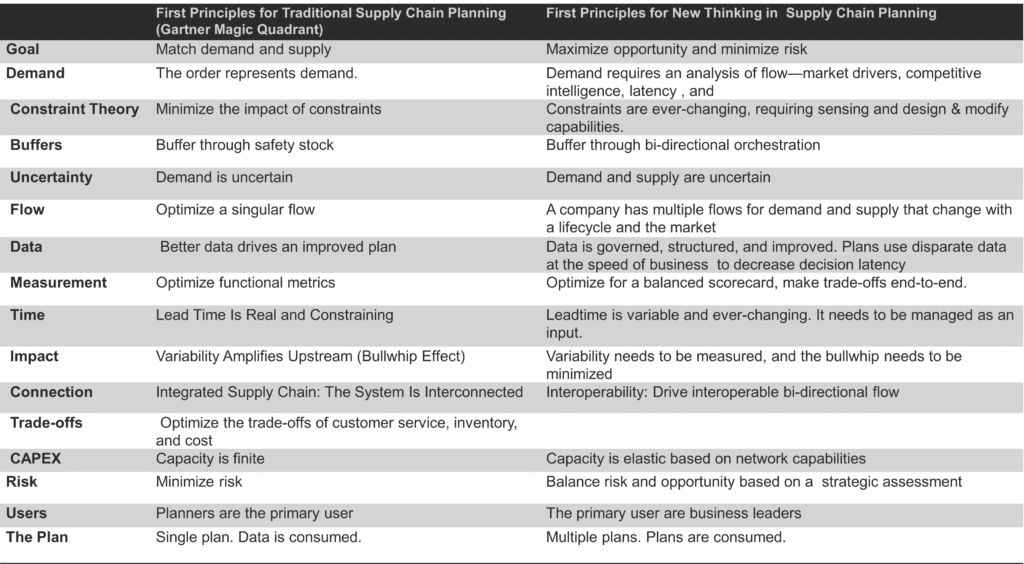
To move forward, the industry must adopt a first-principle mindset. This requires leaders to strip away the jargon and ask: What are we actually trying to do?
In practice, this means mapping the "Current System Value" against "Average Value from Actuals." By analyzing the order cycle, manufacturing cycles, and procurement cycles, organizations can identify exactly where the entropy is highest. Typically, the procurement and logistics cycles are the primary culprits.
The Formula for Supply Chain Entropy
For those looking to quantify the disorder in their network, the following metrics provide a starting point:
- Entropy (H): Calculated as H = -Σ pi ln(pi). Low entropy indicates predictability, while high entropy suggests systemic uncertainty.
- The Composite Metric (SE): SE = H × CV (Coefficient of Variation).
This composite metric is a powerful tool for the boardroom. It provides a numerical value for the "cost of disorder." When a company can show that its lack of lead time discipline is costing the organization a specific, measurable amount in capital and service-level degradation, the conversation with the CFO shifts from "buying software" to "optimizing assets."
Strategic Implications: Redefining the Future
The implication for leadership is clear: stop buying tools and start building disciplines. The path to a resilient, high-performing supply chain involves three distinct steps:
- Align on First Principles: Before deploying AI, ensure your team has a shared, plain-language definition of every process in your supply chain.
- Redefine the Data Relationship: Move away from legacy data structures that accept latency as a standard. Implement a unified data model that treats lead time as a dynamic, living value rather than a static parameter.
- Embrace Variability: Accept that the era of predictable, static supply chains is over. Use probabilistic modeling to account for the reality of your suppliers, your logistics partners, and your customers.
A New Discussion with the C-Suite
The ultimate goal is to move the supply chain conversation out of the warehouse and into the boardroom. By using network design technologies to simulate the impact of entropy on cost and customer service, supply chain leaders can present a compelling business case.
When you can tell your CFO that a 10% reduction in lead time entropy will result in a 5% improvement in working capital without sacrificing service levels, you are no longer just a cost center. You are a strategic driver of value.
Conclusion
The "shiny objects" of the autonomous supply chain are not inherently bad—they are simply useless without a foundation of discipline. If you are struggling with planning, if your teams are caught in the loop of constant fire-fighting, and if your "autonomous" systems are failing to deliver, stop.
Leave your assumptions at the door. Strip your processes back to their first principles. Measure your entropy. Only when you have mastered the fundamentals of the physical supply chain can you successfully leverage the power of the digital one. The future belongs not to those who chase the newest algorithm, but to those who have the courage to fix the broken gossamer threads of their own reality.

 Evan Lee Salim

 Jia Lissa
 Sagoh

 Rifan Muazin

 Ali Ikhwan
