
 Rifan Muazin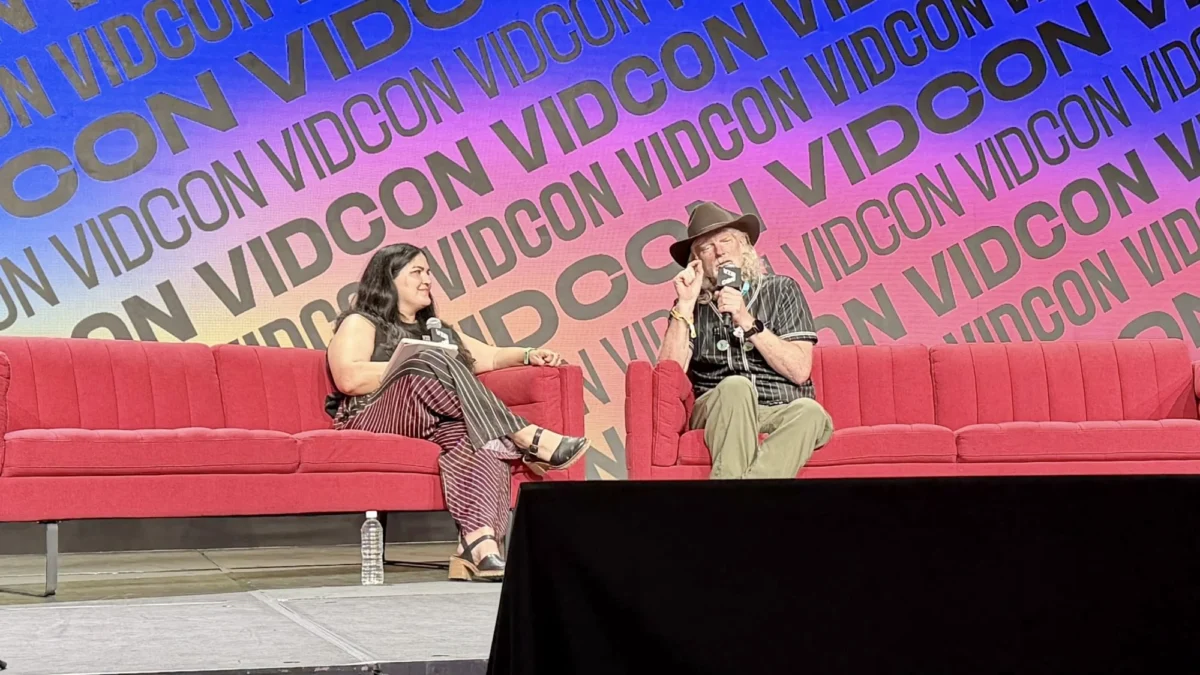
By Bethany Allard
June 27, 2026
In the hyper-competitive landscape of the modern creator economy, the battle for user attention has largely been defined by the "infinite scroll." Platforms like TikTok, Instagram Reels, and YouTube Shorts have conditioned audiences to consume content in rapid, bite-sized bursts. However, as VidCon 2026 convenes in Anaheim, Twitch CEO Dan Clancy is pushing a counter-narrative: the future of digital connection isn’t in the scroll—it’s in the live, unedited stream.
During a keynote fireside chat titled Why Live is the Future of Connection: From Passive Scrolling to Real Connection, Clancy articulated a vision for Twitch that prioritizes depth over velocity. As the platform navigates a shifting media landscape, Clancy’s message to creators and users alike is clear: Twitch is not just a broadcasting tool; it is a digital town square designed to foster genuine human bonds.
The Anti-Social Nature of Modern Social Media
"Social media, interestingly, has become anti-social," Clancy remarked during his session. His critique strikes at the heart of the current creator economy dilemma. While traditional social platforms were engineered to connect us, the evolution of algorithmic "passive scrolling" has, in many ways, driven users further into silos of isolation.
"It started as a technology that connected us with people, but now sitting and swiping actually leaves you a little more isolated," Clancy explained. "It doesn’t make you feel connected, and that’s why live is coming on strong now."

According to Clancy, the distinction lies in the psychology of engagement. When a user engages with a TikTok video, the transaction is often fleeting—seconds of entertainment followed by a flick of the thumb. On Twitch, the dynamic is communal. The audience arrives not just to watch a streamer, but to participate in a shared experience. When a creator takes a hiatus, their community notices the absence—a testament to the social glue that forms within the chat and across the viewer base.
Shared Identity: The "Sports Model" of Streaming
Clancy drew a provocative parallel between the growth of Twitch and the long-standing model of professional sports. He argues that viewers don’t flock to sports solely for the athleticism; they congregate for the shared identity and the collective emotional stakes.
"People often think sports are about watching the world’s best athletes. It’s not about that at all. It’s about community, right? It’s about shared identity," Clancy said. "Twitch is the same thing. The affinity you’re gathering around is a streamer, but then you form these bonds horizontally. The same thing that happens in the bleachers of a stadium is exactly what happens in a Twitch chat."
This "horizontal" connection—where viewers bond with one another as much as they do with the creator—is what Clancy believes will insulate Twitch from the volatility of short-form video platforms.
The Discoverability Paradox
While the emphasis on community is a pillar of the Twitch identity, it has historically created a friction point: discoverability. For years, smaller and mid-sized streamers have expressed frustration over the lack of algorithmic "push" on the platform. Unlike YouTube or TikTok, which rely on aggressive content-delivery algorithms to catapult creators to stardom, Twitch has remained largely hands-off.

Clancy defended this stance, arguing that it is a deliberate design choice. "If I said, ‘I’m going to solve the discovery problem,’ the only way I could fully solve it is by taking them off your page, putting more stuff on your page to distract them, more stuff to get them away from you. And that is exactly what our creators don’t want."
For the Twitch CEO, the priority is protecting the "stickiness" of the streamer’s channel. However, he acknowledged that the ecosystem needs to adapt to the realities of 2026. Twitch is currently leaning into "Recaps"—an evolution of the site’s existing Stories feature—which allows creators to showcase high-impact, short-form clips of their live content to draw in new audiences.
"I think the thing that will benefit our creators the most is if they are able to easily create short-form content and viewers are watching it more on Twitch," he noted. The strategy is clear: use short-form video as a discovery funnel, but retain the audience on the platform for the long-form, live experience where the real monetization—and connection—happens.
The AI Frontier: Moderation and Content
The elephant in the room at any 2026 tech conference is Artificial Intelligence. When asked about the rise of AI-driven channels, Clancy was pragmatic. He indicated that while Twitch has robust contingency plans for when AI content becomes more prevalent, the current landscape is relatively manageable.
"For the time being, it’s limited to a handful that are clearly identifiable as AI, and in my opinion, they aren’t engaging enough to hold a viewer’s attention for the same amount of time as a human creator can," Clancy said.

Beyond the content itself, Clancy is bullish on AI as a utility for safety. He suggested that large language models could significantly enhance the efficacy of "AutoMod," Twitch’s proprietary tool for flagging inappropriate chat behavior. By leveraging AI to better understand context, nuance, and intent, Twitch hopes to foster healthier, safer environments without requiring a massive increase in human moderation overhead.
Diversification: Beyond Gaming
The stereotype that Twitch is merely a home for gamers is rapidly eroding. Over the past several years, the platform has seen an influx of musicians, artists, educators, and even non-profit organizations.
"Now, when I meet an actor or a musician, almost 70 percent of the time when they hear I’m the CEO of Twitch, they go, ‘Oh, yeah, I’ve been thinking I should do something,’" Clancy said. This diversification is essential to Twitch’s long-term sustainability, moving the platform away from a niche hobbyist site toward a broad-spectrum entertainment hub.
Safety and the Path Forward
Perhaps the most critical challenge facing Twitch as it heads into the next cycle of its annual convention, TwitchCon, is the issue of safety. Following the highly publicized backlash regarding the mishandling of an assault at last year’s event—which led to high-profile boycotts from top-tier creators—the pressure is on for Twitch to restore trust.
Clancy appeared confident when addressing these concerns. He emphasized a shift toward more rigid, structured interaction protocols. "We’ve updated how we do meet and greets so that they’re more structured. We don’t allow signups on the day of; you have to reserve a spot. So that restricts it a little bit, but it restricts us in a way to protect the creators."

By implementing these structural guardrails, Clancy believes the platform can provide a safe space for the creator-fan relationship to flourish without the risks that plagued previous conventions.
Implications for the Future of Media
As VidCon 2026 continues, the dichotomy between the "passive scroll" and "active participation" has become the primary battleground of the creator economy. While TikTok and its cohorts may dominate the sheer volume of minutes consumed, Twitch is positioning itself as the high-value alternative.
The implications are significant. If Clancy’s thesis holds—that consumers are growing tired of the isolation of algorithmic feeds—we may be on the cusp of a "Live Renaissance." Creators who can successfully bridge the gap between short-form discoverability and long-form community building will likely be the ones who define the next decade of digital entertainment.
For Dan Clancy and the team at Twitch, the path forward is not about chasing the metrics of the competition. It is about proving that in a world of increasing digital noise, the most valuable commodity is not an impression, but a connection. Whether Twitch can scale that mission without losing the intimate "town square" feel that built its reputation remains the defining question of the CEO’s tenure. As of today, the community is listening—and watching—in real-time.

 Reynand Wu
 Iffa Jayyana
 Raul Delapena Setiawan

 Sagoh
Sagoh

 Azzam Bilal Chamdy
 Ali Ikhwan