
 Raul Delapena Setiawan
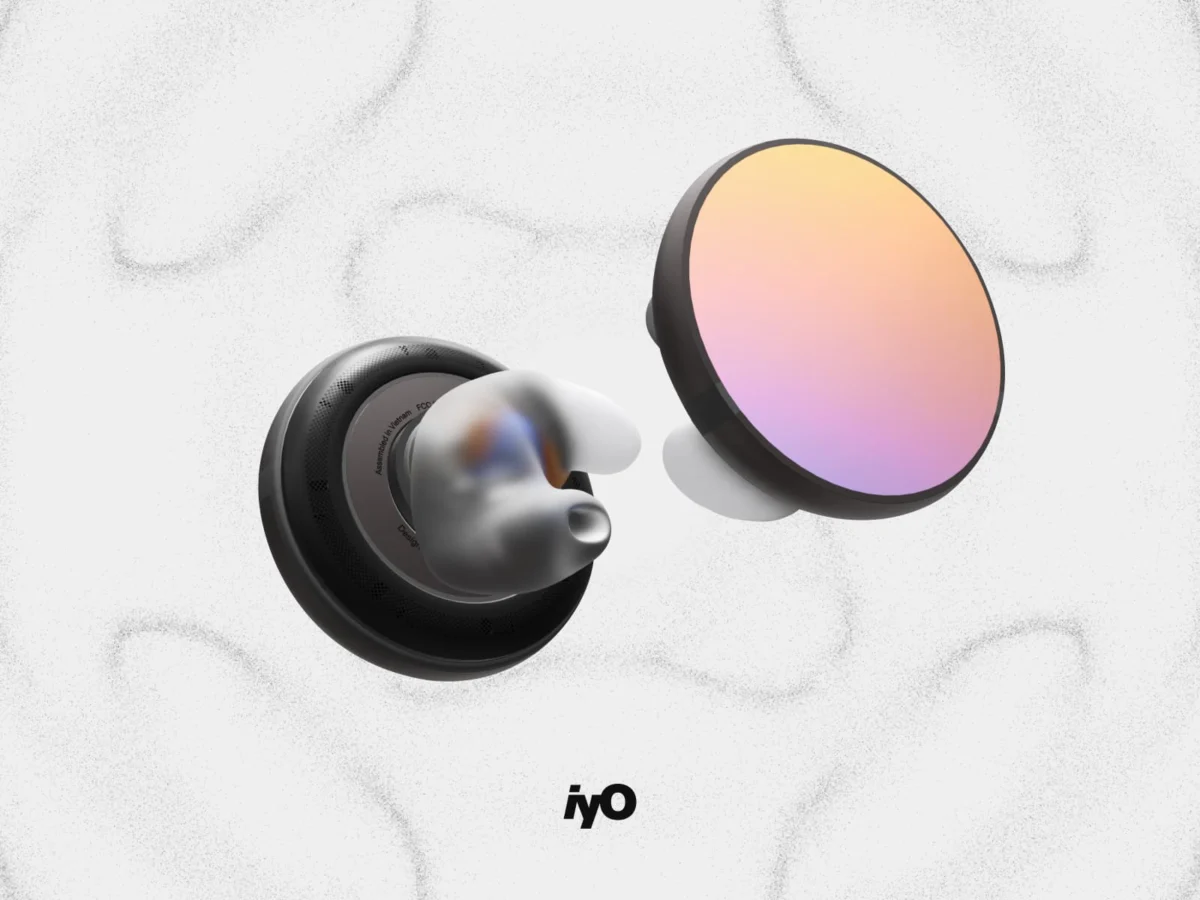
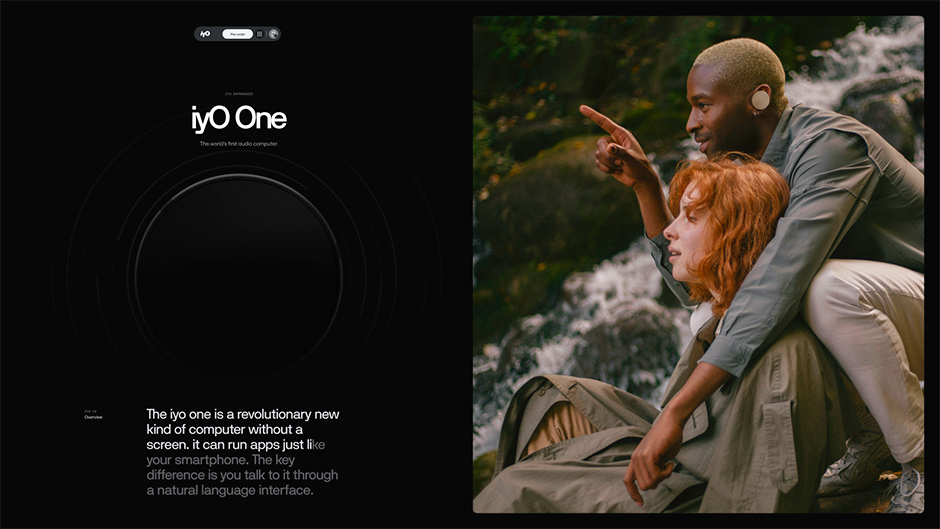
In an era defined by "scroll culture" and the relentless demands of the attention economy, a new player has emerged from the shadows of Google X—the search giant’s famed moonshot factory. The startup, iyO, is attempting to do the unthinkable: disconnect humanity from its screens. Their flagship product, the iyO One, is the world’s first "audio computer." It is a voice-first, screen-free device worn directly in the ear, designed to facilitate a more present, human-centric relationship with technology.
However, launching a hardware revolution is rarely as simple as manufacturing the device itself. For iyO, the primary hurdle was communication. How do you market a product that is invisible to the eye and fundamentally challenges the way we interact with information? The answer lay in a digital transformation project that turned a standard e-commerce platform into a visceral, experiential journey.
The Challenge: Moving Beyond the "Flat" Web
When iyO founder Jason Rugolo approached the creative team, the company was at a critical juncture. With six years of research and development in agentic computing behind them, they were preparing to scale, seeking investment, and readying their first batch for early adopters. Their existing website, however, was a mismatch for their revolutionary hardware. It contained the necessary specs, but it was "flat"—underwhelming and lacking the tactile, futuristic soul of the product it represented.
The mission was clear: create a digital showroom that didn’t just explain the product but allowed the user to feel it. The objective was to build a bridge between high-concept engineering and consumer intuition.
Chronology: A Journey in Three Acts
To translate the complexity of an audio-first computer into a visual medium, the development team structured the website as a three-act journey. Because potential customers had never held or interacted with an audio computer, the site could not simply act as a brochure; it had to serve as a convincer.
Act I: The Philosophy of Sound
The homepage serves as an immersive manifesto. Rather than bombarding users with technical specifications or marketing buzzwords, the team built the experience around the physics of sound. Using WebGL, they created a field of 1.6 million particles that form Chladni patterns—the geometric shapes created by vibrating surfaces at specific frequencies.
These particles do not merely sit static; they are in constant motion, resolving into ten pointed haikus. These manifestos—such as "life is out there, friend / do not stare into the light / look up and be here"—directly challenge the dopamine-loop design of modern smartphones. The technical execution is as elegant as the philosophy: a GPGPU simulation that reads the dark pixels of text to rearrange particles, ensuring the transition between "manifesto" and "sound pattern" feels fluid, organic, and alive.
Act II: Unpacking the Hardware
The second act moves from philosophy to physicality. Because the iyO One is a dense, complex piece of engineering involving custom earmolds and advanced acoustic packages, a simple photograph would fail to convey its sophistication.
The team utilized a scroll-driven, interactive 3D exploded view. By taking the original CAD files—the very blueprints used in the manufacturing process—and retopologizing them for browser performance, they allowed users to "disassemble" the device digitally. As the user scrolls, the hardware peels back along the Z-axis, revealing the inner workings. It transforms a dense engineering story into a tactile experience, inviting the user to explore the device part by part.
Act III: The Digital Showroom
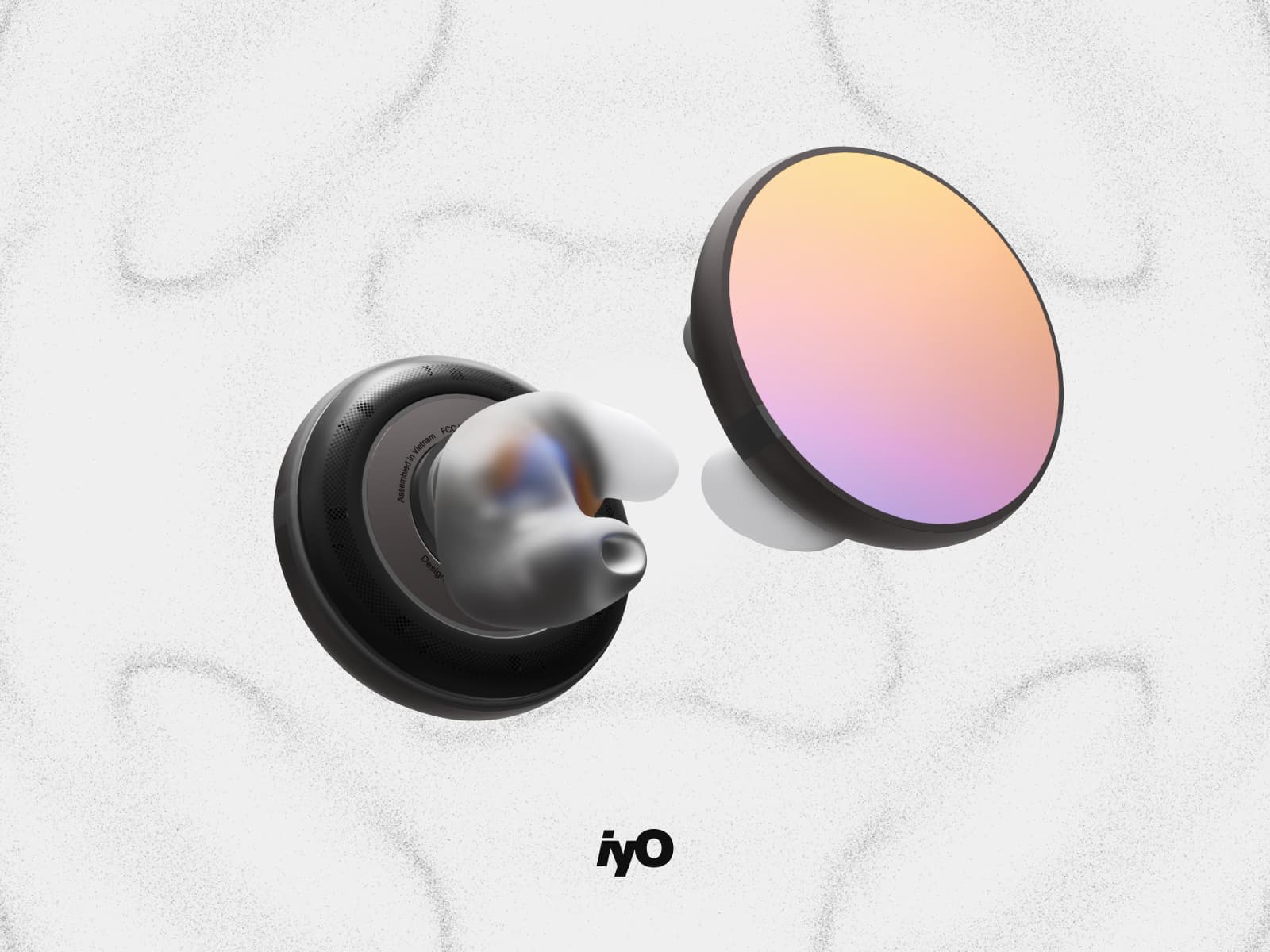
The final act is the shopping experience, which abandons traditional "grid-based" e-commerce for a configurator-style interface. Utilizing a glassmorphic design language, users can customize their device and see the changes reflected in real-time 3D renders. A live model allows for 360-degree rotation, showcasing the complex, dichroic finish of the "dusk" model, which shifts colors based on light—a material effect meticulously recreated in code.
Supporting Data: Engineering for Performance
Creating a high-fidelity digital showroom is easy; making it run smoothly on a smartphone is a feat of engineering. The development team faced the "heavy asset" problem: CAD files are massive, and 1.6 million particles are resource-intensive.
To solve this, the team employed several key strategies:
- Retopology and Draco Compression: They reduced the high-poly engineering files to lean, browser-ready glTF models without losing visual integrity.
- Adaptive Performance: The particle system scales dynamically. On older devices, the system automatically reduces particle count to maintain a steady 60fps, ensuring the user experience never stutters.
- Render Optimization: By lowering the pixel ratio on retina displays, they cut the shader workload by approximately 44% with no discernible impact on visual quality.
- Seamless Transitions: Using
taxi.js, the site functions as a single continuous experience. There are no full-page reloads, allowing memory usage to remain stable rather than creeping up during navigation.
Official Responses: The Vision of Jason Rugolo
For Jason Rugolo, the website is not just a sales tool; it is a vital component of the product’s identity. In a landscape where thousands of startups compete for attention, the ability to capture the imagination of the public is as important as the hardware itself.
"There are thousands of people like me all trying to build the future," Rugolo noted. "A huge part of it is how well you can capture the imagination of the general public and your future customers."
The decision to lean into "futuristic minimalism" was intentional. The goal was to create an interface that felt advanced but remained inherently familiar—a "techno-futuristic" style that doesn’t require a steep learning curve. By keeping the UI consistent across the product range, the site ensures that the hardware feels like a unified ecosystem rather than a disparate collection of gadgets.
Implications: The Future of E-Commerce
The iyO One project signals a shift in how frontier technology is sold. For products that are truly revolutionary—products that don’t yet have a category or a common use case—standard e-commerce layouts are often a "conversion killer." They reduce high-innovation products to commodities.
By treating the "experience as the storefront," iyO has set a new benchmark. The implications for the tech industry are significant:
- Trust through Transparency: By letting users inspect 3D models and understand the hardware components, the company builds the kind of trust that typically requires a physical store visit.
- The Death of the Brochure: The transition from static images to dynamic, WebGL-driven storytelling is likely the future for hardware brands.
- The "Anti-Screen" Paradox: Perhaps the most compelling implication is the irony of using a high-end, immersive digital experience to convince people to spend less time looking at screens. By providing a truly "meaningful" digital interaction, iyO proves that screens can be used to facilitate freedom rather than just consumption.
As the iyO One moves closer to a full-scale public launch, the success of this digital journey proves that even in the age of AI and automated marketing, the most effective sales tool remains a well-told story—especially when that story is told with the precision of an engineer and the soul of an artist.


 Nila Kartika Wati

 Iffa Jayyana

 Ammar Sabilarrohman

 Asep Darmawan

 Asro

 Layla Zulfa


 Muslim
