
 Sagoh
As the landscape of software development shifts from human-led coding to AI-agent orchestration, a fundamental problem has emerged: the chat interface, once the gold standard for human-AI interaction, is breaking under the weight of scale. When a single developer manages a fleet of agents—and those agents, in turn, spawn sub-agents to handle recursive tasks—the linear, scrolling history of a chat log becomes an inadequate vessel for complex oversight.
Industry experts are now sounding the alarm: we are entering an era where "agent management" requires more than just a list of tasks; it requires a sophisticated visual architecture. As explored in recent insights from product design leaders like Luke Wroblewski, the industry is pivoting toward "agent management interface patterns" that prioritize spatial awareness, visual output, and modular workspaces over simple text-based command prompts.
The Evolution of AI Products: From Chatbots to Orchestrators
The initial wave of generative AI was characterized by the "chat-first" paradigm. Tools like ChatGPT or Claude functioned effectively as conversational assistants. However, as AI software evolved into multi-agent systems—where an architect agent might delegate tasks to a coding agent, which then triggers a testing agent—the complexity of these interactions surpassed the cognitive load a human can manage via a single text thread.
The Problem with Traditional Management Views
When developers and project managers first attempt to scale agent oversight, they instinctively reach for familiar enterprise patterns:
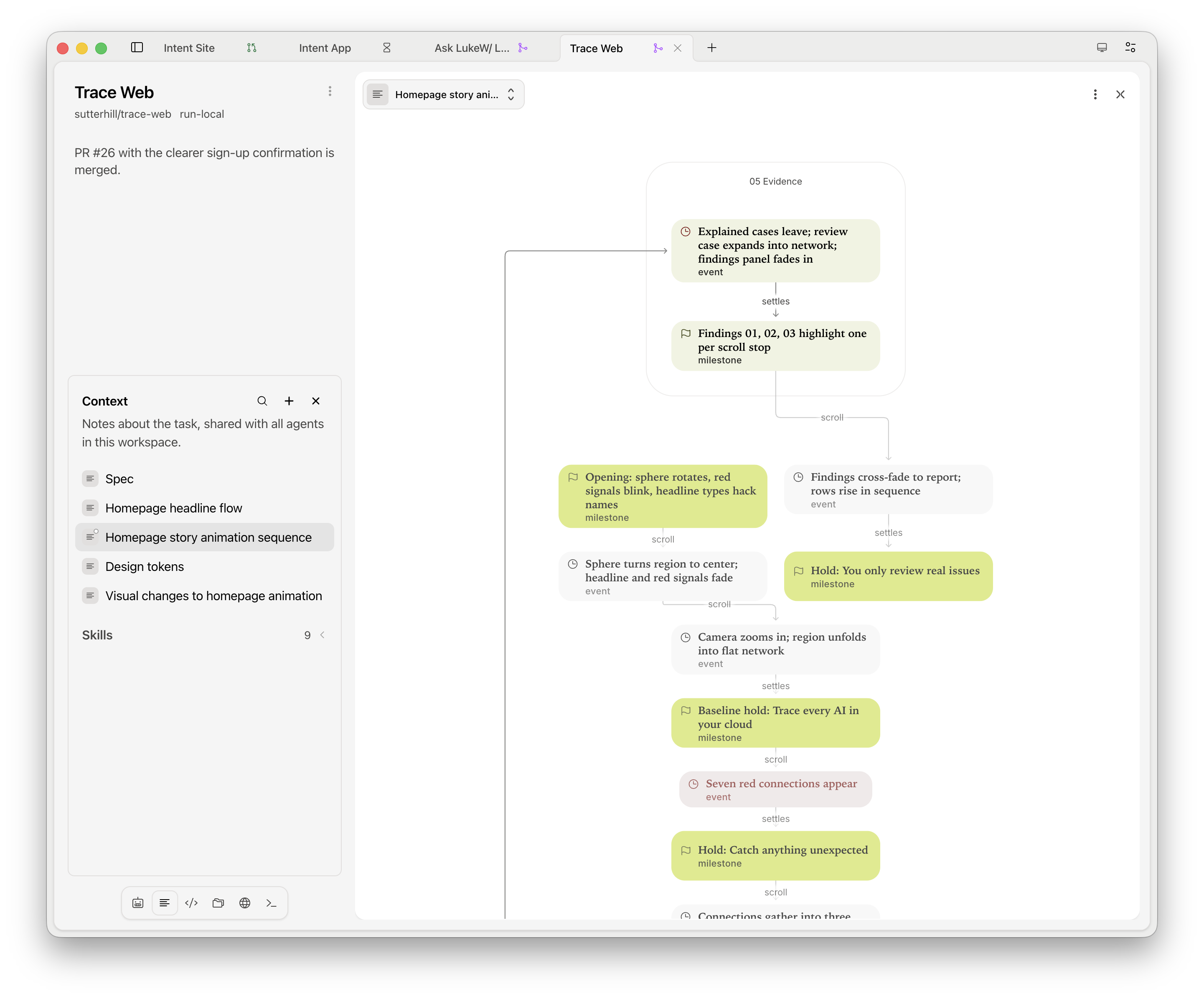
- Inboxes: Borrowed from email and Slack, these treat agent outputs as messages to be cleared.
- Dashboards: Monitoring-style views that provide a "what is happening right now" snapshot.
- Kanban Boards: Useful for tracking status, but often blind to the internal logic or "reasoning" of an agent.
While these tools answer the basic question of "what are my agents doing?", they fail to provide the context required to steer agents effectively. They offer visibility without comprehension.
Intent: A Case Study in Multi-Dimensional Coordination
The limitations of the chat-centric model have led to the development of specialized orchestration tools, most notably Intent. Intent represents a paradigm shift for developers, moving away from a single source of truth (the text log) toward a multi-document, canvas-based workspace.
The core philosophy behind Intent is that agents should not just "speak"; they should "show." By allowing agents to generate persistent, dynamic documents (referred to as "notes"), Intent bridges the gap between raw code generation and human-readable architecture.
Chronology: The Shift to Spatial Computing for Agents
- The Chat Era (2022–2023): Reliance on LLM-based chat interfaces for all interactions. Limitations: Loss of context, inability to track long-running multi-agent processes.
- The Pattern Recognition Phase (2023–2024): Developers began cataloging "management patterns," identifying that static lists and calendars were insufficient for dynamic agent workflows.
- The Spatial/Document Era (2024–Present): Introduction of persistent, visual-heavy workspaces where agents generate diagrams, screenshots, and documentation that live alongside the code.
Supporting Data: Why Visuals Outperform Text
Human cognition is inherently spatial. Research into software architecture has long shown that developers understand complex systems better through visual models—UML diagrams, flowcharts, and state machines—than through lines of code or prose descriptions.
In the Intent ecosystem, this principle is applied directly to agent-human interaction. Agents are now capable of:
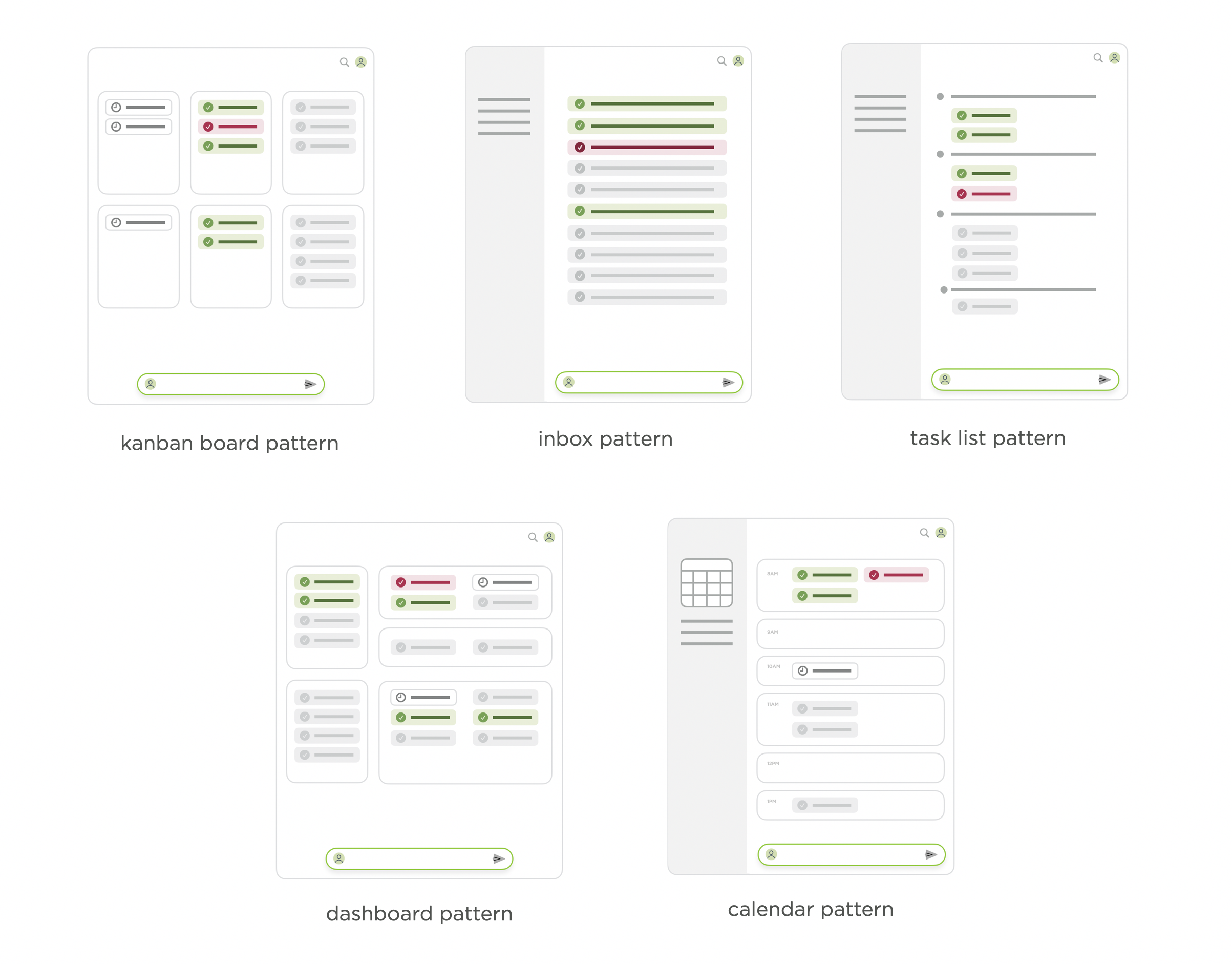
- Planning via Diagrams: Instead of outputting a block of text describing a plan, agents can render architecture maps, flowcharts, and sequence diagrams directly into a note. This allows the human operator to audit the agent’s logic before the agent consumes expensive API tokens on execution.
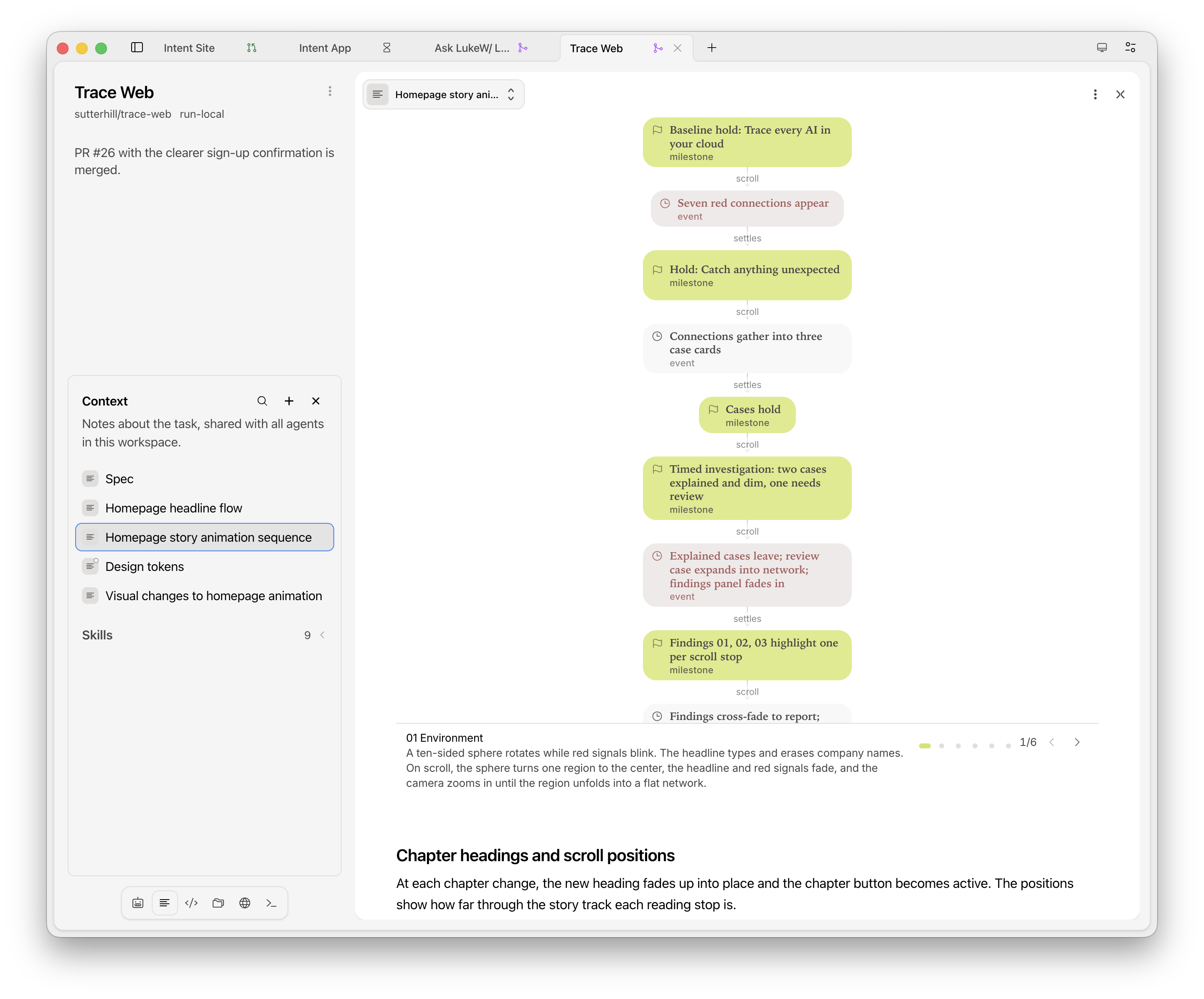
- Stepped Walk-throughs: By breaking complex diagrams into chronological, stage-by-stage breakdowns, Intent allows developers to parse the agent’s intent one segment at a time. This provides a granular "debug" mode for agent behavior.
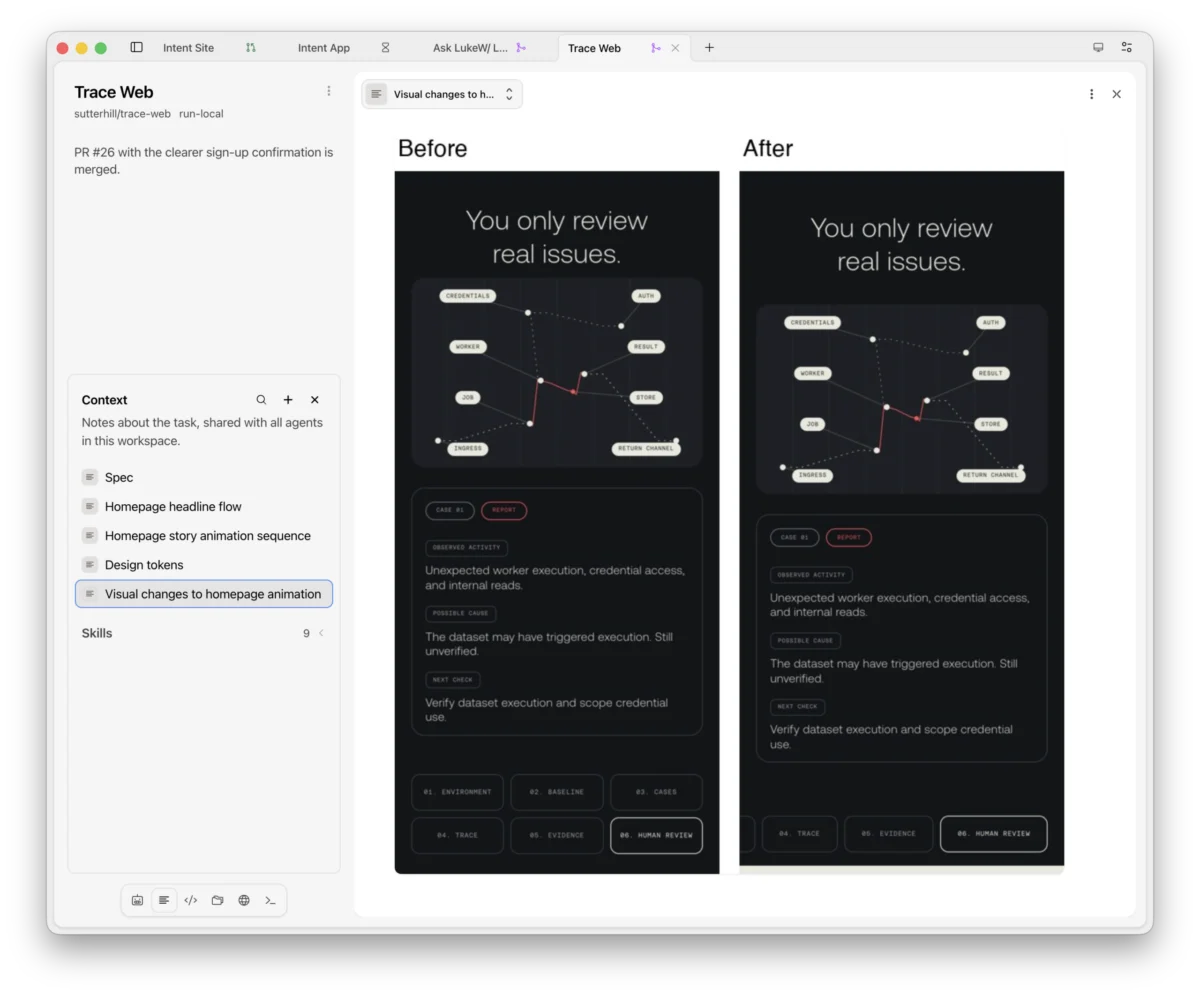
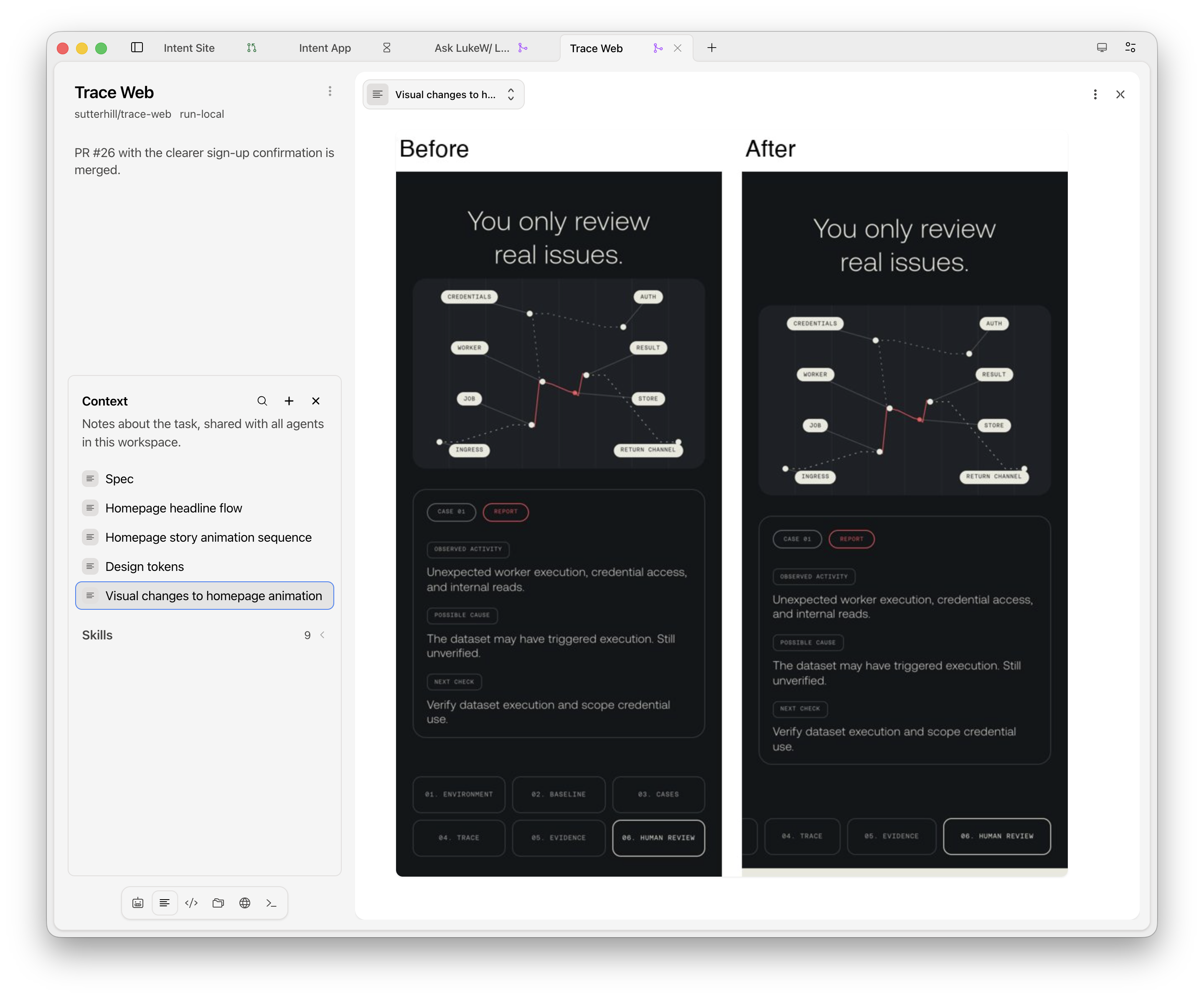
- Visual Regression Tracking: By comparing "before and after" screenshots, agents allow for instant UI verification. This eliminates the need for the developer to manually run code or inspect diffs to understand the impact of a styling change.
Official Perspectives: The Developer’s Role as "Steering Committee"
The shift toward these interfaces changes the role of the developer. They are no longer "coders" in the traditional sense; they are "steering committees."
"We need different ways of seeing things," notes the team behind Intent. This perspective is gaining traction in the software development community. The objective is to keep the developer in the loop without trapping them in the loop. By providing a "design system note," where colors, spacing, and component variants are centrally located and accessible by both human and agent, the platform ensures that the AI stays within the guardrails of the brand identity.
The agent becomes a participant in the design system, rather than an external force that must be constantly corrected.
Implications for the Future of Work
The rise of these specialized interfaces has three significant implications for the software development industry:
1. Token Efficiency and Cost Management
By requiring agents to "map out" their work in visual diagrams before executing tasks, platforms like Intent reduce the likelihood of "runaway agents." A human can see a faulty architectural decision in a diagram and correct it before the agent spends hundreds of thousands of tokens on an incorrect implementation.
2. Cognitive Offloading
The "configurable workspace" approach—where every panel can hold a stack of agents, terminals, files, and browsers—allows developers to construct a custom "cockpit" for their specific project. This reduces context switching, which is arguably the largest productivity killer in software engineering. When the workspace mirrors the problem, the developer can maintain focus for longer durations.
3. The End of the "Black Box"
Perhaps most importantly, these visual interfaces demystify the agent. When an agent pins a screenshot or updates a flow chart, it creates a historical record of progress that is easily auditable. This moves AI development away from the "black box" of prompt-response cycles and toward a transparent, version-controlled process.
Conclusion: A New Interface for a New Era
Chat remains a vital component of the agent-human relationship. It is excellent for initiating work, sending quick commands, and redirecting effort. However, as the number of agents under management scales, relying solely on a chat thread is akin to flying a plane using only a text-based checklist, ignoring the instrumentation and visual navigation displays.
The future of software development will not be defined by which LLM is most powerful, but by which interface allows the human to most effectively orchestrate the swarm. By embracing spatial, document-based, and highly visual management patterns, developers can move beyond simply "chatting" with their software and begin truly engineering it at scale.
As we continue to integrate more agents into our development lifecycle, the lesson is clear: if you can see what your agents are planning, you can steer them toward the outcomes you want. If you can’t, you are merely a passenger in your own code base. The tools of tomorrow, like Intent, are ensuring that developers remain the pilots.

 Nila Kartika Wati
 Iffa Jayyana

 Ammar Sabilarrohman

 Asep Darmawan

 Asro

 Layla Zulfa


 Muslim
