
 Azzam Bilal Chamdy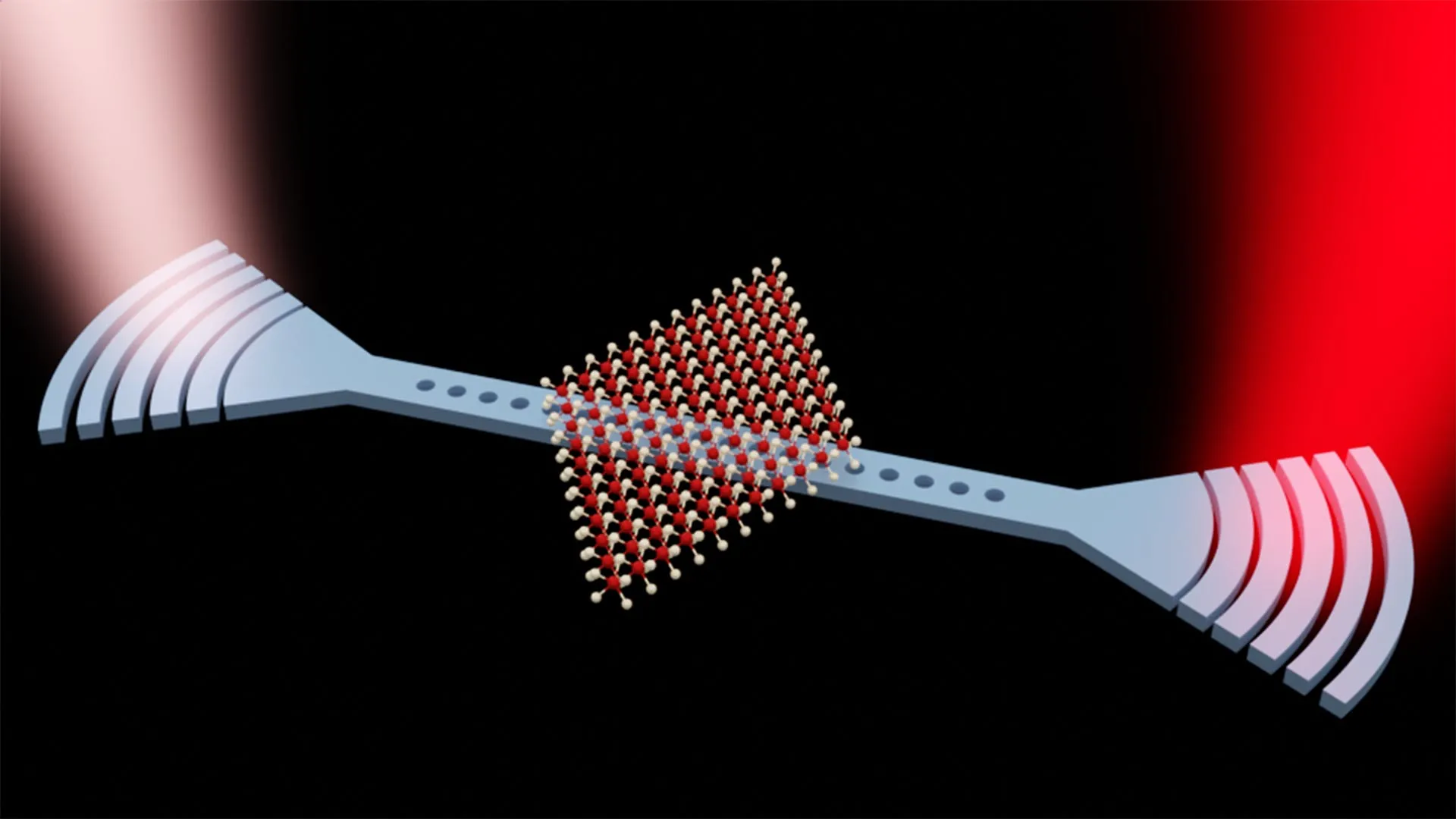
Eighty years after the University of Pennsylvania unveiled ENIAC—the gargantuan, vacuum-tube-driven machine that effectively birthed the digital age—the institution is once again at the vanguard of a computational revolution. While ENIAC relied on the steady flow of electrons to solve the complex ballistics equations of the mid-1940s, a new generation of researchers at Penn is looking to shed the limitations of the electron entirely. By pivoting toward the photon, scientists are exploring a new frontier of hardware that could define the next century of artificial intelligence and high-speed data processing.
The Legacy of ENIAC and the Electronic Bottleneck
In 1946, J. Presper Eckert and John Mauchly changed the trajectory of human history with the Electronic Numerical Integrator and Computer (ENIAC). Occupying an entire room, the machine utilized thousands of vacuum tubes to manipulate streams of electrons. This foundational architecture proved so robust that its core principles—moving electrons through silicon circuits to process binary logic—have remained the gold standard for smartphones, supercomputers, and modern AI arrays for eight decades.
However, the laws of physics are increasingly pushing back against this legacy. Electrons, which carry a negative charge, are inherently "noisy" and "heavy" in the context of information processing. As they traverse the nanoscopic architecture of modern chips, they encounter electrical resistance, generating heat and wasting energy. As our appetite for artificial intelligence grows, the energy demands of these electronic chips have reached a breaking point. We are currently cramming billions of transistors onto chips no larger than a fingernail, and the thermal management of these devices has become a monumental engineering hurdle.
Chronology of a Paradigm Shift
The journey from ENIAC to the current photonic breakthrough represents a decades-long evolution in condensed matter physics.
- 1940s–1960s: The era of the vacuum tube and the subsequent invention of the transistor solidified the electron as the primary "carrier" of information.
- 1970s–2000s: The semiconductor industry focused on miniaturization, following Moore’s Law. As transistors shrank, the efficiency gains were massive, but the physical limitations of moving charge-bearing particles became apparent.
- 2010s: Researchers began exploring "photonic computing," recognizing that light could carry vast amounts of data without the heat generated by electrical resistance. The challenge remained: light is too "polite." It passes through matter without interacting, making it nearly impossible to perform the signal-switching logic necessary for a computer to "think."
- 2024: Researchers at the University of Pennsylvania, led by Bo Zhen, publish a study in Physical Review Letters detailing the use of "exciton-polaritons"—a hybrid particle that bridges the gap between the speed of light and the logic of matter.
Why Photons Hold the Key
"Because they are charge-neutral and have zero rest mass, photons can carry information quickly over long distances with minimal loss, dominating communications technology," explains Li He, co-first author of the study and currently an assistant professor at Montana State University. "But that neutrality means they barely interact with their environment, making them bad at the sort of signal-switching logic that computers depend on."
In the language of computing, light is a perfect delivery vehicle, but a terrible gatekeeper. A computer requires "logic gates"—switches that flip between 0 and 1—to perform calculations. Electrons are ideal for this because their charge allows them to be easily manipulated by external voltages. Photons, conversely, zip past each other like ghosts. To make a computer that thinks, we need light that can "touch" other light.
The Exciton-Polariton: A Hybrid Solution
The breakthrough at the Zhen Lab lies in the creation of a quasiparticle known as an exciton-polariton. By sandwiching atomically thin semiconductor materials between reflective layers, the team trapped photons in a state where they became "strongly linked" with electrons within the material.
This coupling creates a hybrid state. The exciton-polariton possesses the best of both worlds: the high-speed mobility of a photon and the interactive, switchable nature of an electron. When these particles encounter one another, they react strongly. This interaction allows the team to perform "nonlinear activation"—the very process that current photonic chips struggle with.
In existing photonic chips designed for AI, the system often faces a "conversion penalty." When a calculation reaches a stage where a decision must be made (a non-linear operation), the light must be converted back into electricity, processed by a traditional electronic component, and then converted back into light. This cycle is the "Achilles’ heel" of modern photonic computing; it introduces latency and consumes significant amounts of energy.
The Penn team’s approach eliminates this conversion entirely. Using exciton-polaritons, the researchers demonstrated all-light switching at an energy expenditure of just 4 quadrillionths of a joule. To put that in perspective, this is significantly less than the energy required to power a single, tiny LED light for a fraction of a second. It is a level of efficiency that suggests a radical rethinking of AI hardware.
Implications for the Future of Artificial Intelligence
The implications of this research extend far beyond the laboratory. If this technology can be scaled from a controlled experiment to a commercial fabrication process, it could fundamentally alter the infrastructure of the internet and AI.
1. Energy Efficiency and Sustainability
The massive energy consumption of modern data centers is a growing environmental concern. Training a single large language model can consume as much electricity as a small town. By shifting to photonic logic, we could reduce the thermal output of AI chips, potentially allowing for more powerful models to be trained with a fraction of the current energy footprint.
2. Edge Computing and Real-Time Vision
One of the most exciting potential applications is in "edge computing"—the ability for devices like cameras, autonomous vehicles, and drones to process visual data in real-time without needing to send that data to a remote cloud server. Because photonic chips can process information directly from light signals, an autonomous car could theoretically "see" and "react" with near-zero latency, processing the visual feed at the speed of light.
3. The Quantum Frontier
While the current research focuses on AI acceleration, the ability to control light-matter interactions at the quasiparticle level provides a pathway toward quantum computing. By manipulating exciton-polaritons, researchers may eventually be able to perform logic operations that support quantum states, moving us closer to a computer that can solve problems currently considered intractable by even the most powerful supercomputers.
Official Perspective and Research Support
The study, led by Bo Zhen, the Jin K. Lee Presidential Associate Professor in the Department of Physics and Astronomy at Penn, represents a collaborative effort that bridges pure physics and practical engineering. The team included researchers Zhi Wang and Bumho Kim, whose work was instrumental in characterizing the behavior of these quasiparticles.
The project was bolstered by support from the US Office of Naval Research, which has a vested interest in high-speed, low-energy signal processing for defense and communication systems. The Sloan Foundation also provided critical support, reflecting the high-risk, high-reward nature of the fundamental physics research involved.
Moving Toward Scalability
Despite the excitement, the team is measured in its outlook. Moving from a successful experiment in a controlled environment to a mass-produced silicon wafer is a significant hurdle. "The challenge now is scalability," notes Zhen. "We have proven that the physics works at the microscopic level. Now, the engineering challenge is to integrate these exciton-polariton switches into standard manufacturing processes so they can be produced at scale."
If that transition succeeds, the trajectory of computing will have completed a full circle. We began with vacuum tubes, moved to silicon, and are now looking toward light. If the 20th century was defined by the electron, the 21st century may well be remembered as the era when light finally began to think.
By stripping away the limitations of charge and heat, the University of Pennsylvania researchers are not just building a faster computer; they are building the architecture for an era where the speed of calculation finally catches up to the speed of the data it processes. Whether this leads to AI that is truly autonomous, or simply a greener, more efficient digital world, one thing is certain: the era of the electron is reaching its sunset, and the age of light is beginning to dawn.


 Neng Nana
 Evan Lee Salim
 Raul Delapena Setiawan
 Reynand Wu
 Sagoh
Sagoh


 Ali Ikhwan