
 Jia Lissa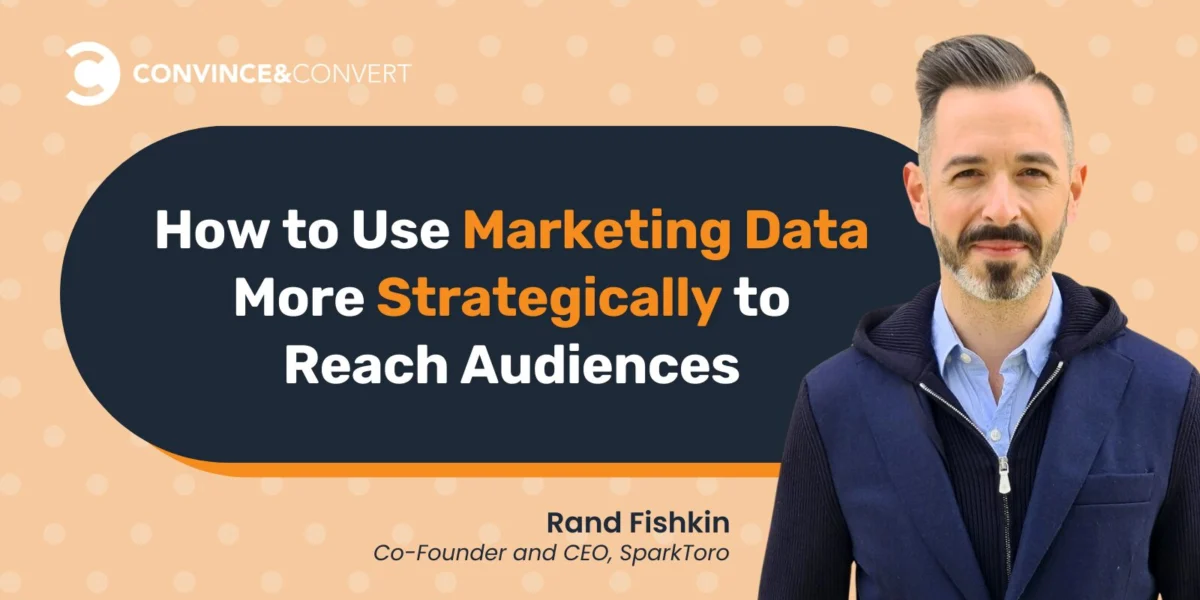
In the modern digital landscape, the marketing playbook often feels like a closed loop. Brands gravitate toward the familiar gravitational pull of Google Ads, LinkedIn lead-generation campaigns, and Facebook retargeting. These channels provide the comfort of clear, quantifiable metrics—a "safe" way to justify ROI to stakeholders. Yet, as the digital ecosystem grows increasingly cluttered, marketers are beginning to question whether this reliance on predictable platforms is actually a barrier to genuine growth.
Are we optimizing for the metrics that look best on a quarterly report, or are we truly reaching our customers where they live, breathe, and solve problems? According to Rand Fishkin, founder of audience intelligence platform SparkToro, the industry is suffering from a "measurement trap" that blinds brands to the most effective, albeit less trackable, channels.
The Architecture of the Modern Marketing Trap
The core issue lies in how marketing teams perceive the customer journey. Most organizations treat the customer acquisition process as a direct line: an ad is served, a user clicks, a conversion occurs. However, human behavior is rarely linear. As Fishkin explains on the Data-Driven Decisions podcast, our obsession with "last-click attribution" has led to a massive misallocation of resources.
The Myth of the Google Middleman
Marketers often credit Google Ads with the lion’s share of their success, observing that customers who search for a specific product and click an ad ultimately convert. But Fishkin argues that this is a fundamental misreading of intent.
"A ton of what happens in Google is actually a response to something else," Fishkin notes. "People who performed a search query in Google, very rarely was that a spontaneous first-touch thing. It was like, ‘Oh, I heard about this software, so I went to Google and searched for it.’ And of course, the attribution looks like Google drove all the value. No, Google was just the middleman."
By prioritizing the "middleman," brands ignore the actual discovery phase—the industry podcast, the influencer’s newsletter, or the niche community discussion where the customer first learned of the solution. By failing to invest in these early-funnel touchpoints, companies leave their brand visibility to chance, waiting for the customer to stumble upon them during an active search.
Redefining Strategy: The SparkToro Approach
If Google and Meta are the "easy" choices, where should marketing budgets actually go? The answer lies in granular audience intelligence. The methodology advocated by Fishkin centers on identifying exactly where a specific target audience spends its time before they ever reach a search engine.
Chronology of a Shifted Strategy
The process of moving away from broad-spectrum paid advertising involves three distinct phases:
- Discovery: Using data tools to map the online habits of your target persona—identifying which niche podcasts they listen to, which subreddits they frequent, and which influencers they trust.
- Community Integration: Moving from "advertising at" to "participating with." Instead of buying a banner ad on a site, the strategy shifts to becoming a guest on a podcast, sponsoring a newsletter, or engaging in organic discussions.
- Zero-Click Engagement: Delivering high-value content directly to the user on their preferred platform without requiring them to leave that platform to visit your website.
Real-World Success Stories
The effectiveness of this redirected approach is best illustrated by companies that have successfully bypassed traditional gatekeepers:
- The Podcast Pivot: A podcaster seeking to increase sponsorship revenue identified influential guests through SparkToro—specifically those with high-engagement YouTube channels. By inviting these influencers as guests, the podcaster tapped into an existing, relevant audience, which in turn attracted high-value sponsors.
- The Tech Event Organizer: By using data to find speakers whose personal brands aligned perfectly with the target audience for an upcoming conference, an event organizer was able to attract sponsors who wanted to reach that specific demographic, rather than relying on generic event ads.
- The Chartr Case Study: The data storytelling company Chartr utilized the Reddit community "r/dataisbeautiful" to distribute infographics. By focusing on pure value—offering interesting, non-branded visualizations—they gained deep brand trust within a community that would have likely ignored a traditional paid advertisement.
The Rise of "Zero-Click" Marketing
A revolutionary concept gaining traction, championed by SparkToro’s VP of Marketing, Amanda Natividad, is "zero-click marketing." This strategy challenges the long-held belief that every piece of marketing content must include a link leading back to a landing page.
In a world where users are fatigued by constant sales pitches, the most effective brands are those that provide utility where the user already is. Whether it’s an insightful LinkedIn carousel, a video series on YouTube, or a data-heavy post on Reddit, the objective is to build credibility and top-of-mind awareness. When the time comes for the customer to purchase, the brand is already a known entity, not a stranger vying for attention with a click-bait headline.
Data-Informed vs. Data-Obsessed: Finding the Balance
While data is essential for targeting, it is not a panacea. A recurring theme in Zontee Hou’s book, Data-Driven Personalization, and the Data-Driven Decisions podcast series is the necessity of being "data-informed" rather than "data-controlled."
The Limitations of Metrics
Data excels at answering "what" and "where," but it often fails at answering "why." Quantitative data can show that a user clicked a button, but it cannot explain the frustration they felt when that button failed to meet their expectations. Relying solely on in-app metrics creates a significant blind spot regarding the needs of potential customers who haven’t yet engaged with your platform.
Fishkin emphasizes the importance of qualitative data—customer interviews and surveys—to fill these gaps. "I’m not saying don’t be data-informed, but I think it pays to be responsible in your recognition of what problems data can solve and what it can’t solve," he notes.
Implications for Future Marketing Budgets
For organizations, the implication is clear: the top 10% of spend on platforms that provide "safe" attribution is often the least effective. If those dollars were redirected toward creative, audience-aligned, and trust-building initiatives, the ROI would likely be higher over the long term.
This transition requires a cultural shift within marketing teams. It means moving away from reporting on "cost per click" to reporting on "audience resonance" and "brand authority." It requires stakeholders to accept that some of the most effective marketing efforts cannot be perfectly tracked by a pixel.
Conclusion: Investing in Meaningful Connections
The future of digital marketing does not lie in more sophisticated ad-targeting algorithms or higher budgets for Google Ads. It lies in the human element—understanding the specific communities, influencers, and platforms that shape the worldview of your customers.
By shifting from a strategy of "interruption" to one of "integration," brands can break through the digital noise. The path forward is to stop treating customers as data points to be captured and start treating them as members of communities where you can provide real, tangible value. As Fishkin reminds us, the most powerful marketing is that which meets the audience exactly where they already are, earning their trust long before they are ready to type your name into a search bar.
For those interested in exploring these concepts further, the Data-Driven Decisions podcast offers a comprehensive series of conversations with leaders from organizations like IBM and Salesforce, dissecting the intersection of data, culture, and strategy. You can find the full series and additional resources on data-driven marketing at the Convince & Convert resource center.


 Reynand Wu
 Iffa Jayyana
 Raul Delapena Setiawan

 Sagoh
Sagoh

 Azzam Bilal Chamdy
 Ali Ikhwan