
 Nana Muazin
In a significant leap for generative artificial intelligence, a collaborative research team from Meta, MIT, and the University of Washington has unveiled a novel paradigm known as Context Language Models (CLMs). This research, detailed in a recent paper, proposes a radical departure from the traditional way large language models (LLMs) handle information. Instead of relying on rigid, human-engineered mechanisms—such as summarization, context window truncation, or external retrieval-augmented generation (RAG)—CLMs are designed to treat their own context as a dynamic, mutable "file" that the model itself is empowered to edit, refine, and curate in real-time.
The core premise of the CLM approach is to shift context management from an external, hard-coded "harness" to an intrinsic, learned behavior of the model. By allowing the LLM to decide what to retain, discard, or rewrite, researchers claim to have achieved significant improvements in both task performance and computational efficiency, potentially unlocking a new era of autonomous agentic behavior.
The Limitations of Current Context Management
To understand the significance of CLMs, one must first recognize the inherent "memory crisis" facing current LLMs. As context windows grow larger, models become increasingly prone to "lost in the middle" phenomena, where they struggle to prioritize relevant information amidst a sea of noise.
Historically, developers have relied on three primary strategies to mitigate this:
- Summarization: Compressing past interactions into a concise digest. However, this often results in the loss of granular details or the introduction of "hallucinated" inaccuracies.
- Compaction: Using predefined heuristic rules to strip away perceived irrelevant data. This approach is brittle and fails to adapt to the nuanced requirements of complex, multi-turn tasks.
- External Retrieval (RAG): Offloading information to a vector database. While powerful, this creates a latency overhead and requires the model to correctly "guess" what information to query at any given moment.
The researchers argue that these methods suffer from a lack of agency. They are "top-down" constraints imposed by developers, rather than "bottom-up" decisions made by the model based on its immediate problem-solving needs.
Chronology: From Concept to Implementation
The development of CLMs represents a strategic evolution in how researchers perceive model architecture.
- Conceptualization: The team began by identifying that LLMs often possess the reasoning capability to determine what is important, yet they are prevented from acting on that knowledge because their context history is treated as read-only.
- The "Editable File" Prototype: The researchers implemented a mechanism where the context is treated as an editable text file. The model is given a specific "system instruction" that grants it permission to update this file.
- Methodology Development: The team tested three distinct developmental paths:
- Zero-Shot: The CLM was given no specific training, relying purely on its pre-existing reasoning capabilities to manage the context.
- In-Context Learning (ICL): The model was provided with natural language instructions on how to manage its context, iteratively refining its strategy through a "skill-optimization loop."
- Reinforcement Learning (RL): The most advanced approach, where the model was trained using task success as the primary objective, with computational efficiency (measured in FLOPs) serving as an additional optimization metric.
By testing these methods, the researchers observed that the models began to evolve "human-transcendent" strategies—such as maintaining "progress notes" for failed experiments, removing intermediate scratchpad data once a result was derived, and even creating internal "cheat sheets" for recurring tasks.
Supporting Data: Efficiency and Accuracy Gains
The empirical results presented by the research team are compelling, suggesting that giving a model autonomy over its own context is not just a theoretical exercise, but a practical performance booster.
Key Performance Metrics:
- Zero-Shot Efficiency: On the BrowseComp-Plus benchmark, CLMs achieved an 11.4% increase in accuracy while utilizing 21.5% fewer FLOPs. On the 12-hour EdgeBench task, the model saw a 5% score increase with a massive 59% reduction in computational load.
- Agent-Swarm Tasks: In a 24-hour multi-repository agent-swarm scenario, CLMs demonstrated a 65% improvement in outcome quality using the same compute resources compared to traditional models.
- In-Context Learning Results: When utilizing iterative skill-optimization, the models showed accuracy improvements of up to 35.9 percentage points on ContextBench, signaling that the models were effectively "learning how to learn" their own maintenance routines.
- Reinforcement Learning Breakthroughs: By optimizing the Qwen3.5-9B model through RL, the researchers boosted performance from 28.8% to 42.5%—a 47.6% relative improvement—while simultaneously slashing compute usage by 12%.
These figures suggest that "context clutter" is a significant drag on current LLM performance. By allowing the model to curate its own workspace, the system achieves a state of "cognitive focus" that improves both output accuracy and speed.
Official Responses and Expert Skepticism
Despite the optimistic data, the research community has met the announcement with a mixture of excitement and cautious apprehension.
The Security Dilemma
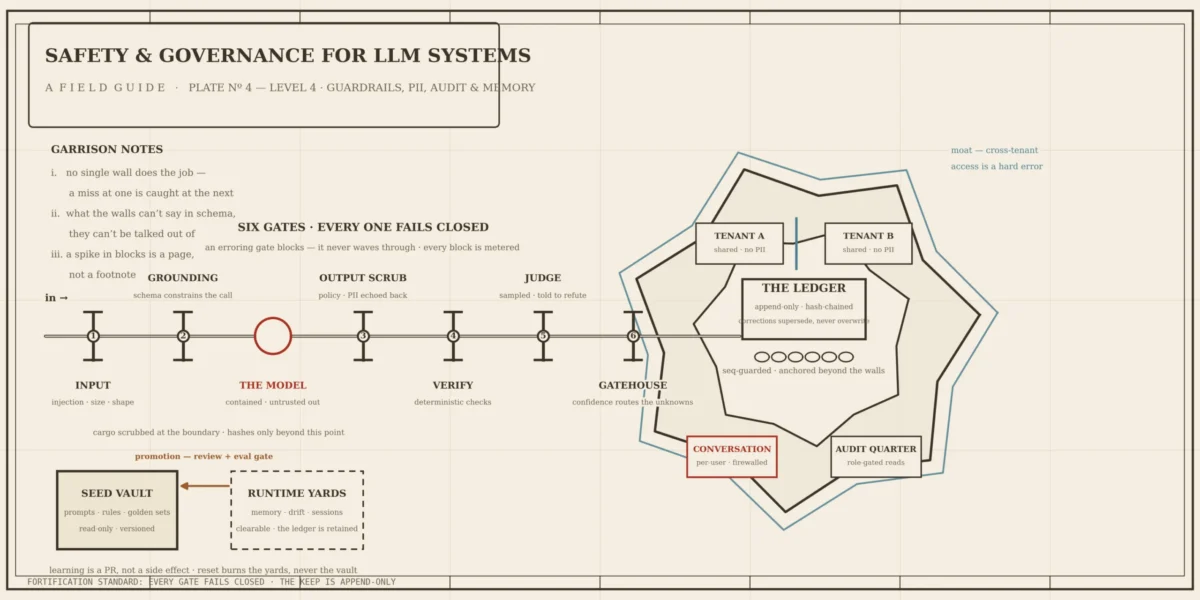
The researchers themselves acknowledge significant risks. By granting a model the ability to edit its own memory, they have effectively created a new attack vector. "The editable context can become another channel through which prompt injections or self-generated instructions persist across turns," the paper warns. If an adversarial prompt is successfully written into the model’s "notes," it could influence future iterations, creating a persistent, self-perpetuating security vulnerability.
Technical Hurdles
On social media and technical forums, the reception has been nuanced. @omarsar0, a notable voice in the AI research space, expressed interest in the direction while remaining wary of the "end-to-end" autonomy of the model. He suggested that while the approach is novel, we are far from a point where we can trust a model to manage its own memory without human oversight.
Meanwhile, on Reddit, user Combinatorilliance highlighted a significant infrastructure hurdle: "Rewriting the context invalidates the model cache." In modern LLM serving, key-value (KV) caching is vital for maintaining speed. Because the CLM modifies its own history, it renders these caches useless, necessitating a re-computation of the context. The "caching trick" employed by the researchers to mitigate this is, in the eyes of some developers, a work-around rather than a definitive solution for production-grade scaling.
Implications: The Future of Autonomous Agents
The transition to Context Language Models marks a shift from "LLMs as Chatbots" to "LLMs as Cognitive Agents."
- Dynamic Autonomy: If a model can effectively manage its own "scratchpad," it becomes significantly more capable of handling long-horizon tasks—such as software engineering, scientific research, or complex logistical planning—where maintaining state over days or weeks is essential.
- Evolving Skill Sets: The ability of CLMs to generate "in-context skill documents" suggests that future models may arrive at a user’s environment with a "blank slate" and quickly adapt their workflow to match the specific needs of that user, essentially learning the user’s preferred organizational style.
- The Reliability Gap: The biggest challenge remains the "reliability of the self." If a model makes a poor decision regarding what information is "irrelevant," it may discard a critical piece of data that cannot be recovered. This suggests that future iterations will need a "memory audit" layer—a mechanism that allows the model to summarize or prune its context while keeping a verifiable trail of what was removed.
Conclusion
The introduction of CLMs is a provocative step toward more efficient and capable AI. By delegating the burden of context management to the models themselves, Meta, MIT, and the University of Washington have opened a new front in the battle against the limitations of current transformer architectures. While issues regarding security, cache invalidation, and potential data loss remain, the gains in FLOP efficiency and task accuracy indicate that the future of LLMs may not lie in larger context windows, but in smarter, more autonomous management of the context we already have.
Whether these models will reach production-readiness depends on the industry’s ability to build guardrails around this newfound autonomy—ensuring that while the model is allowed to manage its own files, it does not rewrite the foundations of its own safety and logic.

 Nila Kartika Wati
 Neng Nana
 Basiran
 Iffa Jayyana
 Raul Delapena Setiawan
 Rifan Muazin
 Asro
Asro