Ali Ikhwan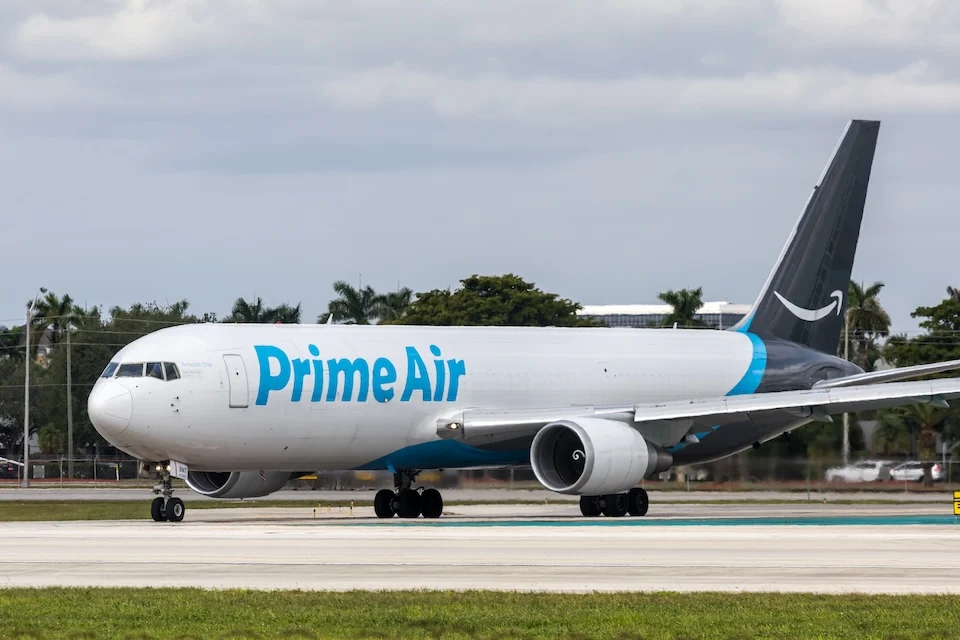
In a strategic move to tighten its grip on the trans-Pacific e-commerce corridor, Amazon Global Logistics has unveiled two specialized airfreight service tiers: Air SMP and Economy Air. Designed to bridge the widening gap between the sluggish reliability of ocean freight and the premium costs of standard air cargo, these new offerings are positioned to provide Amazon’s third-party sellers with unprecedented flexibility during the industry’s most volatile demand cycles.
As global supply chains continue to grapple with the pressures of rapid e-commerce expansion, these additions represent a significant evolution in Amazon’s "end-to-end" logistics vision. By streamlining the flow of goods from Chinese manufacturing hubs to US-based fulfillment centers, Amazon is effectively positioning itself as the primary architect of the modern global retail supply chain.
The New Offerings: Breaking Down Air SMP and Economy Air
The introduction of Air SMP and Economy Air serves a dual purpose: it mitigates the risk of inventory stockouts while optimizing the cost-to-speed ratio for vendors who cannot afford to wait weeks for ocean transit but are priced out of traditional expedited air shipping.
Air SMP: Precision and Placement
The Air SMP (Split/Managed Placement) option is engineered for sellers who require granular control over their US inventory. By allowing merchants to split shipments at the point of origin in China, Amazon enables them to route goods directly to "locked" fulfillment centers across the company’s five distinct US regions.
Key performance metrics for this service include:
- Transit Time: A highly competitive seven to 10 calendar days from the initial origin pickup.
- Operational Connectivity: Daily flight rotations originating from major logistics hubs in Shanghai and Hong Kong.
- Cost Efficiency: Notably, Amazon has waived Fulfilment by Amazon (FBA) inbound placement service fees for this tier. Furthermore, the company has eliminated additional surcharges typically associated with complex categories, such as electronics, apparel, and lithium battery-powered goods—a massive boon for consumer electronics brands.
Economy Air: The Mid-Market Solution
For sellers focused on budget-conscious replenishment, Economy Air offers a strategic middle ground. With transit times estimated between 11 and 15 days from Shanghai or Shenzhen to Los Angeles, this service is designed to outpace ocean freight—which can take upwards of 30 to 45 days—without the premium price tag of standard air logistics.

Amazon representatives have framed this service as a "speed-replenishment" model, explicitly noting that it provides the velocity needed for product launches or stockout recovery at a lower cost than standard Amazon Global Logistics Air.
A Chronology of Operational Integration
The rollout of these services did not happen in a vacuum. It is the latest development in a broader, multi-year strategy to consolidate Amazon’s logistics infrastructure.
- May 2026: Amazon signaled its ambition to become a third-party logistics (3PL) giant by launching Amazon Supply Chain Services (ASCS). This comprehensive suite provides vendors with a full stack of services, including freight forwarding, regional distribution, fulfillment, and final-mile parcel shipping, effectively opening Amazon’s internal logistics engine to any business, regardless of where they sell their products.
- August 2026: Amazon announced a significant internal restructuring of its air cargo division. The company reunited its "Amazon Air" flight operations with its ground transportation and sortation center teams. This realignment placed the entire end-to-end network under the leadership of Raoul Sreenivasan.
- September 2026: The launch of Air SMP and Economy Air marks the first major service-level product release under Sreenivasan’s newly unified logistics architecture, signaling a transition from "growth-at-all-costs" to "operational efficiency and integration."
Supporting Data: Why Speed Still Matters
The logic behind Amazon’s push for faster airfreight is rooted in the current state of global trade. Despite the cooling of the post-pandemic supply chain crisis, the retail landscape remains volatile.
Data suggests that "stockout recovery" remains the highest priority for e-commerce sellers heading into the Q4 peak season. When a bestseller goes out of stock, the "Amazon algorithm" penalizes the seller’s ranking, leading to a long-term loss in revenue that far exceeds the cost of expedited airfreight. By lowering the barriers to air transit, Amazon is effectively ensuring that its marketplace remains the most reliable venue for sellers who cannot risk inventory gaps.
Furthermore, the integration of electronics and lithium battery logistics into these simplified pricing models addresses a major pain point. Historically, air freighting lithium-ion batteries has been fraught with regulatory surcharges and complex handling fees. By absorbing these costs into the service tier, Amazon is simplifying the vendor experience, encouraging more brands to utilize their air network.
Official Perspective and Strategic Implications
Amazon’s messaging emphasizes the "seamless journey" for every package. By bringing air, ground, and sortation teams together, the company claims it can now make faster decisions and engage in sharper planning. This is not merely a marketing claim; it is a tactical shift.

When the air network operates in silos from the ground network, there is often a "buffer" time added to transit estimates to account for potential delays at sort centers. With the new unified management structure, Amazon can synchronize flight arrival times with ground transport capacity, effectively shaving days off the total delivery window.
Implications for the Logistics Sector
The broader logistics industry should take note. By launching these services, Amazon is continuing its transition from an e-commerce platform that uses logistics to an actual logistics carrier that competes with incumbents like FedEx, UPS, and DHL.
- Pressure on Freight Forwarders: Traditional air freight forwarders, who have long relied on the complexity of customs and trans-Pacific shipping to justify their service fees, now face a simplified, integrated competitor.
- Marketplace Stickiness: By offering logistics services that are cheaper and faster for sellers, Amazon creates a "moat." Once a seller’s inventory is integrated into the Amazon Global Logistics ecosystem, the friction involved in moving to another marketplace becomes prohibitively high.
- Peak Season Preparedness: As retailers face increasing pressure to shorten their supply chains to respond to social-media-driven trends, the 11-15 day window provided by Economy Air is becoming the "new normal." Traditional ocean-based inventory planning is increasingly seen as too slow for modern, trend-driven retail.
Conclusion: The New Logistics Frontier
As Amazon enters the final quarter of 2026, the launch of Air SMP and Economy Air signals a mature, confident phase in the company’s logistics evolution. The days of Amazon merely renting space on commercial aircraft are long gone; today, the company is optimizing its own fleet to ensure that its marketplace is never starved of inventory.
For the small-to-medium enterprise (SME) seller, these services offer a lifeline—a way to compete with larger, more established brands that have long enjoyed the benefits of private logistics fleets. For the global logistics industry, Amazon’s move is a clear warning: the future of shipping is not just about moving boxes from A to B; it is about the integration of data, inventory management, and high-velocity transport into a single, seamless, and increasingly automated experience.
As Raoul Sreenivasan and his team continue to harmonize the various segments of the Amazon logistics machine, the industry should expect further service expansions. The focus is no longer just on getting the package there; it is on getting it there in the most cost-effective way that protects the seller’s margin—a formula that is likely to define the next decade of global e-commerce.

 Lina Irawan
 Raul Delapena Setiawan
 Laily UPN
 Iffa Jayyana
 Rifan Muazin
 Suro Senen
 Lina Hope