
 Evan Lee Salim
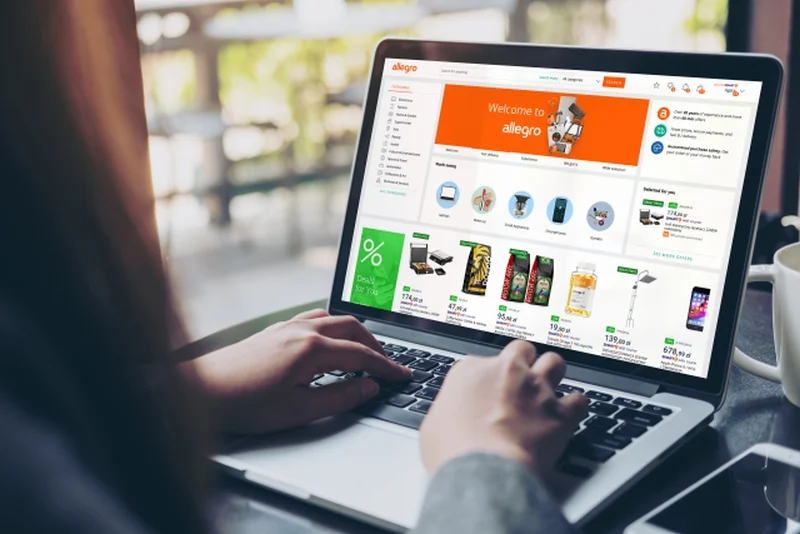
In a strategic move that bridges the Polish and Ukrainian consumer markets, Allegro—the undisputed leader of Polish e-commerce—has officially announced the expansion of its delivery services to include Ukraine. While the company is not establishing a localized Ukrainian marketplace, the integration allows customers to purchase goods directly through the Allegro.pl platform and have them shipped across the border. This development marks a significant milestone for the platform, which has been aggressively expanding its international footprint while simultaneously refining its operational focus.
Main Facts: How the New Service Operates
The expansion of Allegro’s services into Ukraine is not a full-scale regional launch but rather a cross-border logistics enhancement. By updating its terms and conditions, Allegro has effectively opened its massive inventory—comprising millions of products—to Ukrainian shoppers.
Under the new operational framework, users residing in Ukraine can register on Allegro.pl, select products from the vast array of vendors, and facilitate shipping to Ukrainian addresses. This move is designed to simplify access to European goods for Ukrainian consumers, many of whom have faced supply chain disruptions since the onset of the full-scale war in 2022.
However, the expansion comes with stringent compliance requirements. Allegro has explicitly updated its terms of service to include prohibitions on the resale of goods purchased through the platform to Russia, Belarus, or any territories currently under Russian occupation. Furthermore, the company has extended its "Allegro Buyer Protection" program to cover these cross-border shipments, providing a layer of security for Ukrainian consumers who may be navigating the platform for the first time.
Chronology of Allegro’s International Strategy
To understand the weight of this decision, one must look at Allegro’s recent history of regional maneuvering. For years, Allegro reigned supreme in Poland, effectively keeping global giants like Amazon and eBay at bay through a deep understanding of local logistics and consumer behavior.
- 2022–2023: The Push for Regional Dominance: Allegro began an ambitious campaign to capture the Central and Eastern European (CEE) market. The company launched localized versions of its platform in Czechia, Slovakia, and Hungary, investing heavily in infrastructure and local marketing to establish itself as the go-to marketplace for the region.
- Early 2024: Strategic Divestment: In a move that caught industry analysts by surprise, Allegro announced it would divest its operations in Slovenia and Croatia. The rationale was purely financial; the company aimed to streamline its operations and focus its resources on markets where it could achieve scale more efficiently.
- Late 2024: The Ukraine Pivot: The decision to open shipping to Ukraine represents a shift from "physical presence" to "logistical reach." By utilizing existing cross-border shipping capabilities rather than building a new entity in Kyiv, Allegro is testing the appetite of the Ukrainian market with minimal capital expenditure.
Supporting Data: Growth Amidst Volatility
The expansion into Ukraine comes at a time when the Allegro Group is reporting robust financial health, despite a challenging macroeconomic environment. According to the company’s recent earnings disclosures, the Allegro Group experienced a significant surge in its Gross Merchandise Value (GMV).
In the first half of the current year, the group’s overall GMV grew by approximately 14 percent compared to the same period in 2023. Even more telling is the international performance; Allegro’s international GMV saw a staggering 65 percent increase. This growth is largely attributed to the successful integration of the Mall Group and the effective penetration of the Czech, Slovak, and Hungarian markets.
Analysts suggest that the expansion into Ukraine is a logical next step to capitalize on this international momentum. With the Ukrainian economy showing resilience and a high demand for high-quality consumer goods from the EU, the move positions Allegro to tap into a large, underserved market without the heavy lifting of establishing local distribution centers or physical warehouses in a conflict-prone zone.
Official Responses and Regulatory Safeguards
Allegro’s announcement, detailed in a post in its Help Center, was framed as a commitment to accessibility and consumer safety. The company emphasized that while the platform is open for business, it remains strictly compliant with international sanctions and ethical business practices.
The most notable aspect of the company’s official communication is the focus on the "Buyer Protection" program. By extending this to Ukrainian consumers, Allegro is signaling that it considers the region a core part of its extended ecosystem.
Regarding the strict prohibition on reselling to Russia or Belarus, an Allegro spokesperson indicated that the company is employing a combination of algorithmic monitoring and user verification to ensure compliance. This is a proactive measure aimed at protecting the platform from potential legal complications involving international sanctions, as well as maintaining the company’s reputation as a responsible corporate citizen within the European Union.
Implications: A New Era for Regional E-commerce
The entry of Allegro into the Ukrainian shipping landscape has profound implications for both the local retail ecosystem and the broader European e-commerce market.
1. Competitive Pressure on Local Retailers
Ukrainian e-commerce has historically been dominated by local players like Rozetka. While Allegro’s current model is cross-border, the sheer scale of its inventory and its aggressive pricing strategies could disrupt local retailers. Ukrainian consumers, who are already familiar with the quality of Polish and EU goods, may find the ease of ordering from Allegro a compelling alternative to local stock.
2. Logistical Challenges and Opportunities
Shipping into Ukraine remains a complex endeavor due to ongoing border security and infrastructure challenges. Allegro’s ability to successfully scale this service will depend heavily on its choice of logistics partners. If the company can maintain competitive delivery times and reasonable shipping costs, it could set a new benchmark for cross-border e-commerce in the region.
3. Strengthening EU-Ukraine Economic Ties
Beyond the business metrics, the move serves as a symbolic and practical strengthening of the economic ties between Poland and Ukraine. As Ukraine moves toward deeper integration with the European Union, the presence of major European marketplaces like Allegro helps standardize consumer experiences and aligns the Ukrainian retail market with European norms of service and protection.
4. The Future of Allegro’s International Expansion
For investors, the key question is whether this "shipping-first" approach will evolve into a more permanent presence. Should the demand from Ukraine prove to be as robust as the growth in the company’s other international segments, it is not inconceivable that Allegro might eventually look toward establishing local fulfillment centers in Western Ukraine. However, for now, the company is maintaining a cautious, low-risk stance that prioritizes agility over heavy physical infrastructure.
Conclusion: A Calculated Leap
Allegro’s expansion into Ukraine is a masterclass in calculated growth. By opting for a cross-border delivery model rather than a localized subsidiary, the company has mitigated the risks inherent in the current geopolitical climate while still positioning itself to capture a significant share of the Ukrainian e-commerce market.
With a 65 percent increase in international GMV, the company has proven that it knows how to export the "Allegro model" successfully. As it integrates Ukraine into its delivery network, the company is not just opening a new shipping route; it is signaling that the Polish e-commerce titan is ready to play an even larger role in the reconstruction and modernization of the Ukrainian consumer landscape.
The coming months will be critical in determining whether the company’s logistical systems can handle the demand and whether the regulatory safeguards regarding trade with sanctioned nations remain effective. For now, Allegro stands as a primary case study of how a regional player can leverage its existing scale to reach new markets, even under the most challenging of global circumstances.


 Reynand Wu

 Iffa Jayyana


 Sagoh

 Azzam Bilal Chamdy

 Ali Ikhwan
