
 Dwi Wanna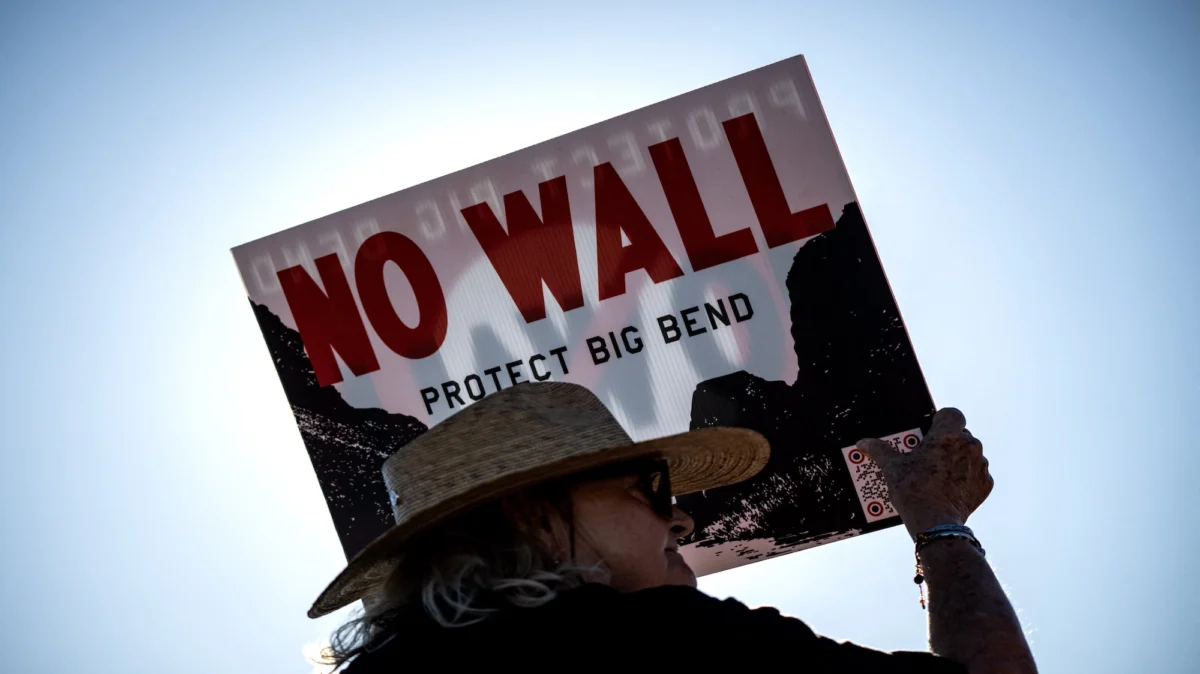
By Investigative Desk
In a landmark decision that could redefine the scope of executive authority regarding environmental protections and border policy, U.S. District Judge Kathleen Cardone issued a preliminary injunction on Friday, effectively grinding construction of the border wall in Texas’s Big Bend sector to a halt. The ruling, delivered from the bench in El Paso, represents a significant victory for a coalition of conservationists, local business owners, and residents who have spent months fighting to protect one of the most pristine and biodiverse regions in the United States.
The injunction covers the entirety of the Big Bend sector—a sprawling 500-mile stretch of rugged West Texas terrain that includes the iconic Big Bend National Park and the neighboring Big Bend Ranch State Park. Judge Cardone’s order mandates that the federal government cease all construction activities until it can demonstrate full compliance with a suite of environmental and historic preservation laws it had previously sought to bypass.
The Core of the Legal Conflict
The lawsuit, filed in April, centers on the Department of Homeland Security’s (DHS) controversial decision to waive dozens of federal laws—including the National Environmental Policy Act (NEPA) and the Archaeological and Historic Preservation Act—to fast-track barrier construction. The plaintiffs, including the Center for Biological Diversity, the Friends of the Ruidosa Church, and local river guide Danny Miller Jr., argued that the government’s reliance on these waivers was not only legally unsound but also based on a fundamental mischaracterization of the region’s security needs.
During the four-hour hearing, Judge Cardone noted that the plaintiffs were highly likely to succeed on the merits of their case and, crucially, would suffer "irreparable harm" if the heavy machinery were allowed to continue its work. For the plaintiffs, the ruling was not just a legal technicality; it was a validation of their deep-seated connection to the land. As the gavel fell in El Paso, supporters who had traveled from remote border communities like Terlingua and Marfa were seen weeping and embracing outside the courtroom.
A Chronology of Escalation
The friction between the federal government and the Big Bend community has been building for over a year. The timeline of this confrontation underscores the rapid pace at which the current administration sought to alter the landscape:
- February 2026: Customs and Border Protection (CBP) announces updated plans for border barriers in the Big Bend region. These plans oscillate between vehicle barriers, access roads, and 30-foot steel walls on private land.
- April 2026: A coalition of environmental groups and local stakeholders files a federal lawsuit challenging the constitutionality of the legal waivers used to bypass environmental oversight.
- August 15, 2026: Tensions peak as activists hold public protests, including a notable demonstration in Study Butte, Texas, where locals held signs reading, "No wall, protect Big Bend."
- August 17, 2026: Following reports of excavators and bulldozers clearing sensitive land within the boundaries of Big Bend National Park, CBP issues a temporary construction pause.
- Late August 2026: The pause is lifted, and construction activities resume, including the initiation of a 30-foot steel wall project in Hudspeth County.
- September 2026: The legal case intensifies as experts and witnesses provide testimony regarding the ecological and cultural damage already being inflicted on the borderlands.
- Friday, October 2, 2026: Judge Kathleen Cardone grants the preliminary injunction, halting all construction across the 500-mile sector pending further judicial review.
Data vs. Narrative: The "High-Traffic" Dispute
A central component of the government’s justification for the wall has been the assertion that the Big Bend sector is a high-traffic zone for unauthorized border crossings, necessitating immediate security intervention. However, the testimony provided by Adam Isaacson of the Washington Office on Latin America (WOLA) dismantled this narrative during the hearing.
Isaacson presented granular data illustrating that the Big Bend sector is, in fact, a "distant last place" in terms of unauthorized border crossings compared to the nine other sectors along the U.S.-Mexico border. When plaintiffs’ attorneys requested specific, localized data to justify the necessity of a 30-foot steel wall within a national park, the federal government failed to produce it.
This lack of empirical support for the government’s claims became a focal point of the court’s skepticism. The court questioned why such an aggressive, permanent infrastructure project was being pursued in one of the least-trafficked, most environmentally sensitive sectors of the border.
The Human and Ecological Cost
The testimony of Danny Miller Jr., a lifelong river guide, provided the emotional weight of the proceedings. For Miller, the wall is not a political abstract; it is a physical intrusion into his livelihood and a permanent disfigurement of the landscape. "It is a visible scar that will never go away," Miller told the court. His description of the wall—as something that fundamentally severs the relationship between the local population and the Rio Grande—resonated deeply, leaving many in the courtroom visibly shaken.
Beyond the human element, the ecological stakes are immense. Big Bend is internationally renowned for its dark night skies, high-desert biodiversity, and the rugged, pristine canyons of the Rio Grande. Conservationists argue that the construction of a 30-foot steel barrier will disrupt wildlife migration patterns, damage sensitive riparian ecosystems, and destroy archaeological sites that have remained undisturbed for centuries.
Official Responses and Future Outlook
The reaction from federal agencies has been restrained. The White House, when approached for comment, redirected inquiries to the Department of Homeland Security. A spokesperson for CBP remained defiant, stating, "We stand by our assessment and remain confident in our legal authorities to secure the border while preserving the unique landscape of the Big Bend region. We are working with the Department of Justice on next steps."
However, the Department of Justice’s performance in court was notably subdued. With no witnesses brought forward to counter the plaintiffs’ experts, and a lack of substantive legal arguments offered to defend the necessity of the project, the government’s position appeared to weaken significantly as the hearing progressed.
Implications: A Precedent for Federal Power
The implications of Judge Cardone’s injunction extend far beyond the borders of West Texas. By staying the effect of the federal waivers, the court has signaled a potential shift in how the judiciary approaches the intersection of national security and environmental law.
If this injunction holds through the duration of the lawsuit, it could force the executive branch to undergo the rigorous environmental review processes it has spent months attempting to circumvent. This would mean public comment periods, biological impact assessments, and archaeological surveys—requirements that have historically served as the bedrock of land management in the United States.
For the residents of Terlingua, Marfa, and the surrounding areas, the fight is far from over. However, for the first time in months, the bulldozers have stopped. The silence in the Big Bend wilderness, at least for now, has been restored—a temporary reprieve for a landscape that many argue should never have been on the front lines of a political war.
As the case moves forward, the nation will be watching to see whether the judiciary continues to assert its role as a check on executive overreach, or if the federal government will find new, perhaps more aggressive, avenues to bypass the laws that protect America’s most cherished natural resources. For now, the "visible scar" is on hold, and the future of one of America’s last truly wild places remains in the hands of the courts.

 Laily UPN
 Lina Hope
 Iffa Jayyana
 Rifan Muazin
 Suro Senen
 Lina Irawan