
 Lina Hope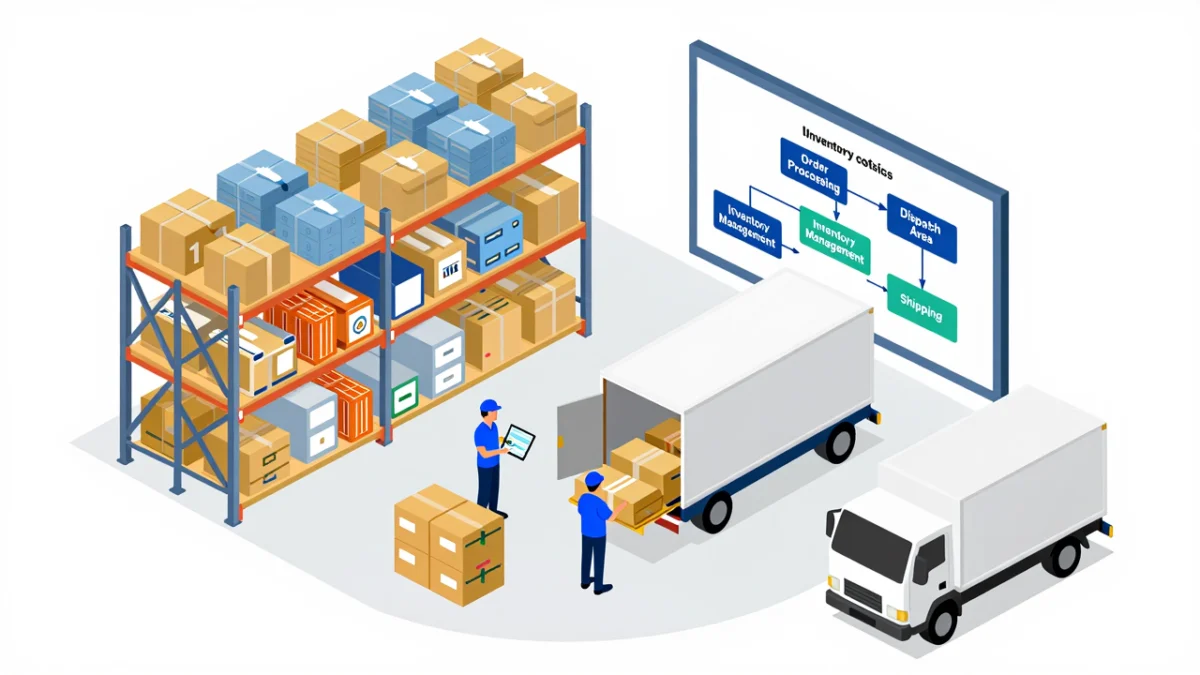
In the current volatile global marketplace, the difference between a thriving enterprise and one struggling to stay afloat often comes down to the efficacy of its inventory logistics. No longer just a back-office administrative task, inventory management has evolved into a strategic pillar that dictates cash flow, operational agility, and, ultimately, customer satisfaction. As supply chains become increasingly complex, businesses must shift from reactive stock management to proactive, technology-driven logistics ecosystems.
Main Facts: The Anatomy of Modern Logistics
Inventory logistics is the overarching management of goods as they move from the point of origin—the supplier—to the final consumer. It is a multi-faceted discipline that balances the cost of holding stock against the risk of stockouts.

The core mission of any logistics strategy is to ensure the "right product" is in the "right place" at the "right time." To achieve this, organizations must integrate four primary categories of inventory:
- Raw Materials: The foundational components required for production.
- Work-in-Progress (WIP): Items currently in the manufacturing or assembly cycle.
- Finished Goods: Ready-to-sell inventory held in warehouses or distribution centers.
- Maintenance, Repair, and Operations (MRO) Items: The essential supplies that keep the internal machinery of a business running smoothly.
When these components are mismanaged, the implications are severe: capital is trapped in overstocked shelves, or revenue is lost when customers encounter "out-of-stock" notifications.

Chronology: Building an Optimized Workflow
Transitioning to an efficient logistics model is not an overnight process. It requires a methodical, phased approach to operational restructuring.
Phase 1: Procurement and Sourcing
Success begins long before a product enters your warehouse. It begins with rigorous sourcing. Building strategic partnerships with reliable suppliers ensures that the flow of goods remains uninterrupted. Organizations should focus on vetting vendors not just on price, but on lead-time reliability and quality consistency.

Phase 2: Implementation of Inventory Control
Once procurement is secured, the focus shifts to internal control. This involves installing robust Inventory Management Systems (IMS) that provide real-time visibility. By tracking stock levels with precision, businesses can move away from manual "guesstimates" and toward data-driven replenishment cycles.
Phase 3: Storage and Warehouse Optimization
The physical environment of your inventory is just as critical as the digital data. Warehouse layouts should be optimized using ABC analysis—categorizing items based on their value and turnover rate. High-velocity items should be stored in easily accessible zones to reduce pick-and-pack times.

Phase 4: Order Fulfillment and Distribution
The final stage is the movement of the product to the customer. This is the moment of truth for customer satisfaction. Utilizing automated order-picking software and choosing the right shipping channels—balanced by cost, speed, and reliability—completes the loop.
Supporting Data: The Impact of Technology
The integration of advanced technologies has shifted the paradigm of what is possible in logistics. According to industry analysis, the adoption of Artificial Intelligence (AI) and the Internet of Things (IoT) can significantly alter the bottom line.

- Inventory Turnover: Companies utilizing predictive analytics for demand forecasting report a 10–20% increase in inventory turnover rates.
- Holding Costs: Effective demand planning and Just-in-Time (JIT) strategies have been shown to reduce inventory holding costs by 20–30%.
- Warehouse Efficiency: Implementing automation and robotics in the fulfillment process can boost picking and packing speeds by 20–30%, simultaneously reducing human error.
- Data Accuracy: Regular cycle counting and automated audits are essential. Without them, companies often struggle with inventory accuracy rates that fall below 70%. Achieving an accuracy level of 95% or higher is the current gold standard for competitive enterprises.
Official Perspectives: Navigating Logistics Challenges
Industry experts emphasize that challenges such as inaccurate data, elongated supply chain lead times, and rising carrying costs are not insurmountable. The "7 C’s of Logistics"—Customer, Cost, Communication, Control, Convenience, Coordination, and Compliance—serve as a universal framework for leadership teams.
According to logistics consultants, the most common pitfall is a failure to integrate technology. When a company uses siloed systems for procurement and distribution, data gaps inevitably appear. "The key to modern logistics," says one industry lead, "is transparency. If you cannot track the item from the supplier’s dock to the customer’s front door, you are operating in the dark."

Overcoming Common Hurdles
- Inaccurate Data: Combat this by conducting regular, unscheduled inventory audits rather than relying on annual physical counts.
- Supply Chain Volatility: Build resilience by diversifying your supplier base. Relying on a single vendor for critical components is a high-risk strategy in the modern climate.
- Scaling Issues: As your business grows, ensure your technology stack is scalable. Cloud-based IMS solutions allow for seamless integration as your volume of transactions increases.
Implications for Future Growth
The implications of mastering inventory logistics extend far beyond simple efficiency. Businesses that excel in this area gain a significant competitive advantage. By minimizing the "dead weight" of excess stock, companies free up liquidity that can be reinvested into product innovation, marketing, or talent acquisition.
Furthermore, in an era where consumers demand near-instant gratification, the ability to fulfill orders accurately and quickly is a primary brand differentiator. A company that consistently delivers on its promises builds trust, which leads to higher customer lifetime value.

Key Metrics to Monitor
To keep your logistics strategy on track, leadership must monitor the following Key Performance Indicators (KPIs):
- Inventory Turnover Ratio: How many times your inventory is sold and replaced over a period.
- Order Lead Time: The duration from order placement to final delivery.
- Carrying Cost of Inventory: The total cost of storing unsold goods.
- Order Accuracy Rate: The percentage of orders delivered without error or damage.
Conclusion: The Path Forward
Inventory logistics is the silent engine of the modern economy. It requires a disciplined, technology-first approach that prioritizes accurate forecasting, strong supplier relationships, and optimized warehouse management.

As we look toward the future, the integration of blockchain for supply chain traceability and advanced robotics for warehouse operations will continue to redefine the landscape. Businesses that fail to modernize their logistics strategy risk being left behind in a market that rewards speed, precision, and reliability.
By treating inventory logistics as a core business function rather than an auxiliary task, you position your organization to not only survive the complexities of the global supply chain but to leverage them as a springboard for growth. Start by auditing your current processes, embrace the tools available, and commit to a culture of continuous improvement. The next step in fine-tuning your approach is not just to manage your stock—but to master the flow of your entire business.


 Muslim
 Layla Zulfa
 Raul Delapena Setiawan
 Dwi Wanna

 Nana Wu

 Rifan Muazin