
 Pevita Pearce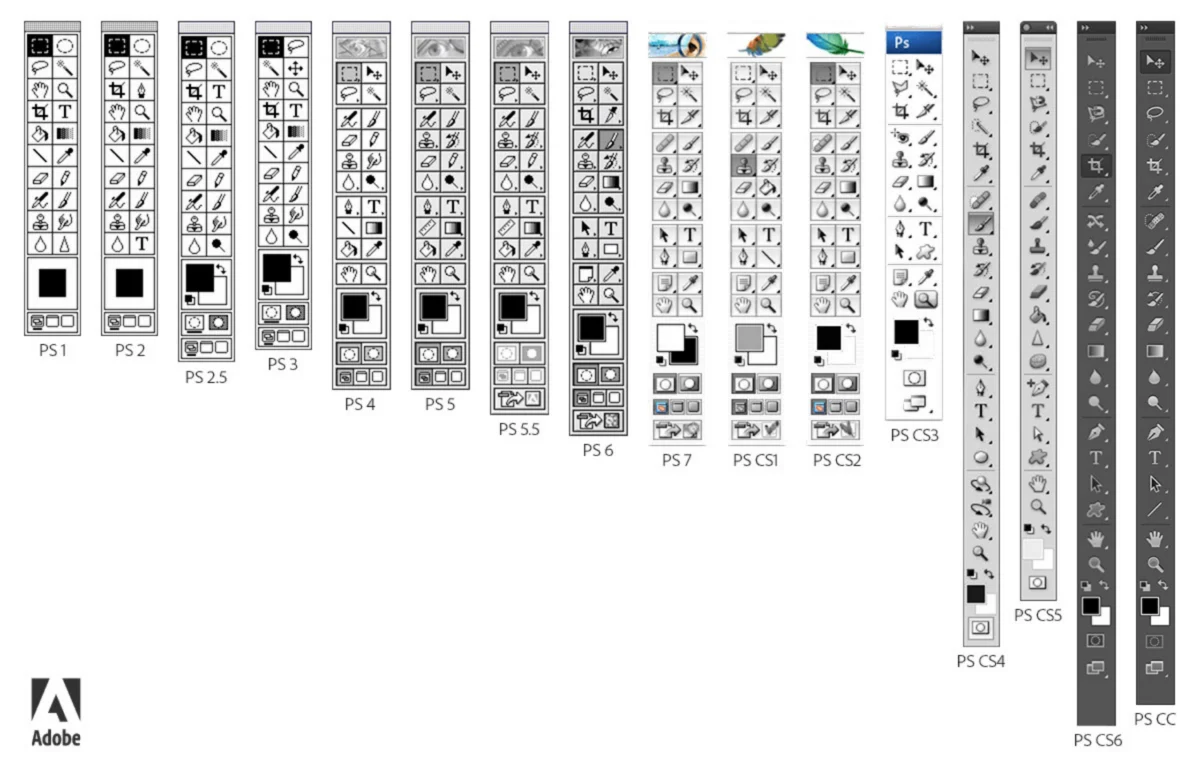
For decades, the digital creative industry has been shackled to a two-dimensional grid. Whether it is a graphic designer manipulating layers in Adobe Photoshop or a video editor scrubbing through frames in Premiere, the fundamental unit of labor has remained the pixel. But a profound architectural shift is underway—a transition from "canvas-centric" editing to "object-centric" intelligence. With the emergence of new technologies like Reve’s layout-based models, the era of manipulating raw color data is rapidly giving way to an era of semantic, structured image engineering.
Main Facts: The End of Pixel Manipulation
At the heart of this revolution is a move away from the "dumb" canvas. Traditional tools like Photoshop operate under a paradigm of pixel manipulation; the software does not inherently understand that an image contains a cat, a chair, or a sunset. It simply manages a matrix of color values. If a user wants to move a cat across a room in a traditional editor, they must manually mask, cut, paste, and heal the background pixels—a tedious, destructive process that often degrades image quality.
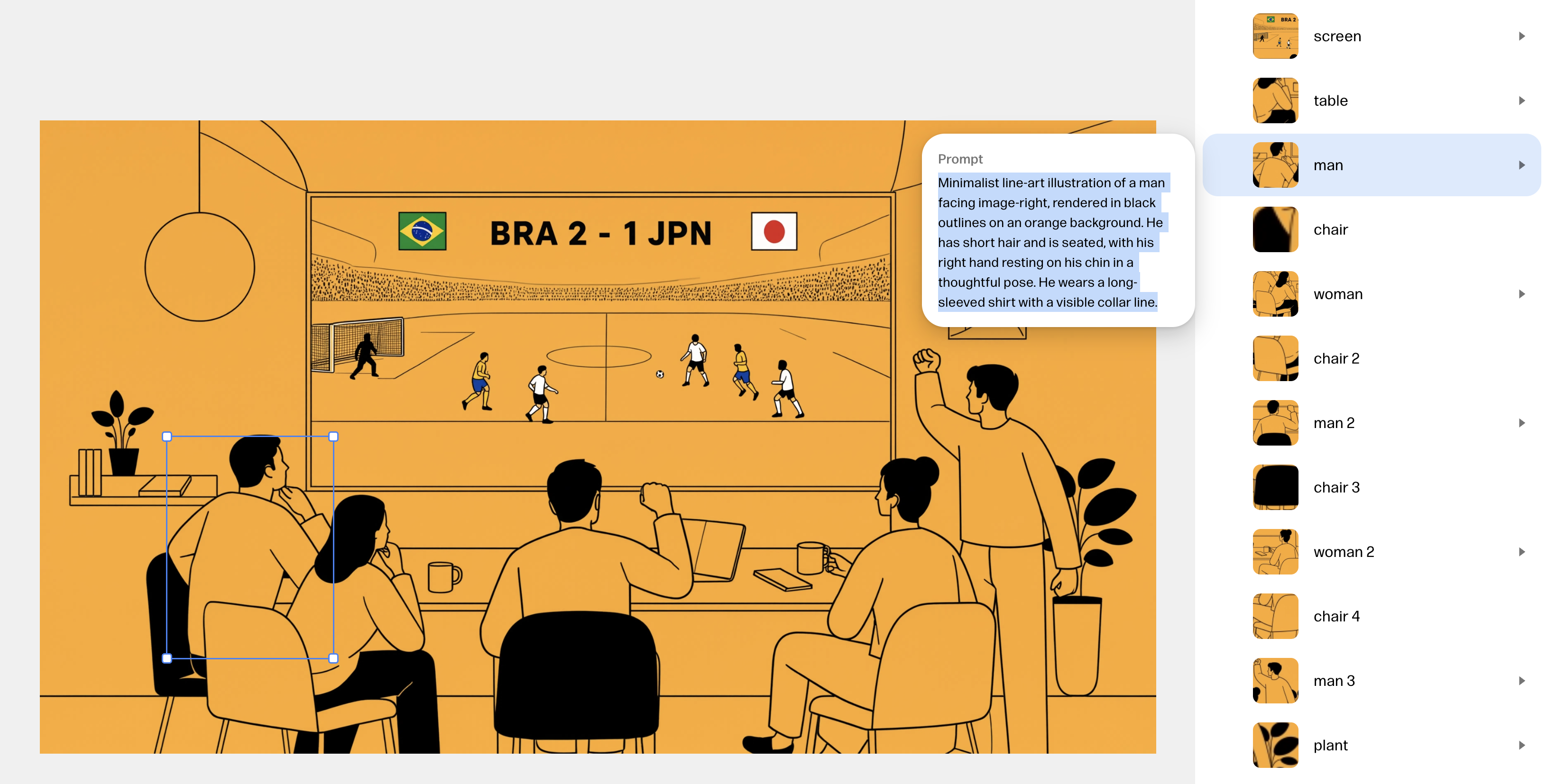
Object-centric editing, by contrast, treats an image as a collection of addressable, intelligent entities. When a model understands the semantic "what" behind the "where," the workflow transforms. Instead of painting over pixels, a user can simply instruct the model to "move the cat" or "change the cat’s eyes to green." The model, possessing an internal map of the scene’s hierarchy, recalculates shadows, reflections, and lighting automatically, ensuring that the image remains coherent rather than becoming a fractured collage of edited segments.
Chronology: From Static Research to Dynamic Reality
The journey toward object-centricity has been incremental, moving from academic theory to functional product design:
- The Early 2000s–2010s (The Era of Pixel Supremacy): Photoshop cemented its dominance as the industry standard. Creative workflows were defined by manual selection tools, layer masks, and cloning stamps. AI was largely relegated to basic filters and automated noise reduction.
- 2020–2022 (The Diffusion Explosion): The rise of generative AI models (like Midjourney and Stable Diffusion) introduced a new way to create images from text. However, these models were largely "black boxes." They translated text into pixels, but they lacked a persistent internal structure.
- 2022 (The Theoretical Shift): Industry observers began to note the limitations of the text-to-pixel pipeline. Articles surfaced discussing the necessity of a shift toward "object-centric" design, arguing that text-only prompts were insufficient for precise creative control.
- 2023–2024 (The Emergence of Layout Models): Companies like Reve began to bridge the gap. By moving away from purely prose-based generative models and toward "Large Layout Models," developers started creating systems that treat image generation like code compilation.
- Present Day: We are currently seeing the first generation of tools where the "layout" acts as a live, editable interface, effectively turning image generation into a form of spatial design.
Supporting Data: Why Layouts Trump Prose
The current state of image generation is heavily reliant on Large Language Models (LLMs) acting as translators. A user inputs a prompt; the LLM expands it into a long, descriptive paragraph; and a diffusion model attempts to render that description into pixels. This process is inherently flawed for professional design because it is "loose."
As data suggests, small changes in a text prompt—such as moving a modifier from the beginning to the end of a sentence—can cause the diffusion model to hallucinate a completely different composition. This is because the model lacks a persistent "layout" state.
In contrast, Reve’s approach utilizes a structured, hierarchical format. This can be viewed as the "HTML of images." By mapping elements, coordinates, attributes, and depth data, the system treats an image as a tree of objects.
- Structural Fidelity: Because the system renders based on a layout, the relationship between objects remains constant.
- Attribute Independence: If an interior decorator wants to swap a chair’s color, they no longer need to regenerate the entire image. They simply update the "color" attribute of the chair object.
- Coherence: Shadows and perspective are mathematically derived from the object positions rather than being "guessed" by a diffusion model’s training data.
Official Responses and Industry Sentiment
While Adobe and other incumbents have begun incorporating AI into their suites (notably through Firefly and generative fill), the industry remains split on the best path forward.
"The challenge with current AI integration is that it’s still trying to force modern intelligence into legacy pixel-based frameworks," says a design systems engineer familiar with the new layout models. "Adobe’s generative fill is incredible, but it’s still, at its core, a way to patch pixels. The future isn’t a better patch tool; it’s an environment where the pixels are just the final output of a structural model."
Representatives from firms experimenting with layout-based rendering argue that this is the only way to satisfy the needs of enterprise-grade creative workflows. In a corporate setting, consistency is king. If a brand needs to produce a thousand variations of a product image, pixel-based generative tools are too unpredictable. A layout-based model, however, ensures that the product is always in the same place, the lighting is identical, and only the peripheral elements change.
Implications: The Future of Human-AI Collaboration
The move to object-centric models has seismic implications for the future of digital creative work.
1. The Death of Manual Selection
The "magic wand" and "lasso" tools have been the staple of image editing for thirty years. As object-centricity becomes the standard, the concept of "selecting" pixels will become obsolete. Objects will be pre-selected by default because the model inherently knows the boundaries of every item in the frame.
2. AI as an Agent, Not Just a Brush
Perhaps the most transformative implication is the transition from "AI as a tool" to "AI as an agent." Because a layout is a structured, machine-readable format—much like JSON or HTML—an AI agent can reason about the composition. A user could tell an agent, "Make the composition fit a mobile aspect ratio," and the agent would intelligently rearrange the objects, resize them, and recompose the scene based on the layout hierarchy.
3. Democratization and Professionalism
For the novice, object-centric editing lowers the barrier to entry by removing the need for technical skills like masking, layer management, and color correction. For the professional, it removes the "drudgery." By automating the spatial and lighting adjustments, designers are freed to focus on high-level decision-making: the why of the composition rather than the how of the pixels.
Conclusion: A New Canvas
We are witnessing a paradigm shift that mirrors the transition from command-line interfaces to graphical user interfaces. Just as the GUI allowed humans to interact with computer logic through visual metaphors, object-centric models allow creators to interact with image generation through spatial logic.
As we look toward the next five years, the "canvas" will increasingly exist only as an export format. The true work will happen in the layout—the structured, semantic blueprint that defines not just how an image looks, but how it is constructed. For the creative professional, this is not the end of artistry; it is the beginning of a more powerful, architectural way of bringing imagination to life. The pixels, at long last, are finally learning what they are supposed to represent.

 Nila Kartika Wati
 Sagoh
Sagoh
 Reynand Wu
 Ali Ikhwan
 Siti Muinah