Ali Ikhwan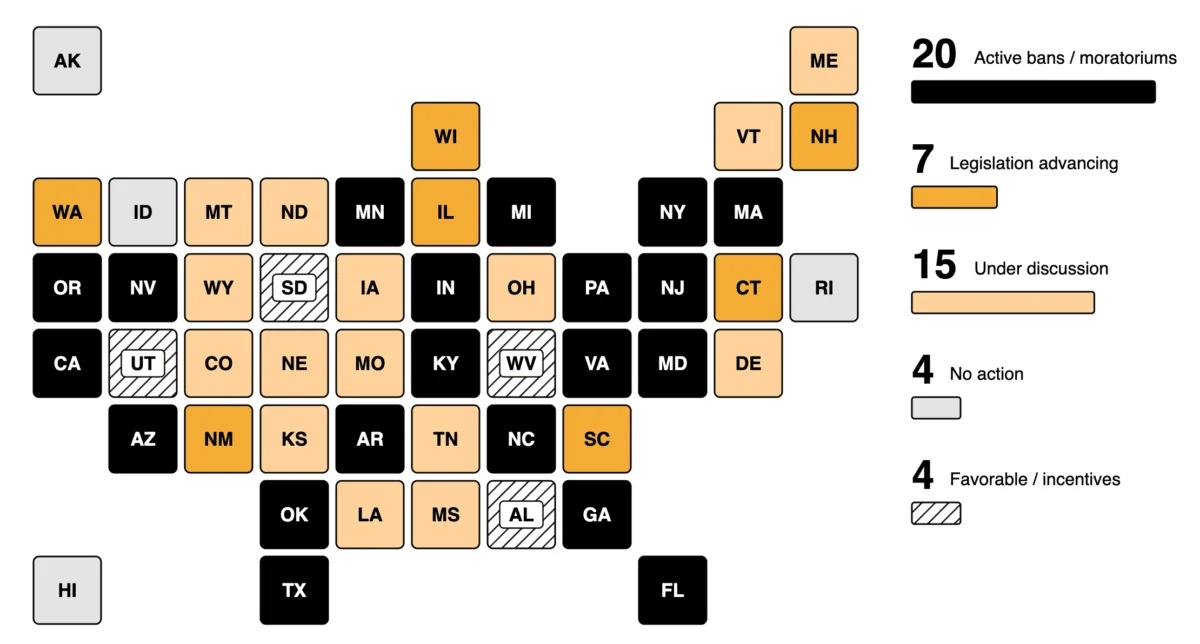
The landscape of American infrastructure is undergoing its most significant transformation since the rural electrification projects of the 1930s. However, this time, the massive power draws are not for homes or factories, but for the "digital brains" of the 21st century: AI data centers. As these sprawling facilities rise across the U.S., they have ignited a firestorm of controversy, pitting the voracious energy and water requirements of artificial intelligence against the stability of local utility grids and the pocketbooks of everyday citizens.
The Collision of Infrastructure and Innovation: Main Facts
The core of the conflict lies in the disparity between the centralized nature of the tech industry’s growth and the localized reality of utility infrastructure. Traditional cloud computing was predictable, with traffic patterns that ebbed and flowed with user activity. AI clusters, by contrast, are "always-on" power hogs. They pack thousands of high-performance GPUs into dense racks that generate intense heat, requiring massive, continuous electricity and water-intensive cooling systems.
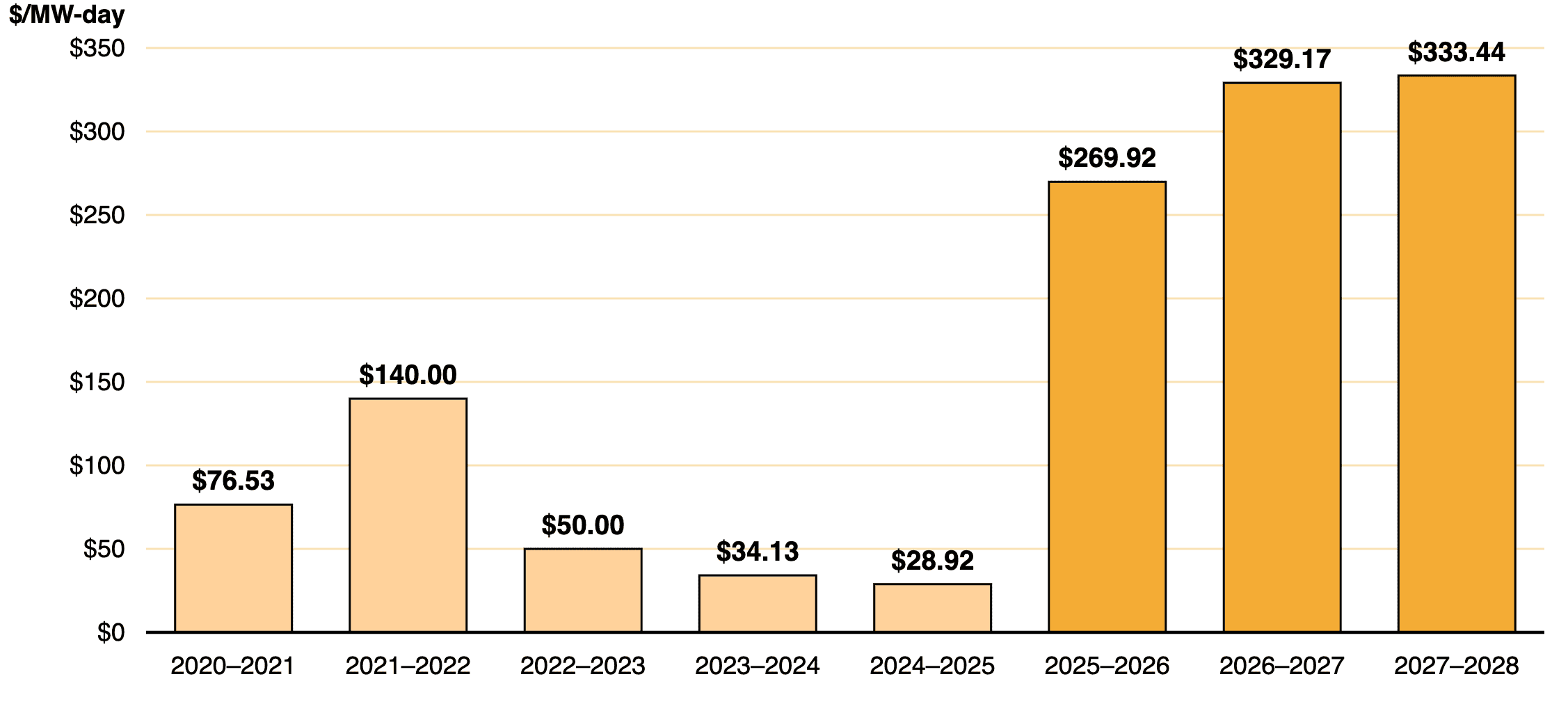
The economic impact is no longer theoretical. In Manassas, Virginia, residents have reported seeing their monthly electricity bills triple, citing the arrival of nearby data centers as the catalyst. This is not an isolated incident. Across the country, the surge in demand has led to a dramatic spike in capacity market clearing prices—the fees paid to power plants to ensure they are available during peak demand. In the PJM grid alone, which serves 13 states, these costs have skyrocketed, with market monitors attributing nearly two-thirds of recent price hikes directly to data center load.
A Timeline of Resistance: The 2026 Shift
The rapid expansion of AI infrastructure has been met with an equally rapid wave of civic pushback.
- Early 2026: A Gallup poll reveals that 70% of Americans oppose the construction of AI data centers in their neighborhoods, marking a rare moment of bipartisan consensus.
- Q2 2026: The conflict reaches a fever pitch as roughly 120 projects face disruption, with approximately $68 billion worth of development stalled or canceled due to local opposition.
- August 2026: The Indianapolis City Council sets a precedent by voting 23–1 to impose a total moratorium on new data center construction through 2027.
- September 2026: Texas Governor Greg Abbott halts state permitting for data centers, pending a massive audit of how these facilities impact the state’s grid and water security.
- Present Day: Over 379 U.S. jurisdictions have now implemented moratoriums or outright bans, reflecting a growing sentiment that the regulatory framework for AI infrastructure is fundamentally broken.
The Economic and Environmental Ledger: Supporting Data
The debate is frequently reduced to a binary of "progress versus NIMBYism," but the data suggests a much more nuanced problem.

The Electricity Conundrum
While the industry argues that large, steady loads help stabilize utility fixed costs, the empirical evidence is mixed. A peer-reviewed study by researchers at NC State and Carnegie Mellon predicts that wholesale electricity prices could rise by as much as 57% in the most affected regions by 2030. Conversely, studies funded by industry groups like the Data Center Coalition suggest that these companies provide a net surplus to the grid. The truth likely lies in the "spare capacity" era: historical benefits were only possible because there was excess power. Today, the grid is operating near its limit, and every new data center requires expensive, new transmission infrastructure.
The Water Crisis
In arid regions like Arizona, the water consumption of data centers has become a flashpoint. While industry proponents argue that data centers use less water than agriculture, critics point to the "indirect" cost. Berkeley Lab estimates that for every gallon used directly by a server, significantly more is consumed by the power plants generating the electricity to run those servers. In places like Botetourt County, Virginia, a single facility’s potential use of 8 million gallons per day threatens the water security of residents reliant on local wells, effectively privatizing a public resource.
Official Responses and Regulatory Realignment
State governments are finding themselves in an impossible position: they are eager to attract the tech jobs associated with the AI revolution, but they are increasingly forced to answer to an angry electorate.
The industry’s response has been to pivot toward "on-site power." Companies like xAI have begun deploying methane gas turbines to bypass the grid entirely. While proponents argue this is a matter of "national and economic security," it has raised significant environmental justice concerns. In Memphis, for instance, the deployment of dozens of unpermitted gas turbines in an already pollution-burdened neighborhood led to a lawsuit from the NAACP, backed by the Southern Environmental Law Center.
The federal government’s response has been equally fragmented. While the Department of Justice has intervened on behalf of companies like xAI—citing the need for energy speed in the AI arms race—the EPA has simultaneously tightened regulations on stationary power sources. This tension highlights a critical gap in federal policy: there is no overarching strategy for how the U.S. should balance AI compute capacity with environmental and public health protections.
The Future: Who Pays and Who Decides?
The long-term implications of the current trajectory are profound. The current "demand risk" is being underplayed by both sides of the aisle. If the projected AI boom fails to materialize at the scale predicted—or if the technology shifts toward greater efficiency—the infrastructure currently under construction could become a "stranded asset."
If utilities build billions of dollars in new transmission lines for data centers that eventually leave or downsize, the cost will inevitably be socialized. As seen in Virginia, where regulators have introduced a specialized rate class forcing large customers to pay for a percentage of their contracted power regardless of usage, states are beginning to recognize the need for "exit fees" and protective tariffs.
Key Implications:
- Transparency: The use of non-disclosure agreements (NDAs) to shield data center deals from public scrutiny is losing favor. States like Pennsylvania have already moved to ban such practices, ensuring that local communities have a seat at the table.
- Grid Resilience: The shift toward decentralized power—on-site plants and microgrids—will likely become the new standard, moving the cost burden from the general public to the developers, though this creates new environmental oversight challenges.
- The "Fair Bill" Doctrine: The most likely regulatory future involves a shift in how costs are allocated. Instead of residential ratepayers subsidizing the grid expansion required for industrial-scale AI, developers will increasingly be required to pay the full, upfront capital costs of the grid hardening they necessitate.
Conclusion
The data center crisis of 2026 is a microcosm of a broader national challenge: how to manage a technological transition that promises immense national wealth while imposing immediate, localized costs. Neither the alarmism of critics nor the techno-optimism of the industry fully captures the complexity of the issue.
As we move forward, the "who pays" question will dominate the policy landscape. Data centers are an essential component of the modern digital economy, and they will continue to be built. However, the days of "build first, ask questions later" are clearly numbered. The future of AI in America depends on a new, more transparent social contract—one that ensures that the cost of progress is not borne exclusively by the local communities that host the infrastructure, but by the companies that stand to profit from the data they process.
The next generation of AI centers must come with a fair, transparent, and sustainable bill attached. Until then, the tug-of-war between the silicon giants and the local grid will remain one of the most consequential domestic policy battles of our time.

 Siti Muinah
 Lina Irawan
 Muslim