
 Laily UPN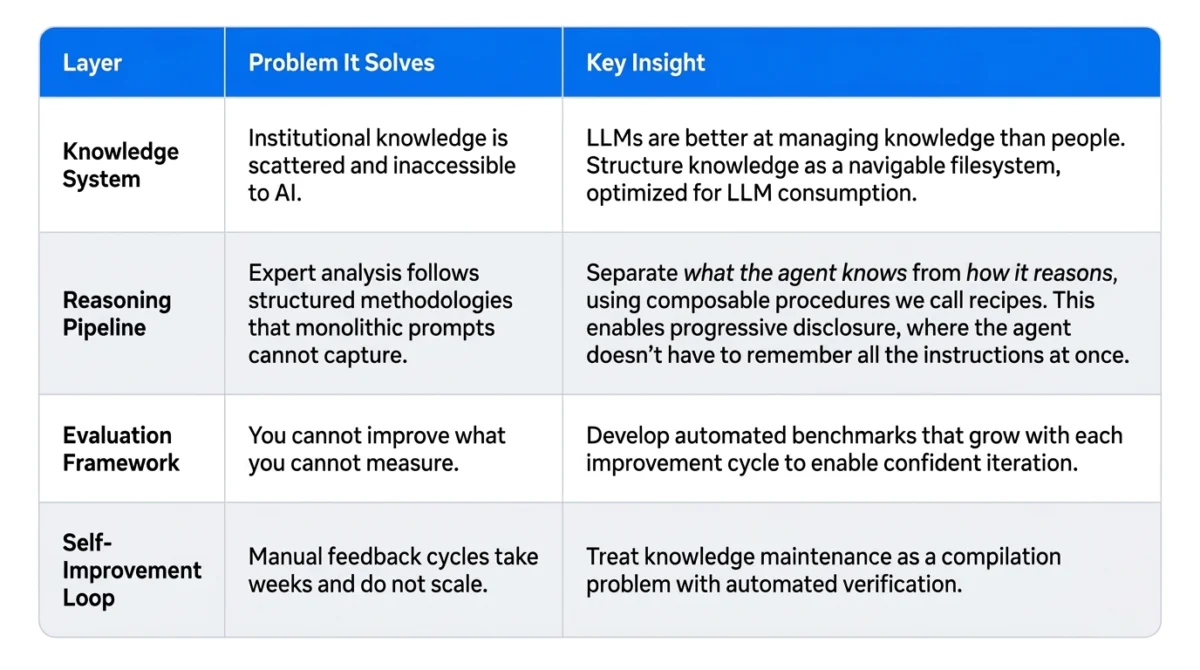
For decades, large organizations have suffered from a silent, persistent drain on efficiency: the "siloing" of specialist knowledge. While corporate frameworks, checklists, and procedural models exist, the most vital expertise—the nuanced reasoning used by top-tier compliance officers, security architects, and financial analysts—remains trapped in the heads of human experts. This reliance on individual judgment often leads to inconsistent assessments, redundant manual research, and critical organizational risk.
Now, a new architectural shift in AI development is promising to change that. By moving beyond the limitations of general-purpose Large Language Models (LLMs), engineering teams are successfully codifying institutional intelligence into AI agents that don’t just "know" facts, but "reason" like the organization’s best minds.
Main Facts: Moving Beyond General Intelligence
The core challenge in deploying AI within high-stakes enterprise domains is the gap between "what an organization could do" and "what it should consider doing." General-purpose models are adept at summarizing information, but they lack the grounding necessary to navigate historical company positions, internal risk appetites, and complex business contexts.
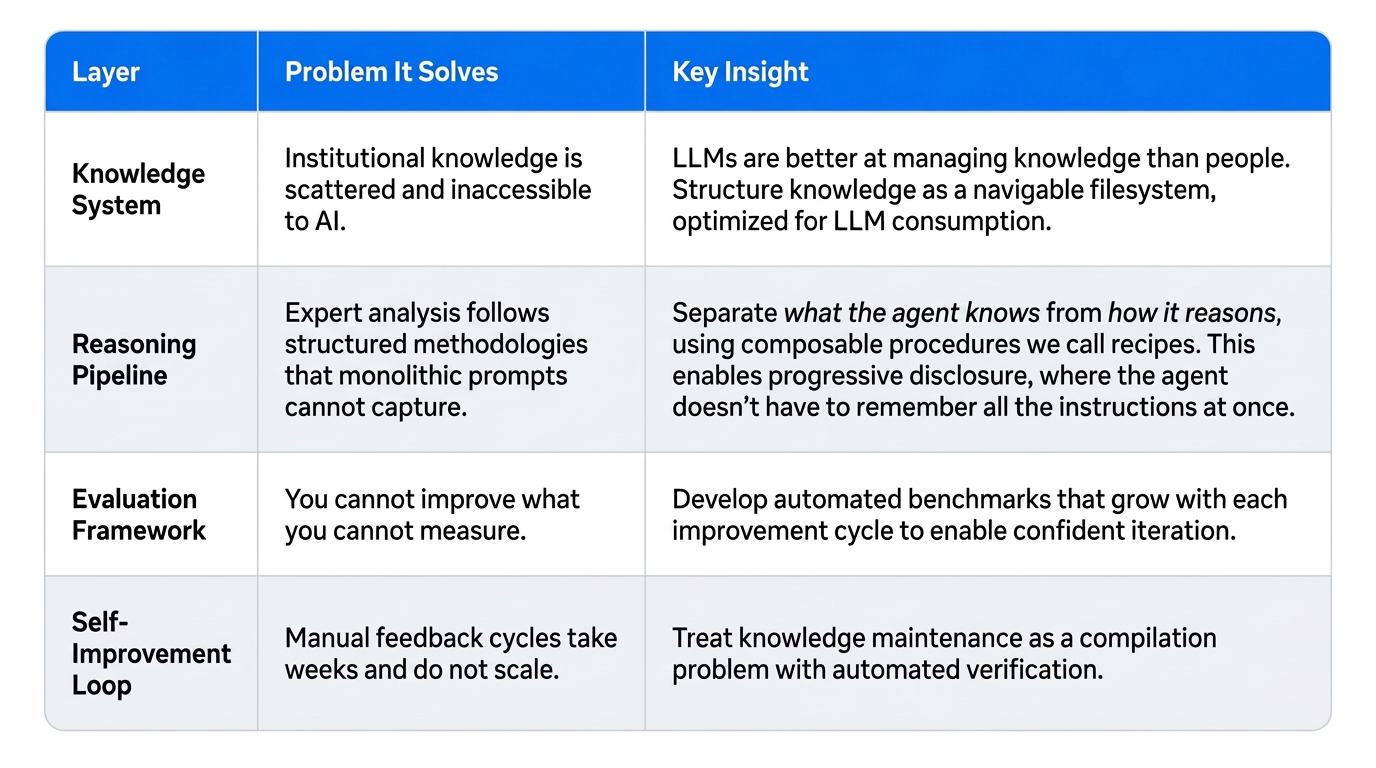
To bridge this, researchers have developed an architecture that functions as an organization’s "second brain." This system is built upon four distinct, interdependent layers:
- A Structured Knowledge System: A repository of curated, machine-readable institutional knowledge.
- A Reasoning Layer: "Recipes" that dictate how the model should think through specific analytical tasks.
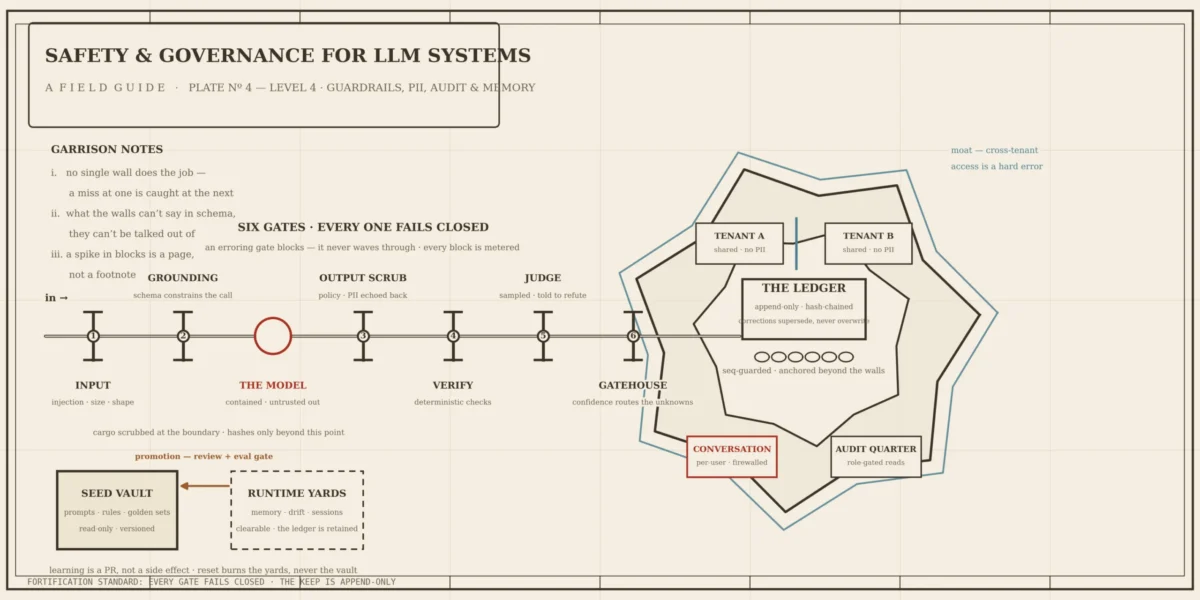
- An Evaluation Framework: A rigorous testing layer that gates every system change.
- An Automated Improvement Loop: A feedback mechanism that compounds expert effort into permanent system upgrades.
By decoupling the what (knowledge files) from the how (analytical recipes), organizations can ensure that their AI remains grounded in current, validated expertise without requiring frequent, expensive model retraining.
Chronology: From Static Documents to Dynamic Agents
The evolution of this architecture began with the recognition that document retrieval—even with advanced RAG (Retrieval-Augmented Generation)—is insufficient for high-fidelity tasks.
Phase 1: The Documentation Trap (Pre-2025)
Organizations previously attempted to solve knowledge gaps by dumping thousands of documents into vector databases. The result was often slow, inconsistent, and error-prone; the AI had to "re-derive" reasoning from raw sources every time a query was made.
Phase 2: Structured Taxonomy (Early 2026)
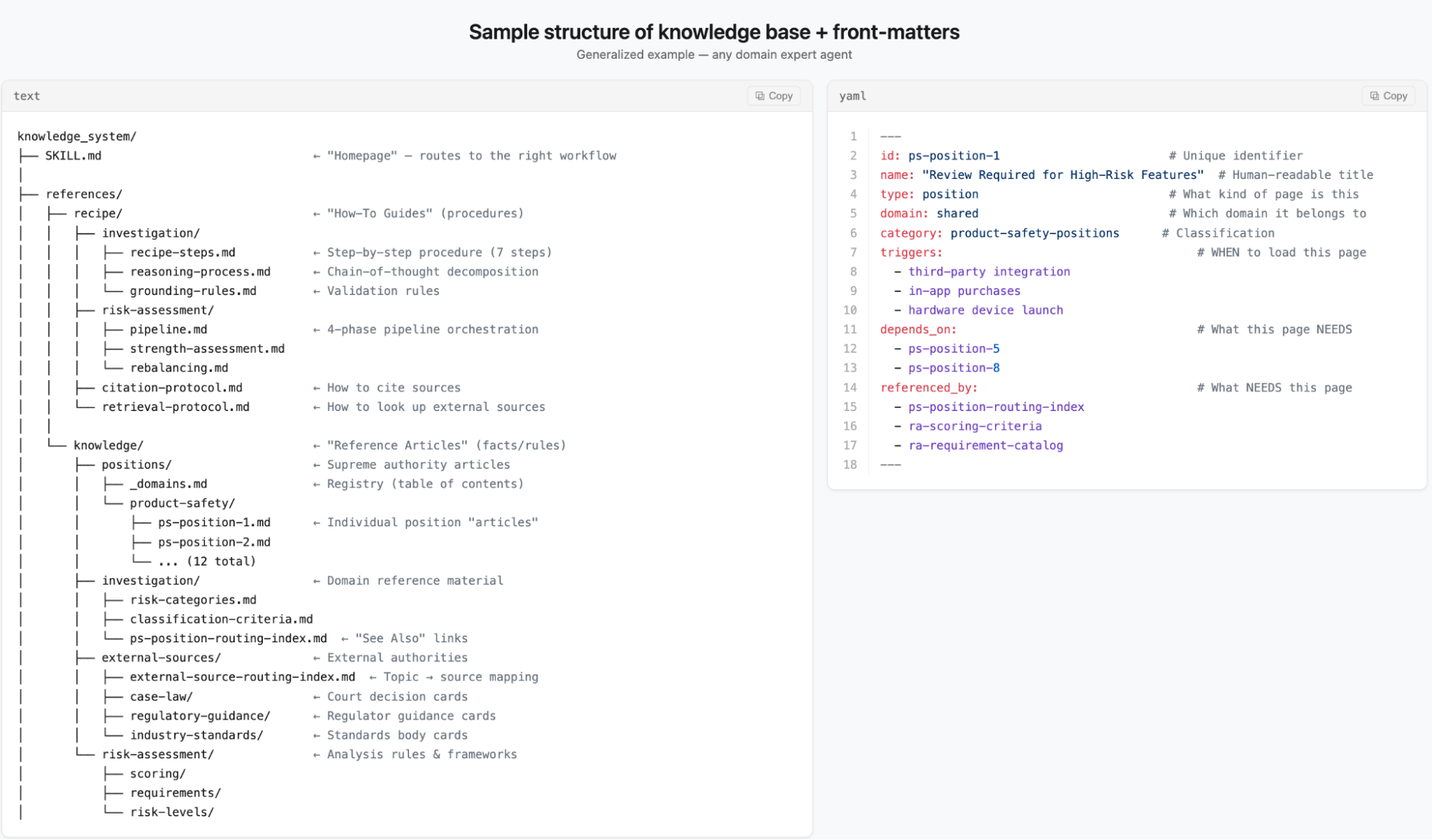
Engineers began adopting the "LLM Wiki" approach—structuring knowledge as a navigable graph of files. By using YAML frontmatter to declare dependencies, teams created a bidirectional graph where the impact of a single file change could be traced across the entire system.
Phase 3: The Recipe-Driven Paradigm (Mid-2026)
The breakthrough arrived when teams separated declarative knowledge from imperative "recipes." These recipes act as step-by-step guides, allowing the AI to decompose complex problems into manageable phases. This transition saw a massive reduction in token consumption and a significant boost in reasoning reliability.
Phase 4: The Self-Improvement Flywheel (Late 2026)
The final, and perhaps most critical, development was the creation of an automated compilation pipeline. By treating expert feedback as a software engineering problem, the system can now diagnose, compile, validate, and land fixes to the knowledge base without human manual intervention, effectively "learning" from every interaction.
Supporting Data: Efficiency at Scale
The results of this architectural approach, documented after just six weeks of development, are significant. The system demonstrated:
- 80% Reduction in Token Consumption: By implementing progressive disclosure and targeted recipe-based retrieval, the model only processes relevant data for each step of the analysis, rather than flooding the context window with extraneous information.
- Near-Perfect Consistency: By relying on a strict taxonomy of knowledge, the system eliminated the "hallucination" of conflicting internal policies.
- Permanent Knowledge Gains: Every expert correction is now folded into a regression test suite. This ensures that once a "blind spot" is addressed, the system never regresses to that mistake again.
- Human-in-the-Loop Velocity: Expert review times for complex assessments were cut significantly, as the agent now handles the initial synthesis and "heavy lifting," leaving the human expert to verify and authorize high-consequence decisions.
Official Responses and Methodology
The developers behind this architecture emphasize that the goal is not to replace human experts, but to augment them. "Human experts stay in control of this system throughout," the team notes.
To maintain this authority, the system utilizes two primary safeguards:
- Checkpoints: The agent presents intermediate reasoning for human oversight at critical junctures.
- Escalations: If the system encounters genuine ambiguity—where multiple, defensible interpretations exist—it automatically halts and hands the decision to a human.
By keeping the complexity in human-readable text files rather than buried in fine-tuned model weights, the architecture remains transparent. "Every improvement is a text edit that a domain expert can review in 30 seconds," the researchers explain. This transparency is vital for compliance and auditing, as it provides a clear, version-controlled audit trail for every AI-driven assessment.
Implications: A New Standard for Enterprise AI
The implications for this technology extend far beyond compliance. Any domain that requires high-fidelity, high-stakes reasoning—such as financial risk assessment, engineering safety standards, or complex procurement—stands to benefit from this "second brain" architecture.
The Death of "Hidden" Knowledge
The most profound implication is the democratization of expertise. In traditional models, junior employees often struggle because they lack access to the tacit "reasoning" of senior staff. In this new paradigm, that reasoning is codified into the system, meaning every user benefits from the collective wisdom of the organization’s most experienced professionals.
The Compounding Return on Expertise
For decades, expert time has been a linear commodity: one hour of work yields one hour of results. With the self-improvement flywheel, expert time becomes exponential. An expert’s correction to a single policy file doesn’t just fix one instance; it updates the knowledge base for all future queries, permanently raising the baseline performance of the entire organization.
Technical and Cultural Requirements
Adopting this architecture is not merely a technical task; it is a cultural one. Organizations must be willing to:
- Formalize their reasoning: Transition from implicit "gut-feel" decision-making to explicit, rules-based frameworks.
- Invest in "Compilation": Build the infrastructure to treat institutional knowledge as code, with testing, linting, and regression suites.
- Prioritize Transparency: Favor human-readable, version-controlled text files over "black-box" model training methods.
Conclusion: The Future of Organizational Intelligence
As AI continues to proliferate, the winners will not be the organizations that simply use the largest models, but those that successfully integrate their own internal logic into the AI’s reasoning process. By building systems that mirror how their best people think, companies can turn their institutional intelligence into a durable, scalable, and ever-improving asset.
The era of "trapped" knowledge is coming to an end. In its place is a model of persistent, verified, and accessible expertise that promises to fundamentally redefine the efficiency and accuracy of the modern enterprise.

 Nila Kartika Wati
 Neng Nana
 Basiran

 Iffa Jayyana
 Raul Delapena Setiawan
 Rifan Muazin
 Asro
Asro