
 Evan Lee Salim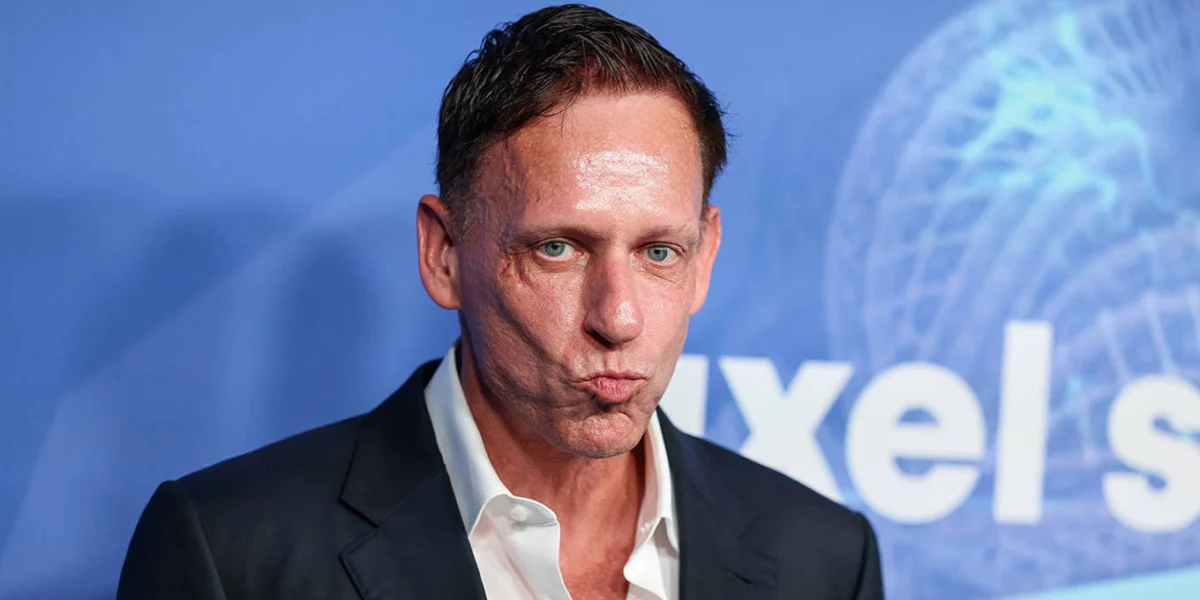
By [Your Name/Bureau], reporting from New York
October 9, 2026
In the early 1990s, as the Berlin Wall lay in ruins and the Soviet Union dissolved into the pages of history, Francis Fukuyama became the intellectual avatar of a new, unipolar world. His thesis—that humanity had reached the "end of history" with the triumph of Western liberal democracy—was celebrated, critiqued, and eventually mythologized. Today, more than three decades later, Fukuyama returns to that legacy with his new memoir, In the Realm of the Last Man. Yet, as he attempts to clarify his original warnings, a new, stark reality has emerged: the rise of Silicon Valley figures like Peter Thiel, whose explicit rejection of democratic oversight suggests that the "end of history" was perhaps merely a prelude to a new, more volatile era of technological autocracy.
Main Facts: The Memoir and the Misunderstood Thesis
Fukuyama’s memoir is, in many respects, an act of intellectual reclamation. Throughout the 2020s, as global populism surged and the geopolitical landscape shifted toward multipolarity, critics frequently cited Fukuyama as the man who "got it wrong." However, in In the Realm of the Last Man, Fukuyama argues that his critics largely ignored the second half of his seminal 1992 The Last Man.
The "Last Man" is a Nietzschean concept, referring to a human being who has lost the capacity for higher ambition or struggle, satisfied with mere comfort and security. Fukuyama’s central contention in his new work is that he always foresaw the fragility of the liberal order. He warned that liberal democracy is not a self-sustaining machine; it is prone to "intrinsic stresses." These stresses are born from the human desire for thymos—the spirited, competitive need for recognition. When liberal democracy fails to satisfy this desire, or when it creates a society that feels stagnant, the "Last Man" seeks radical, often destructive, alternatives.
Chronology of a Disillusioned Era
To understand why Fukuyama’s work is being revisited with such urgency in 2026, one must look at the timeline of the "post-historical" era:
- 1992: The End of History and the Last Man is published. It is greeted with euphoria by Western elites, who interpret it as a guarantee of democratic permanence.
- 2008–2016: The global financial crisis and the subsequent rise of anti-establishment sentiment across Europe and the United States begin to undermine the perceived inevitability of liberal democratic consensus.
- 2016–2022: The emergence of "techno-libertarianism." Figures like Peter Thiel move from the periphery of venture capital to the center of political influence, openly questioning the necessity of democratic governance.
- 2024: The "Great Regulatory Pivot," where major nations attempt to re-assert control over AI and digital infrastructure, sparking fierce resistance from private capital.
- 2026: Publication of In the Realm of the Last Man. Fukuyama attempts to pivot from the role of "prophet of democracy" to "diagnostician of decay."
Supporting Data: The Erosion of Liberal Faith
The data surrounding the contemporary state of democracy provides a grim backdrop to Fukuyama’s reflections. According to the 2026 Freedom House Global Index, democratic indices have declined for the 20th consecutive year. More significantly, the "trust deficit"—a metric tracking public confidence in representative institutions—has hit a record low of 24% among G7 nations.
Simultaneously, the concentration of power in the private sector has reached unprecedented levels. The "Tech-State" divide, as defined by independent policy analysts, shows that the top five technology conglomerates now control infrastructure that accounts for nearly 18% of global GDP. This shift has facilitated a new form of power, where private entities exercise sovereign-like control over communication, information, and even logistical supply chains, effectively bypassing the legislative oversight that Fukuyama once assumed would be the bedrock of the global order.
Official Responses and Intellectual Friction
The reception of Fukuyama’s memoir has been polarized. Supporters within the academic community, such as those at the Stanford Center on Democracy, argue that the book is a necessary correction to the "reductionist" view of Fukuyama’s earlier work. "Fukuyama is essentially saying that we treated the end of history as a victory lap, while he was trying to write a warning label," says Dr. Elena Rossi, a political sociologist.
Conversely, the camp surrounding Peter Thiel has responded with dismissive pragmatism. Representatives of the Thiel-aligned "New Sovereignty" movement have argued that democracy is an outdated software for managing a complex, technologically accelerating world. In recent public forums, associates of Thiel have characterized Fukuyama’s emphasis on "democratic majorities" as a "sentimental attachment to a dying consensus." They argue that the future belongs to decentralized, meritocratic structures that prioritize rapid innovation over the "sluggish, performative nature of electoral politics."
Implications: The Quest for the Future
The core conflict between Fukuyama and the techno-libertarian movement centers on the nature of the future. Fukuyama views the preservation of the liberal state as a moral and political imperative—a way to ensure that human thymos is channeled through healthy, collective institutions.
Thiel’s philosophy, by contrast, operates on the assumption that the state is an obstacle to progress. By attempting to "wrest control of the future" from democratic majorities, figures like Thiel are essentially testing the limits of the social contract. If they succeed in creating "sovereign enclaves" or digital jurisdictions that exist outside the reach of national tax laws and regulatory oversight, the very definition of a "citizen" changes.
The Return of History
Fukuyama’s memoir serves as a poignant reminder that history was never truly "over." It was merely suppressed by the illusion of stability. Today, the "Last Man" is no longer just a passive consumer of liberal peace; he is a man of immense technological power, searching for a new arena of struggle.
The implication for the remainder of the 2020s is clear: the struggle is no longer between communism and capitalism, but between the remnants of the democratic order and a new, fragmented vision of governance driven by private capital. As Fukuyama writes in his concluding chapters, the danger is not that history has ended, but that we have forgotten how to fight for the future within the framework of our own laws.
As we look toward 2030, the debate sparked by In the Realm of the Last Man will likely define the political discourse of the decade. We are witnessing the end of the "End of History." Whether what follows is a renaissance of democratic values or a descent into a new form of private, technocratic rule remains the most pressing question of our time.
The "Last Man" is no longer content to sit in the realm of history’s end. He is ready to write the next chapter himself, and he is doing so without the permission of the ballot box.

 Lina Hope
 Basiran
 Neng Nana
 Iffa Jayyana
 Raul Delapena Setiawan
 Rifan Muazin
 Asro
Asro