
 Basiran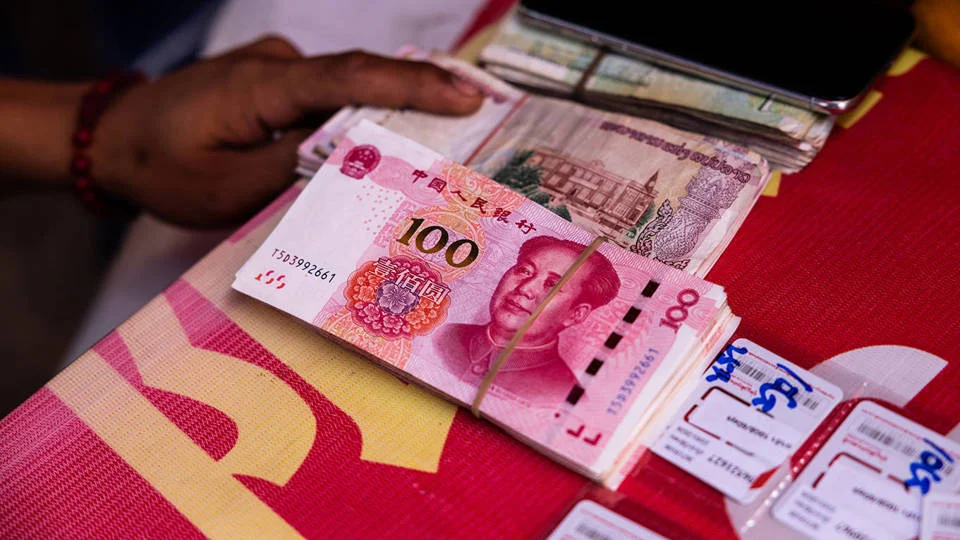
By Justin Yifu Lin and Yan Wang
October 9, 2026
The global financial architecture, built upon the bedrock of the US dollar in the post-WWII era, is undergoing a profound and irreversible transformation. For decades, developing nations have been tethered to the greenback, finding themselves at the mercy of the Federal Reserve’s interest rate cycles and the shifting risk appetites of Wall Street. Today, however, that paradigm is fracturing. As the stability of American economic institutions faces unprecedented scrutiny, a viable, cost-effective, and increasingly robust alternative has emerged: the Chinese Renminbi (RMB).
The $4 Trillion Void: The Context of Development Finance
The global development-finance landscape is currently defined by a staggering deficit. According to the latest data from UN Trade and Development, the world’s developing nations face an annual shortfall of $4 trillion in their efforts to achieve the United Nations’ Sustainable Development Goals (SDGs).
For decades, this gap was meant to be bridged by multilateral institutions—such as the World Bank and the IMF—and private capital flows denominated almost exclusively in dollars. While this provided liquidity, it also forced emerging markets to shoulder the "original sin" of international finance: borrowing in a currency they do not control. When the US dollar appreciates, the debt-servicing burden for these nations balloons, often triggering sovereign debt crises that stifle growth for decades.
The recent volatility in US economic policy—characterized by erratic fiscal trajectories and the weaponization of the financial system—has accelerated the search for an alternative. The renminbi, once viewed as a niche regional currency, is now being positioned as a global liquidity provider that offers insulation from the volatility of the dollar-centric system.
Chronology of a Shift: From Currency Pegs to Global Adoption
The transition toward RMB-denominated lending did not happen overnight. It is the result of a deliberate, multi-decade strategy that began with China’s cautious integration into global trade and has culminated in the current era of "South-South" financial cooperation.
- 2009–2010: The Pilot Phase. China initiated the RMB Trade Settlement Pilot Program, allowing companies in select Chinese cities to settle cross-border trade in renminbi. This was the first brick laid in the foundation of internationalizing the currency.
- 2013: The Belt and Road Initiative (BRI). The launch of the BRI provided the infrastructure for a massive expansion of Chinese outbound capital. While early BRI projects were often dollar-denominated, the shift toward RMB lending began to gain momentum as China sought to mitigate its own currency risk.
- 2016: The SDR Milestone. The International Monetary Fund (IMF) formally included the renminbi in the Special Drawing Rights (SDR) basket, recognizing its status as a "freely usable" currency. This provided a critical seal of legitimacy for central banks globally to hold RMB as a reserve asset.
- 2022–2024: The Geopolitical Pivot. The freezing of Russian central bank assets by Western nations served as a wake-up call for the Global South. Developing nations, wary of being caught in the crossfire of US-led sanctions, accelerated the move toward "de-risking" their reserves and trade settlements.
- 2026: Institutionalization. By late 2026, RMB-denominated loans are no longer an exception; they are a standard, competitive option for infrastructure and development projects across Africa, Latin America, and Southeast Asia.
Supporting Data: Why the RMB is Gaining Traction
The attractiveness of the renminbi is not merely political; it is fundamentally economic.
- Lower Volatility: Unlike the dollar, which has been subject to sharp spikes driven by Federal Reserve quantitative tightening, the renminbi has maintained a more stable trajectory in its exchange rate against a basket of currencies. This stability is crucial for long-term project planning in developing countries.
- Trade Integration: China remains the largest trading partner for over 120 countries. Settling loans in the currency that is already used for the import of capital goods and machinery creates a natural hedge for developing nations.
- Cost of Capital: As China maintains a distinct monetary policy cycle compared to the US, there have been periods where RMB-denominated interest rates are lower than the high-interest-rate environment necessitated by the US Fed’s inflation-fighting measures.
- Reserve Diversification: Central banks in the Global South are increasingly replacing a portion of their USD holdings with RMB. This move is intended to reduce exposure to the "exorbitant privilege" of the dollar and ensure financial sovereignty.
Official Responses and the Multilateral Dilemma
The rise of the RMB has elicited mixed reactions from the traditional pillars of the Bretton Woods system.
In Washington, officials have expressed concern over what they characterize as "opaque lending practices." Treasury representatives frequently point to the lack of "market-determined interest rates" in China as a potential risk to the stability of the global financial system. They argue that the US dollar remains the safest, most liquid currency in the world, and that shifts away from it could undermine the efficiency of global capital allocation.
Conversely, officials from the Global South—speaking at summits in Nairobi, Brasilia, and Jakarta—have offered a different narrative. Finance ministers have noted that the "conditionality" associated with Western development loans often imposes painful austerity measures. In contrast, they argue, the RMB-denominated funding provided by Chinese institutions is often project-specific and focused on infrastructure development, which provides tangible, long-term economic returns.
"We are not choosing sides," a finance minister from a leading African nation noted during a recent IMF meeting. "We are choosing stability. If our debt is in the currency of our primary trading partner, our economies are safer."
Implications: A Bipolar Financial Future?
The shift toward RMB-denominated lending carries profound implications for the global economy.
The End of US Financial Hegemony
The most immediate implication is the erosion of the dollar’s absolute dominance. While the dollar will remain the primary reserve currency for the foreseeable future, its share of global transactions is likely to continue its slow, steady decline. This limits the "reach" of US sanctions, as the ability to cut a nation off from the SWIFT system becomes less effective when an alternative, RMB-based payment system (such as CIPS) is available.
Empowering the Global South
For developing countries, the availability of RMB financing provides a "second option." This competition between the dollar and the renminbi gives emerging economies more leverage. They can now negotiate better terms, ensuring that their development needs are not dictated by the political whims of a single Western superpower.
The Risk of Fragmentation
However, this transition is not without risks. A fragmented global financial system—where one bloc uses the dollar and another uses the renminbi—could increase transaction costs and lead to inefficiencies in global capital markets. Furthermore, if China does not fully open its capital account, the RMB may struggle to achieve the same level of liquidity as the dollar, potentially leading to bottlenecks in times of global financial stress.
Conclusion
As we look toward the end of 2026, the rise of the renminbi is not just a story of Chinese economic growth; it is a story of a world that is no longer content to wait for the US to provide stability. The $4 trillion development gap remains a daunting challenge, but the democratization of financing options—facilitated by the renminbi—is a necessary step toward a more multipolar, and perhaps more equitable, international financial order.
For developing nations, the message is clear: the era of relying on a single, volatile currency is ending. By embracing the renminbi, they are not only securing their own development projects but are also playing an active role in rewriting the rules of the global financial game. The future of development finance will be defined not by the dictates of one nation, but by the diversity of choices available to those who have, for too long, been marginalized by the existing system.


 Lina Hope
 Nana
Nana
 Laily UPN
 Iffa Jayyana
 Rifan Muazin
 Suro Senen

 Lina Irawan