
 Laily UPN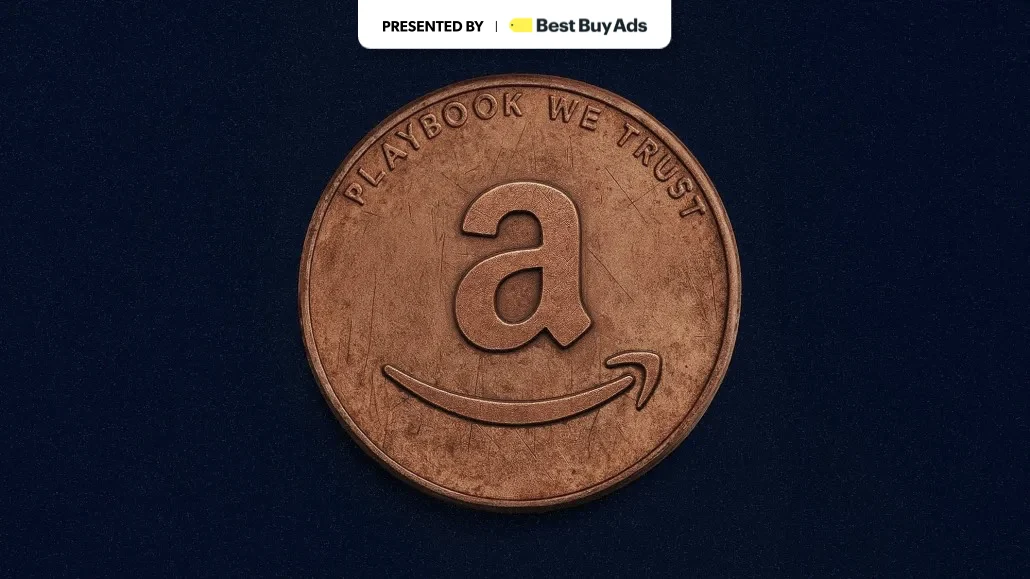
In the current economic climate—defined by persistent inflationary pressures, rising fuel costs, and a precarious dip in consumer confidence—the traditional retail playbook would suggest a tightening of marketing budgets. Yet, as Amazon prepares for its "Prime Big Deal Days" (October 6–7, 2026), the expected narrative of fiscal austerity is being defied by a surge in digital advertising investment.
Despite the hesitation to slash profit margins through aggressive discounting, brands are not retreating. Instead, they are recalibrating their strategies, pouring significant capital into Amazon’s advertising ecosystem. For many, the e-commerce giant has transitioned from a simple sales channel to a non-negotiable pillar of their media mix, proving that even when consumer sentiment wanes, the power of Amazon’s closed-loop data remains a primary magnet for corporate spend.
The Chronology of an Advertising Juggernaut
The evolution of Amazon as a premier advertising platform has been rapid. Historically, Prime Day and its autumnal sibling, "Prime Big Deal Days," were viewed primarily as tactical sales events designed to clear out inventory and boost short-term volume.
However, over the last 24 months, these events have transformed into strategic catalysts for comprehensive media campaigns. The chronology of this shift is telling:
- Early 2025: Amazon begins integrating more sophisticated Demand-Side Platform (DSP) capabilities, allowing brands to reach audiences off-site while leveraging Amazon’s first-party retail data.
- June 2026: A truncated, two-day Prime Day event tests market appetite. Despite the shorter duration compared to the previous four-day format, ad spend remains resilient.
- October 2026: Prime Big Deal Days arrive, with media buyers reporting a 15–40% increase in pre-event ad spend compared to 2025 figures.
- Looking Forward (2027): Agencies project continued, albeit more tempered, growth as Amazon cements its position as a "full-funnel" marketing partner.
Supporting Data: By the Numbers
The data provided by industry experts underscores a market that, while perhaps more cautious than in the boom years of 2021–2022, remains fundamentally bullish on Amazon.
Five prominent media buyers interviewed by Digiday indicate that client spending on Amazon Ads leading up to this week’s event is up significantly year-over-year. Darren D’Altorio, SVP of Paid Media at Wpromote, notes a 30% year-on-year growth for endemic brands (those selling directly on Amazon) and an even more aggressive 40% growth for non-endemic brands.
While the pace of growth has slowed—moving from the 40–50% spikes seen in previous years to a more conservative 15–20%—the absolute dollar volume continues to climb. Amazon’s own financial reporting supports this: in Q2 2026, the company generated $19.8 billion in ad revenue, a staggering 26% increase year-on-year.
This growth is increasingly driven by "non-endemic" brands—companies that do not sell on Amazon but recognize the value of its audience. For these firms, Amazon has become a top-of-funnel powerhouse, using streaming inventory like Prime Video and Twitch to capture consumer attention before the intent to purchase is even solidified.
Strategic Shifts: The Rise of the DSP and CTV
The most significant trend identified by agencies like Power Digital and PMG is the pivot away from traditional "Sponsored Products" toward Amazon’s Demand-Side Platform (DSP).
The Shift to Brand Building
Katie Davis, Director of Retail Marketing at Power Digital, highlights a clear shift in intent: "Amazon DSP continues to be viewed more as a brand-building lever than a retail checkout driver."
By prioritizing Connected TV (CTV) and online video, marketers are attempting to prove incremental returns that transcend the platform itself. This is a critical development. In the past, Amazon spend was strictly associated with the "bottom of the funnel"—the final click before a purchase. Today, the investment is moving upstream, with marketers utilizing Amazon’s high-quality, proprietary inventory on Fire TV and Prime Video to drive brand awareness.
Diversification of Inventory
Ryan Walker, Senior Director of Commerce at PMG, and Ashley Hutchings of KSM Media, both emphasize that "full-funnel" is the current industry standard. Brands are no longer choosing between search or display; they are diversifying. From Twitch streams to live sports broadcasts on Prime Video, the inventory is becoming more premium.
Joe O’Connor, Senior Director of Innovation and Growth at Tinuiti, confirms this trend: "We see Prime Video really driving growth with a lot of our non-endemic clients who are starting to test Amazon." For these brands, the ability to marry Amazon’s retail data with the high-impact environment of streaming video is a unique competitive advantage that few other publishers can match.
Official Responses and Industry Sentiment
Despite the regulatory noise—specifically the FTC’s ongoing investigation into Amazon’s ad auction practices—agencies report that the legal environment has had little to no impact on client behavior.
"At the end of the day, what our clients care about is performance," says O’Connor. This sentiment is echoed across the industry. For the CFO, the decision to invest in Amazon is increasingly "defensible." With granular data on who is buying, when they are buying, and what they are viewing on their second screens, marketers can justify expenditures with a level of precision that other media channels struggle to replicate.
However, a note of caution persists regarding discount fatigue. As the industry grapples with the proximity of October’s deal days to the traditional Black Friday/Cyber Monday peak, brands are becoming more selective. Data from PMG suggests that the average discount depth has fallen from 28% in 2024 to 24% in 2025, with expectations that deep discounts will continue to shrink. Marketers are realizing that constant, high-percentage discounting is an unsustainable model, leading them to search for "always-on" strategies that don’t rely solely on price-slashing.
Implications for the Future of Retail Media
The reliance on Amazon as a primary media vehicle carries several long-term implications for the retail landscape:
- The "Defensibility" Threshold: As marketing budgets face tighter scrutiny, Amazon’s ability to prove direct return on ad spend (ROAS) makes it the "safe" choice for CFOs. This could potentially starve other, less measurable media channels of funding.
- The End of the "Discount Trap": The trend toward shallower discounts suggests that brands are reclaiming their margins. If successful, this could shift the nature of Prime events from "clearance sales" to "exclusive access" events, fundamentally altering consumer expectations.
- Amazon as a Media Company: The aggressive expansion into live sports and streaming audio signals that Amazon is not just an e-commerce platform, but a full-fledged media conglomerate. Their competitive advantage in the DSP space is growing, and by 2027, they may find themselves the primary gatekeeper for the majority of digital ad budgets in the retail sector.
Ultimately, the surge in Amazon ad spend during a period of economic uncertainty is a testament to the platform’s utility. While brands may be nervous about the broader economy, they are betting that the best way to survive—or thrive—is to be exactly where the consumers are: within the Amazon ecosystem. As the company continues to refine its DSP capabilities and expand its reach into living rooms via CTV, the question for marketers is no longer if they should invest in Amazon, but how they can do so without losing their identity in the noise of constant, perpetual retail promotion.

 Rifan Muazin
 Azzam Bilal Chamdy

 Iffa Jayyana
 Suro Senen
 Lina Hope
 Lina Irawan