
 Siti Muinah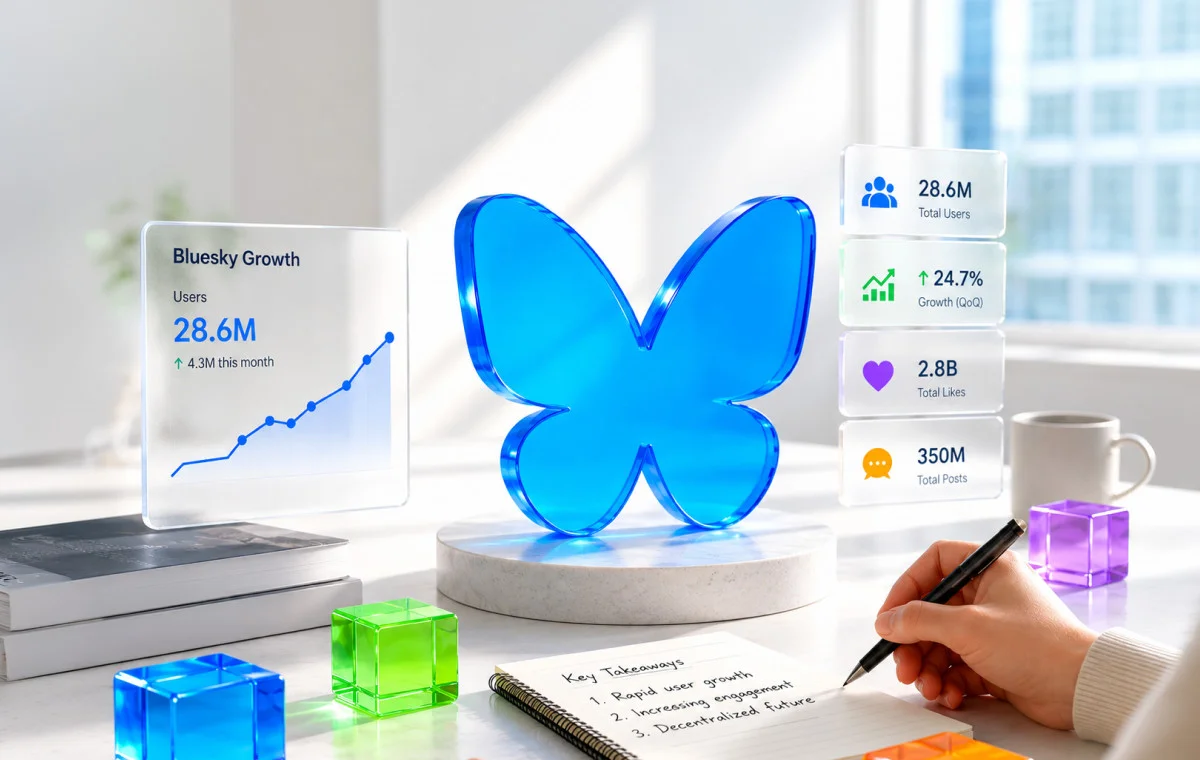
Once regarded merely as a fledgling "Twitter alternative," Bluesky has matured into a significant, albeit nuanced, player in the global social media ecosystem. As of mid-2026, the platform has surpassed 46 million registered users, a milestone that reflects a dramatic departure from its origins as an invite-only experiment. Yet, as the platform scales, it faces the classic "growth versus engagement" dilemma that has historically defined the lifecycles of major social networks.
For brands, publishers, and digital strategists, the question is no longer whether Bluesky is "real," but rather how it fits into a fragmented digital landscape where user loyalty is increasingly thin.
The Chronology of a Disrupter: From Protocol to Platform
Bluesky’s journey is rooted in a vision for decentralized social networking, distinct from the centralized models of X (formerly Twitter) or Meta’s Threads.
- The Genesis: Originally launched as a research initiative under the Twitter umbrella in 2019, Bluesky eventually spun off into an independent public benefit corporation. Its foundational technology, the AT Protocol, was designed to enable portable identities and interoperable social experiences.
- The Beta Phase: Through 2023 and early 2024, Bluesky maintained an invite-only barrier. This period was critical for fostering a "community-first" culture, attracting academics, tech enthusiasts, and journalists who were seeking a quieter, more curated digital environment.
- The Public Pivot: By mid-2024, the doors were thrown open. The surge of signups that followed wasn’t just a reaction to the volatility of other platforms—it was a recognition of Bluesky’s unique "calm" user interface and decentralized philosophy.
- The 2026 Reality: Now, two years removed from its public launch, the platform is navigating the transition from a niche tech hub to a mainstream contender. While the user count continues to rise, the platform has entered a phase of stabilization, where the focus has shifted from raw acquisition to retaining a highly active, albeit selective, user base.
Decoding the Data: Where Bluesky Stands in 2026
The metrics surrounding Bluesky provide a complex portrait of a platform in flux. While the raw number of 46 million registered users sounds impressive, industry analysts emphasize the need to look beneath the surface.
Geographic Distribution
The platform’s footprint remains heavily concentrated in Western markets, suggesting that while it has global potential, its cultural resonance currently favors English-speaking regions.
| Country | Traffic Share (August 2026) |
|---|---|
| United States | 46.69% |
| United Kingdom | 11.26% |
| Japan | 5.15% |
| Germany | 5.14% |
| Canada | 4.9% |
The dominance of the U.S. and U.K. markets indicates that Bluesky has successfully captured a specific demographic of power users who are dissatisfied with algorithmic feeds elsewhere. However, the relatively lower penetration in non-English speaking markets remains a strategic hurdle for the company as it looks toward international expansion.
Demographics: Who is Actually Posting?
Understanding the Bluesky user is a lesson in digital sociology. Unlike platforms that prioritize viral video consumption, Bluesky’s core user base leans toward text-heavy interaction, professional discourse, and community-led moderation.
The "Early Adopter" Legacy
The demographic makeup remains skewed toward the 25–40 age bracket. These users are largely tech-forward, often employed in creative or digital industries, and prioritize "transparency" in their feeds. Unlike platforms optimized for the "creator economy" (such as TikTok or Instagram), Bluesky users show a marked preference for chronological timelines and granular control over their content moderation filters.
Engagement Dynamics
Recent data suggests a "settling in" period. While initial signups were driven by curiosity, the current cohort of users demonstrates consistent daily activity. Engagement is characterized by high rates of replies and thread-based interactions rather than passive scrolling. This high-intent engagement is a goldmine for niche brands that prioritize community building over broad-spectrum awareness.
The Business of Decentralization: Infrastructure and Growth
Operating a decentralized platform is fundamentally more expensive and complex than maintaining a traditional centralized server. Bluesky’s business statistics highlight the strain of scaling infrastructure while avoiding the "ad-heavy" model that plagues its competitors.
The platform has navigated several funding rounds designed to prioritize long-term sustainability over short-term monetization. The strategy appears to be a "slow and steady" approach: by keeping the team lean and focusing on the robustness of the AT Protocol, Bluesky is building a moat against the instability often associated with VC-backed social media.
However, the "infrastructure challenge" remains. As the platform adds features—such as video integration, advanced search, and improved discovery tools—the costs of hosting and moderation scale non-linearly. The company’s ability to balance these costs without resorting to intrusive advertising will be the ultimate test of its business model.
Implications for Marketers and Creators
For those looking to integrate Bluesky into their broader social media strategy, the platform offers a distinct set of risks and rewards.
The "Quality Over Quantity" Rule
Marketers who attempt to transplant their high-frequency, automated content strategies from X or LinkedIn to Bluesky are likely to fail. The user base on Bluesky is notoriously resistant to "corporate-speak." Successful brands on the platform are those that participate in conversations rather than broadcasting announcements.
The Timing Factor
Strategic posting remains a vital component. Because the platform lacks the "algorithmic boom" of other networks, timing your content to coincide with peak activity windows—often early mornings and late evenings in the U.S. and U.K. time zones—is essential for organic reach. If you are refining your strategy, understanding the best time to post on Bluesky is a prerequisite for success.
The 2026 Verdict: A Mixed Picture
As we look toward the remainder of 2026, the data paints a picture of a platform at a crossroads. While the registered user count continues to climb, the deceleration in mobile active usage suggests that the platform is currently undergoing a "weeding out" process. The casual observers have largely moved on, leaving behind a dedicated core that is deeply invested in the platform’s mission.
Challenges Ahead
- Retention: Can the platform keep users engaged once the novelty wears off?
- Monetization: Will the platform introduce revenue-sharing models for creators without alienating its base?
- Scalability: Can the decentralized architecture support 100+ million users without compromising speed or user experience?
Conclusion
Bluesky has undoubtedly carved out a unique space in the digital landscape. It is no longer just an alternative; it is a destination. For brands, marketers, and creators, it represents an emerging frontier—one that requires patience, a commitment to authentic engagement, and an understanding of the platform’s unique demographic profile.
While it does not yet possess the sheer scale of the industry titans, its growth trajectory suggests that it is not going anywhere. The future of Bluesky will not be measured by how many users it can steal from its competitors, but by how effectively it can foster a sustainable, user-centric environment that keeps people coming back for the discourse, not just the drama.
As we move forward, monitoring these trends will be essential for any professional looking to stay ahead of the curve. The social media landscape is shifting, and for those willing to engage with the nuance of platforms like Bluesky, the opportunities for meaningful connection are only just beginning.


 Suro Senen
 Raul Delapena Setiawan
 Laily UPN
 Iffa Jayyana
 Rifan Muazin
 Lina Hope
 Lina Irawan