
 Iffa Jayyana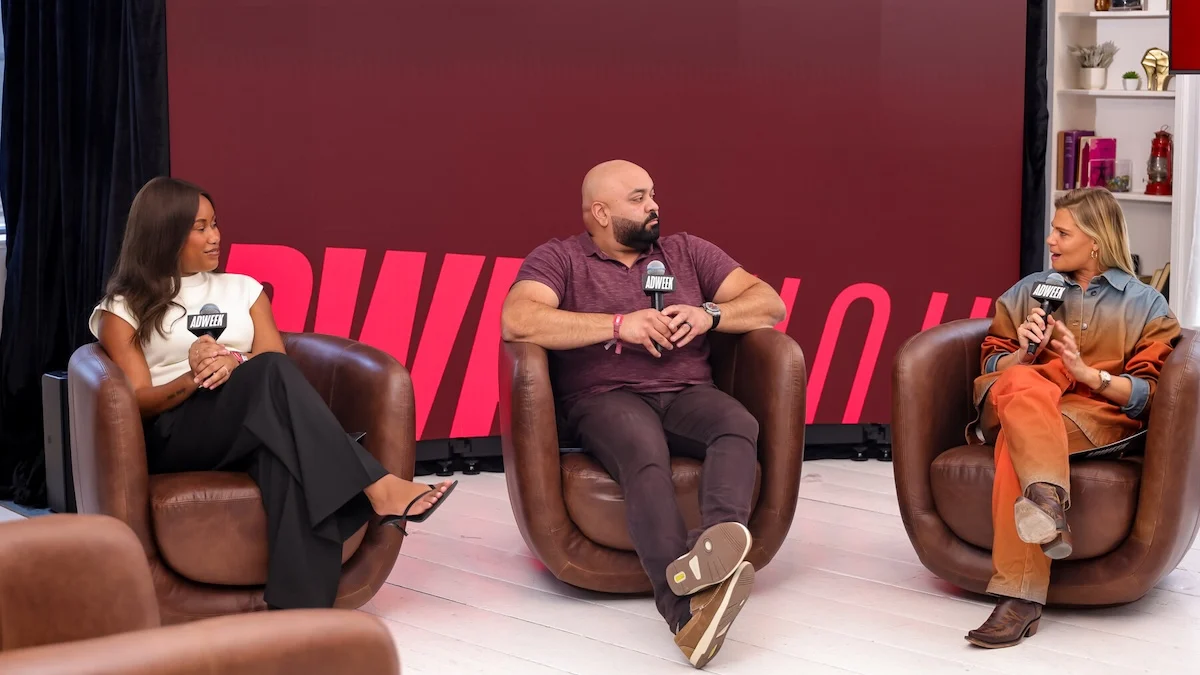
This post was created in partnership with TikTok for Business.
In the contemporary marketing ecosystem, the role of media buying has undergone a seismic shift. It is no longer sufficient for brands to simply secure ad space or monitor impressions; today’s media buying must function as a bridge between brand identity and consumer action. In a landscape defined by rapid cultural shifts and fragmented attention spans, the most successful brands are those that treat media buying as a strategic growth engine.
To explore this evolution, ADWEEK House recently hosted an Advertising HQ panel in partnership with TikTok. The session featured Alexia Nüssli, Head of Product Strategy and Operations for TikTok, who facilitated a deep dive with leaders from two agencies recognized in the inaugural TikTok Media Buying Excellence Awards. The discussion highlighted how a "TikTok-first" mindset is not merely a creative choice but a performance-driven necessity for modern enterprises.
The Evolution of the Media Buying Mandate
The traditional model of media buying—characterized by rigid planning cycles and broad-reach metrics—is increasingly being challenged by the agility required in a digital-first economy. TikTok, as a platform, sits at the nexus of culture and commerce, providing a unique environment where entertainment and purchase intent collide.
"Brands turn to agencies not just for media performance; they turn to agencies to drive holistic business growth," Nüssli noted during her opening remarks. This sentiment captures the modern mandate for agencies: they must act as consultants, navigators, and executors who can decipher the complexities of algorithmic discovery while delivering tangible return on investment (ROI).
The TikTok Media Buying Excellence Awards were established specifically to honor this new breed of independent agency partner. By recognizing firms that demonstrate innovation, rigorous data application, and a demonstrable impact on their clients’ bottom lines, the awards serve as a benchmark for the industry at large.
Chronology: From Static Ads to Dynamic Ecosystems
The transformation of media buying on TikTok did not happen overnight. It was the result of a concerted effort by the platform to build sophisticated, end-to-end advertising solutions.
The Early Adopter Phase
Initially, brands approached TikTok with caution, treating it as a secondary channel for experimental video content. Agencies were largely focused on organic reach, hoping to go viral without a clear strategy for converting that attention into business metrics.
The Integration of Measurement
As the platform matured, the focus shifted toward "measurable media outcomes." TikTok introduced advanced attribution models and incrementality testing tools, allowing agencies to strip away the mystery of social media ROI. This allowed for the integration of TikTok into broader media mix models (MMM), ensuring that budgets were not just spent, but optimized.
The Current Era: AI and Commerce
Today, we are in the era of "intelligent media buying." With the advent of AI-driven creative tools and the rise of social commerce (via TikTok Shop), the buying process has become a real-time cycle of testing, learning, and scaling. Agencies now spend as much time managing creative supply chains as they do managing bidding strategies.
Supporting Data: The Power of Scientific Testing
During the ADWEEK panel, Zayit Bemmel, Associate Director of Paid Advertising (Fashion) at Power Digital, emphasized that the secret to their success lies in the marriage of intuition and rigorous testing. For Power Digital, media buying is treated as a scientific endeavor.
"We’re constantly ensuring that within our media mix models, with all of our clients—whether it’s fashion or CPG—that we’re pressure testing what we’re running on TikTok," Bemmel explained.
This approach involves:
- Incrementality Testing: Determining the true lift of a campaign by isolating the impact of TikTok ads against baseline growth.
- Budget Elasticity: Using data to identify the precise moment to scale up spend during high-performance windows or pull back to preserve margins.
- Cross-Channel Correlation: Analyzing how TikTok ad exposure influences search volume and direct website traffic, providing a more holistic view of the customer journey.
This data-driven rigor is essential. When agencies can prove that TikTok is a primary driver of conversion rather than just a top-of-funnel awareness tool, they unlock larger budgets and earn the trust of stakeholders who may have historically favored more traditional channels.
The Role of AI in Creative Scaling
Perhaps the most disruptive element in modern media buying is the integration of Artificial Intelligence. Warren Jolly, Co-founder and CEO of Adquadrant, provided a compelling look at how his agency is looking toward the APAC region for inspiration on AI implementation.
"I think there’s a lot that we can learn in the U.S. from what’s happening in APAC, and one component of that is AI content," Jolly asserted. He argued that many brands are overly cautious regarding AI-generated assets, fearing a loss of "human" brand voice. However, Jolly contends that this fear is misplaced when AI is used as a strategic tool.
AI as a "Construct for Narrative"
Adquadrant uses AI not necessarily to replace human creativity, but to facilitate high-volume testing. By leveraging AI to generate variations of creative assets, brands can:
- Test Narratives at Scale: Quickly determine which messaging angles resonate with specific audience segments.
- Optimize the Creative Supply Chain: Meet the relentless demand for fresh content on TikTok, which rewards frequent creative refreshes.
- Achieve Differentiation: Use AI-driven insights to find "white space" in the market that human teams might overlook due to cognitive bias.
For Jolly, the goal is to build a "creative engine" that can keep pace with the platform’s rapid innovation.
Official Responses and Strategic Guidance
When asked for actionable advice on maximizing TikTok strategies, the panelists were unanimous: trust the platform’s guidance and lean into the collaborative relationship between agency and provider.
The "Partner-First" Mentality
Bemmel noted that the most successful clients are those willing to "test into" new tools, such as TikTok Shop. She observed that when agencies foster deep trust with their clients, those clients become "bullish" about adopting new features. "We are following their guidance in tandem with our best practices and expertise that we have across our entire team to lean into things like TikTok Shop," she said.
Operationalizing Innovation
Jolly emphasized that the complexity of modern digital media requires an "always-on" learning mentality. "TikTok is probably the best partner to unpack what those opportunities look like and actually operationalize towards them," he remarked. He highlighted that part of the agency’s value proposition is acting as a translator for the platform’s rapid product updates, ensuring brands aren’t left behind by technological shifts.
Implications for the Future of Advertising
The panel discussion highlighted a fundamental shift in the power dynamics of marketing. As platforms like TikTok continue to roll out sophisticated, AI-enhanced tools, the role of the agency is evolving from a mere "buyer of space" to a "partner in growth."
The Death of the "Set and Forget" Campaign
The implications are clear: the era of the static, set-and-forget media plan is dead. To remain competitive, brands must adopt a "disruptor" mindset. This means:
- Increased Agility: The ability to pivot creative and bidding strategies in response to real-time performance data.
- Holistic Measurement: Moving away from platform-specific silos to understand how TikTok influences the entire customer lifecycle.
- Creative-Led Media: Recognizing that on TikTok, the creative is the targeting. Media buying is no longer just about audience demographics; it is about serving the right content to the right interest groups.
The Independent Agency Advantage
Independent agencies, such as Power Digital and Adquadrant, are uniquely positioned to navigate this landscape. Lacking the bureaucratic inertia of larger holding companies, these agencies can pivot quickly, adopt new AI tools, and iterate on client strategies with a level of speed that aligns with the "fast-paced" nature of TikTok itself.
Conclusion: The Path Forward
The dialogue at the ADWEEK House panel served as a masterclass for brands looking to professionalize their TikTok strategy. By focusing on measurable incrementality, embracing AI-driven creative at scale, and fostering a collaborative relationship with the platform, agencies are setting a new standard for what it means to be a modern media buyer.
As the digital landscape continues to fragment, the brands that thrive will be those that treat media buying not as an expense, but as a strategic asset. The agencies leading the charge are proving that when you combine the power of TikTok’s platform with the analytical rigor of an expert agency partner, you don’t just reach an audience—you drive the future of your brand.

 Suro Senen
 Raul Delapena Setiawan
 Laily UPN
 Rifan Muazin
 Lina Hope
 Lina Irawan