Iffa Jayyana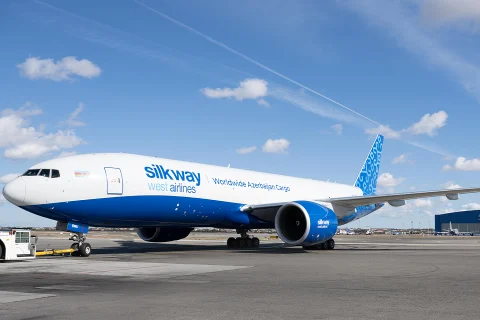
In a move signaling a significant leap forward in the modernization of global air freight logistics, Baku-based cargo giant Silk Way West Airlines has announced a strategic partnership with the digital booking platform CargoAi. This integration marks a pivotal moment in the airline’s ongoing digital transformation, designed to streamline booking processes, enhance visibility for freight forwarders, and consolidate its market position across the high-demand corridors of the United States, Europe, and Asia.
By embedding its extensive cargo capacity, real-time rate structures, and automated eBooking services into the CargoAi ecosystem, Silk Way West is moving beyond traditional booking methods. This integration allows the carrier to meet the evolving demands of a digital-first logistics industry, ensuring that its service offerings are accessible exactly where freight forwarders operate on a daily basis.
The Digital Integration: How the Partnership Works
The collaboration centers on the integration of Silk Way West’s inventory into CargoMART, CargoAi’s flagship third-party booking portal. This allows for a seamless, end-to-end booking experience that replaces manual inquiries and fragmented communication channels.
Key Capabilities and Features
The technical synergy between the two entities provides several critical advantages:
- Multi-Commodity Support: The platform now supports the immediate booking of a wide range of cargo types, including general freight, lithium batteries, and complex dangerous goods. By digitizing these categories, Silk Way West reduces the administrative burden typically associated with specialized cargo.
- CargoCONNECT Integration: Beyond the web portal, the partnership leverages CargoCONNECT, allowing for direct integration with the internal Transport Management Systems (TMS) of freight forwarders. This removes the "double-entry" friction, allowing bookings to flow directly from a forwarder’s system into the airline’s operational queue.
- Real-Time Rate Transparency: Forwarders gain instantaneous access to live pricing and capacity availability. This transparency is vital in a volatile market where cargo space availability can fluctuate by the hour.
- Operational Visibility: The development provides what the carrier describes as "greater visibility, automation, and reach." By centralizing booking data, Silk Way West can better optimize its load factors and provide more accurate tracking information to its global client base.
A Chronology of Strategic Growth
To understand the weight of this digital milestone, one must look at the recent trajectory of Silk Way West Airlines. The company has been in the midst of a multi-year effort to overhaul not just its technological infrastructure, but also its physical assets.
2024-2025: Building the Foundation
Following the global disruption of the early 2020s, the airline prioritized the stabilization of its network. It recognized early on that a physical fleet is only as effective as the software that manages it. The decision to partner with CargoAi follows a period of rigorous internal auditing of its digital supply chain, identifying bottlenecks in the booking process that hindered agility.
2025: Expanding the Physical Fleet
Late in 2025, Silk Way West solidified its hardware future by exercising options for two Airbus A350F freighters. This move completed its planned four-aircraft order, a cornerstone of its fleet renewal strategy. The A350F is widely considered the most efficient long-haul freighter currently in production, offering lower fuel burn and higher payload capacity, which directly complements the airline’s goal of operating a sustainable and cost-effective network.
2026: The Boeing 777 Milestone
The current year began with a high-profile delivery: a brand-new Boeing 777 freighter touched down in Baku, having flown directly from the Boeing manufacturing facility in Seattle. This aircraft represented the fourth of six Boeing 777s ordered by the airline. With two more scheduled for delivery in 2027, the airline is clearly signaling its intent to dominate the long-haul transcontinental market.
Official Responses and Strategic Vision
The leadership at both Silk Way West and CargoAi views this partnership as a fundamental change in the "customer journey" of air freight.
The Airline’s Perspective
Wolfgang Meier, President of Silk Way West Airlines, emphasized that the shift is rooted in customer experience. "Expanding our digital distribution in retail is an important part of how we continue to evolve our customer experience," Meier stated. He noted that the partnership is not merely a technical upgrade, but a commitment to accessibility. "By making our offering more visible and easier to book, we are creating a more efficient customer journey while continuing to strengthen the digital capabilities of our global network."
The Platform’s Perspective
Matthieu Petot, Founder and CEO of CargoAi, highlighted the strategic value of merging widebody capacity with digital infrastructure. "By combining Silk Way West Airlines’ dedicated widebody freighter capacity and global network with CargoAi’s digital ecosystem, we are making capacity and pricing more easily accessible to freight forwarders across multiple booking environments," Petot remarked. He added that the integration is designed to foster long-term growth, providing forwarders with the tools they need to scale alongside the airline.
Supporting Data: Why Digitalization Matters
The air cargo industry has historically been plagued by "siloed" data. Freight forwarders often had to visit multiple websites, send numerous emails, or make phone calls to confirm space on a single flight. The integration of Silk Way West into CargoAi addresses several industry-wide inefficiencies:
- Reduction in Booking Latency: By enabling automated bookings, the time taken to secure space can be reduced from hours to seconds.
- Accuracy in Compliance: When booking dangerous goods via a digital portal, the platform can automatically flag regulatory requirements, reducing the risk of ground-handling rejections and costly delays at the airport.
- Market Reach: By appearing on a multi-carrier platform like CargoMART, Silk Way West exposes its capacity to a broader range of global forwarders who may not have previously utilized the airline, effectively expanding its market share without the need for increased physical sales staff.
Implications: The Future of Global Air Freight
The partnership between Silk Way West and CargoAi is emblematic of a broader trend: the "Amazonification" of air cargo. As global trade becomes increasingly complex, stakeholders are demanding the same level of digital ease in B2B shipping that consumers expect in B2C e-commerce.
Impact on Freight Forwarders
For the average freight forwarder, this move simplifies the complexities of booking. Whether they are managing a shipment of lithium-ion batteries or high-volume perishables, they now have a single, unified interface to check the availability of Silk Way West’s world-class freighter fleet. This leads to better pricing models and more reliable supply chain planning.
Competitive Positioning
Silk Way West is positioning itself as a "Digital-First" carrier. By pairing its state-of-the-art Boeing 777 and Airbus A350 fleet with high-end digital distribution, the airline is effectively insulating itself against competitors who rely on legacy, paper-heavy systems. This dual-pronged strategy—investing in the most efficient hardware while simultaneously investing in the most efficient booking software—creates a powerful competitive moat.
The Road Ahead
As the airline prepares for the arrival of its remaining Boeing 777s in 2027, the digital foundation laid by the CargoAi partnership will be crucial. The ability to fill the capacity of these larger, more frequent flights depends on the velocity of bookings. The automation provided by this partnership will ensure that as the fleet grows, the operational overhead remains manageable, allowing Silk Way West to maintain its reputation for reliability and speed.
In conclusion, the partnership between Silk Way West Airlines and CargoAi is more than just a software integration; it is a strategic alignment with the future of global logistics. By bridging the gap between its impressive widebody assets and the digital needs of its customers, Silk Way West is ensuring that it remains at the forefront of the air cargo sector for years to come. The airline is not just transporting goods across continents; it is transporting the industry into a more efficient, automated, and transparent era.


 Lina Irawan
 Raul Delapena Setiawan
 Laily UPN

 Rifan Muazin
 Suro Senen
 Lina Hope