
 Nana Muazin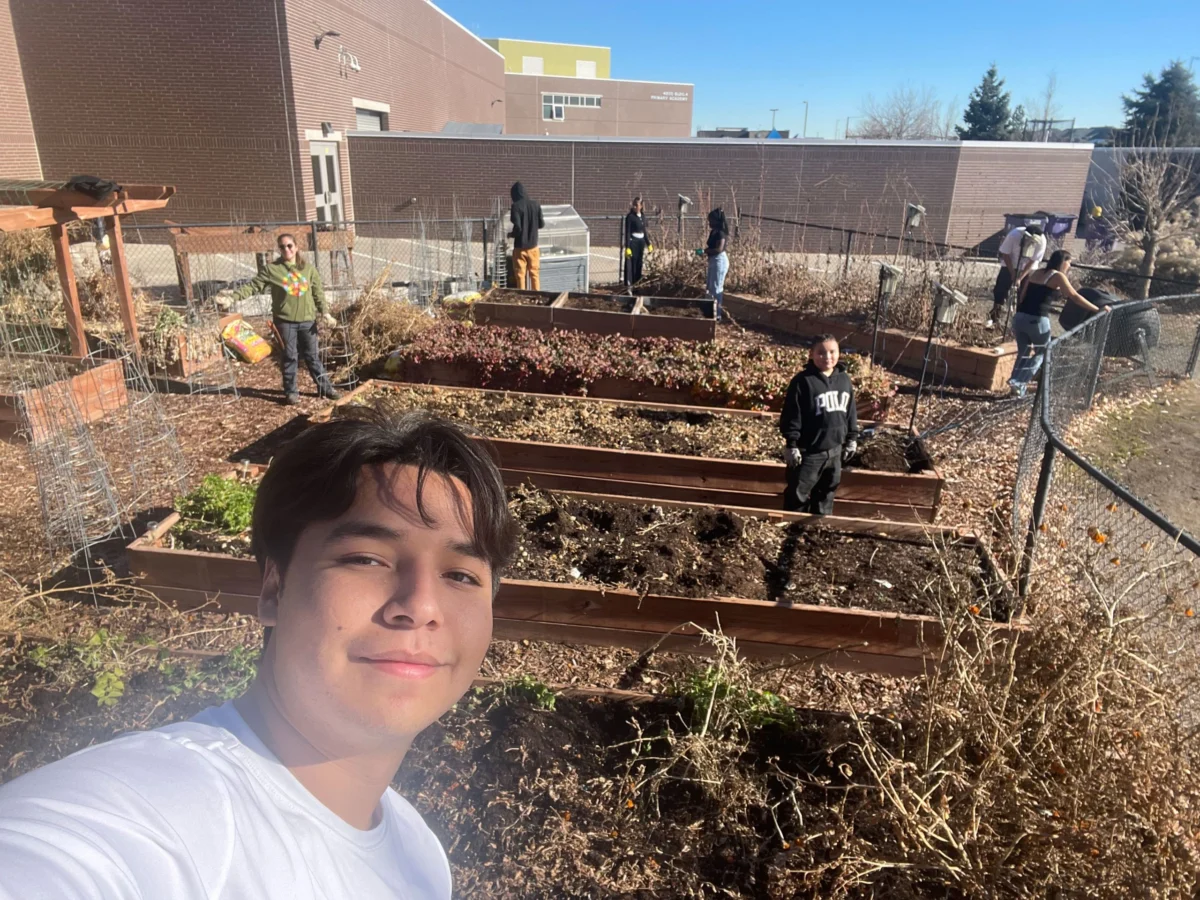
As jet fuel emissions from Denver’s nearby international airport hung in the air above his campus, Anthony Muñoz found himself grappling with a daunting question: Could the invisible pollutants raining down on his high school be harming the very ecosystem he helped cultivate?
An avid gardener and student at Vista Academy, a charter school in Colorado, Muñoz didn’t just wonder—he acted. Partnering with a local university, he transformed a patch of school grounds into an "ozone garden," a living laboratory filled with bio-indicator plants specifically selected for their ability to react to ground-level ozone pollution. Under the mentorship of climate scientists from the federally backed National Center for Atmospheric Research (NCAR) in Boulder, Muñoz learned to decode the language of leaves, monitoring plant health to map air quality and planting milkweed to support the migratory patterns of monarch butterflies.
"One garden is a very good data source," Muñoz reflects today. "Colorado is so beautiful, and I would hate to see it wilt away."
Muñoz’s project was not merely an extracurricular hobby; it was a capstone requirement for Colorado’s Seal of Climate Literacy. This innovative state initiative represents a growing national movement to codify climate education, offering students a tangible, recognized pathway to demonstrate their understanding of Earth’s systems and their ability to address local environmental crises.
The Mechanics of the Seal: Bridging Theory and Practice
The Seal of Climate Literacy serves as a formal endorsement on high school diplomas and transcripts, signaling to colleges and employers that a graduate possesses a sophisticated understanding of climate science and a commitment to civic engagement.
To earn the credential, students must complete two rigorous, climate-focused courses—typically one in the natural sciences, such as biology or environmental studies, and a second in a field of their choosing, which can range from civics and history to fine arts. The centerpiece of the requirement, however, is the capstone project. Unlike traditional classroom learning, which often keeps climate change locked within the pages of a textbook, the capstone demands that students identify a climate-related issue within their own backyard and implement a community-based solution.

Since its inception in Colorado in 2024, the program has been adopted by 26 of the state’s 179 school districts, with approximately 1,200 students receiving the seal to date. The initiative was spearheaded by Lyra Colorado, a non-profit organization dedicated to fostering community-based education. According to CEO Mary Seawell, the movement was born out of necessity. Rural educators and students expressed a deep frustration with the "global doom and gloom" narrative, seeking instead a way to engage with climate change as a practical, local reality.
A Chronology of Expansion: From Colorado to the Coasts
The momentum behind the Seal of Climate Literacy has moved swiftly beyond Colorado’s borders. The model is currently being replicated across the country as youth-led coalitions and state education boards recognize the appetite for climate-conscious curricula.
- 2024: Colorado officially rolls out the Seal of Climate Literacy, establishing the template for the capstone-based model.
- Early 2025: Maine, leveraging its existing framework for a "seal of biliteracy," adopts a climate seal via state education officials to bypass legislative gridlock.
- Mid-2025: California signs into law SB 1048, creating a statewide framework for a climate literacy endorsement.
- Ongoing: Youth coalitions in states like Hawaii and Minnesota continue to lobby for similar resolutions, with the Minnesota Youth Council formally recommending the adoption of a seal during the 2026 legislative session.
In Maine, the rollout exceeded expectations. When state K-12 climate education specialist Teddy Lyman launched a pilot program across nine high schools, he anticipated a dozen applicants. Instead, 57 seniors earned the seal, proving that students are eager to turn their environmental anxiety into constructive action.
The Economic and Pedagogical Implications: Preparing for a Green Workforce
Proponents of the seal argue that it does more than just educate; it prepares students for the burgeoning "green economy." As the global market shifts toward sustainable infrastructure, the seal acts as a bridge to vocational opportunities in solar grid maintenance, heat pump installation, sustainable agriculture, and water resource management.
Lyra Colorado is currently working with institutions like Colorado Mountain College to align the high school seal with college credit and professional certification programs. The goal is to create a seamless pipeline where a student who monitors forest health in high school can transition into a college program for sustainable forestry with pre-existing recognition of their skills.
For students like Rylan Neumann, a graduate of Colorado’s Boulder Valley School District now studying environmental economics at UC Berkeley, the seal was a catalyst for activism. Within weeks of starting college, Neumann traveled to Sacramento to lobby lawmakers for the passage of California’s climate seal bill. "Getting more students involved in climate action and how they’ll be impacted in the future is essential," Neumann says. "Students are the future. We’re the ones growing up in this world."

Official Responses and the Ideological Divide
Despite the program’s success, the initiative has not been without controversy. Critics argue that the seal risks politicizing the classroom and diverting limited resources away from foundational academic disciplines.
Lance Izumi, senior director of education studies at the Pacific Research Institute, has been a vocal opponent. Citing California’s current struggles with student proficiency in standardized testing—where only one-third of students meet benchmarks in science—Izumi argues that "diverting focus away from foundational science learning could worsen performance levels." He characterizes the capstone projects as "activist community projects" rather than rigorous academic pursuits, suggesting that schools should prioritize core competencies over climate-focused advocacy.
Conversely, proponents view the seal as a vital antidote to student disengagement. Laura Schifter, a senior fellow with the Aspen Institute’s This is Planet Ed, emphasizes that the seal offers agency to students who are otherwise paralyzed by the magnitude of the climate crisis. "Where we can make the most difference is often in our local community," Schifter notes. She argues that the seal addresses a critical gap in K-12 education, where climate change is rarely covered with the depth or urgency required by current environmental trends.
Financial Hurdles and the "Chilling Effect"
The rollout of the seal has faced significant logistical and financial barriers. With limited state funding—Colorado provided less than $20,000 for the program’s initial launch—many districts have been left to rely on external grants or out-of-pocket contributions from teachers and students.
The political climate at the federal level has further complicated the landscape. Recent rhetoric from the Trump administration, which has labeled climate change a "hoax" and sought to dismantle climate research institutions like the NCAR, has created a "chilling effect" on funding. Mary Seawell notes that potential donors are increasingly wary of supporting climate-related educational initiatives, fearing that their tax-exempt status or political standing could be targeted by federal oversight.
For Anthony Muñoz, the threat to institutions like the NCAR—which provided him with essential data and mentorship—is "devastating." Despite this, he remains undeterred. Now a sophomore studying mechanical engineering at the Colorado School of Mines, Muñoz is using his college break to return to Vista Academy, where he is writing code to streamline data collection for the next generation of students in the ozone garden.

A New Model for Resilience
The success of the climate seal lies in its ability to adapt to regional realities. In Maine, where the economy is tied to aquaculture and the Gulf of Maine is warming at an alarming rate, students at Freeport High School are studying sustainable fisheries and the commodification of invasive crab species. In urban centers, the focus might shift to heat mitigation and infrastructure.
By grounding climate education in the specific, tangible challenges of their home communities, schools are successfully shifting the narrative from abstract fear to localized resilience. As Maine’s Teddy Lyman observes, "No more global doom and gloom. Students can feel empowered to make a difference in their community. They’re not trying to solve something for the U.N. They’re advocating at their town committee instead."
As the movement grows, the question remains whether these state-level endorsements will eventually coalesce into a national standard. For the students currently pinning graduation cords to their robes or adding the "Climate Literacy" designation to their transcripts, the seal represents more than a line on a resume; it is a declaration of intent.
"Are you going to think beyond yourself and help not only those in need but the environment," Muñoz asks his peers, "or will you sit back and wait for someone else to change the world for you?" For thousands of students, the answer is already written in the gardens, the policy papers, and the data sets they are producing today.

 Sagoh
Sagoh
 Jia Lissa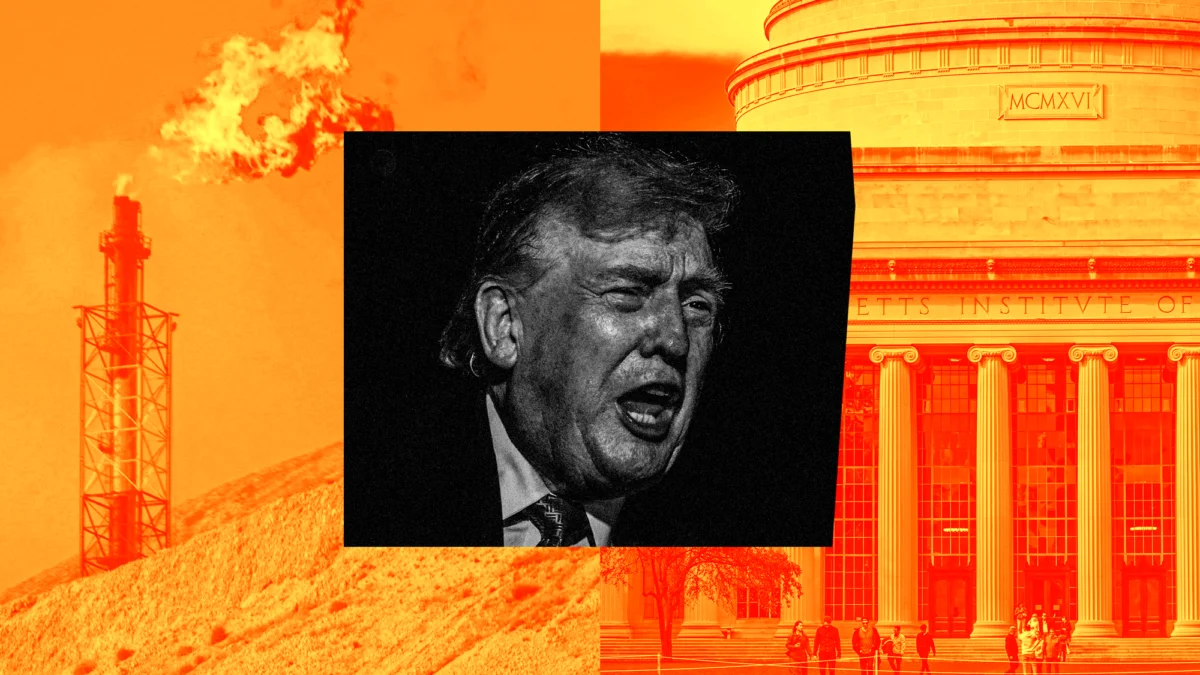
 Laily UPN
 Iffa Jayyana
 Rifan Muazin
 Suro Senen
 Lina Hope
 Lina Irawan