
 Reynand Wu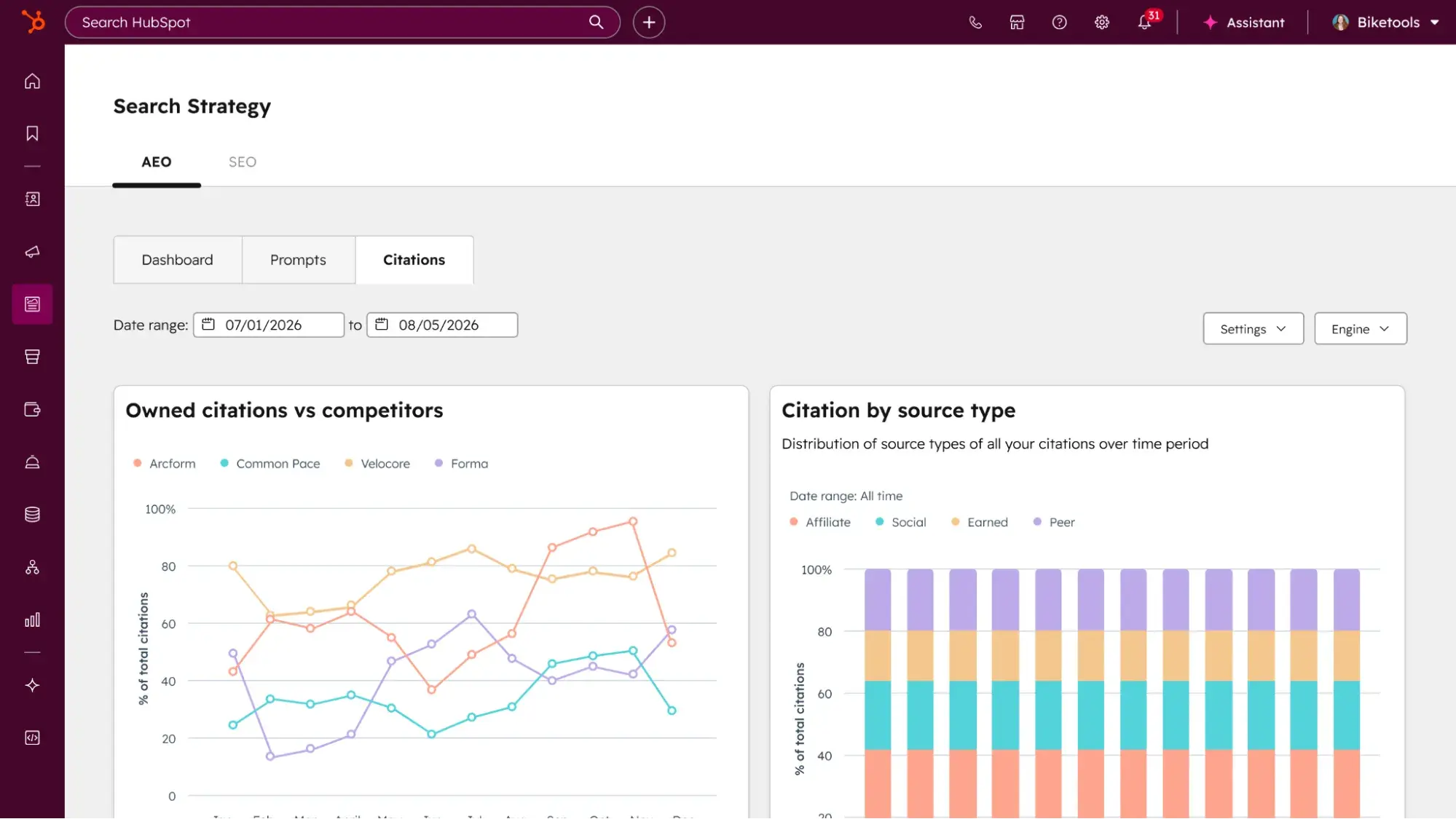
For decades, the “demand generation funnel” has been the bedrock of B2B marketing. It was built on a predictable, linear assumption: buyers would eventually arrive at a brand’s digital doorstep when they were ready to learn about a category, whether through organic search, paid advertising, or content marketing. The funnel was defined by the moment a prospect became visible—when they clicked a link, visited a landing page, or downloaded an asset.
Today, that model is undergoing a fundamental transformation. Artificial Intelligence has inserted itself into the very beginning of the buyer’s journey, effectively acting as a digital gatekeeper. Before a prospect ever hits a vendor’s website, they are asking AI interfaces—like ChatGPT, Perplexity, or Gemini—to curate their options, compare solutions, and form opinions. If your brand isn’t part of that AI-generated response, you aren’t just losing a click; you’re losing the conversation that shapes the buyer’s shortlist.
The Shift: Moving Upstream in the Buyer Journey
The traditional demand generation funnel is no longer sufficient. Buyers are increasingly starting their research inside AI chat interfaces, receiving synthesized answers that prioritize authority and relevance over traditional SEO keywords. This shift means that the "top of the funnel" has moved even further upstream.
Demand generation teams that fail to adapt risk becoming blind to the most critical stage of the modern buying process. When a buyer asks an AI, “What are the best CRM platforms for mid-sized manufacturing firms?” and receives a list of three vendors, those three vendors have effectively won the first battle of the sales cycle. If your brand is absent from that list, you are forced to play catch-up, attempting to influence a prospect whose mind may already be made up.

The strategic imperative for modern marketing teams is not to abandon traditional demand generation, but to extend it. By capturing presence at the AI-discovery stage, brands can ensure they are part of the initial shortlist, creating a more robust pipeline that starts well before the first direct interaction with the company.
Chronology of an AI-Influenced Purchase
To understand the urgency, one must look at how the modern buyer’s journey has evolved:
- Phase 1: The AI-Driven Discovery: A buyer identifies a business problem and turns to an AI model to research potential categories and solutions. They are looking for high-level summaries and peer-validated recommendations.
- Phase 2: Shortlist Curation: The AI provides a curated list of vendors. The buyer evaluates the credibility of the sources cited within the AI response.
- Phase 3: The "Deep Dive" Transition: The buyer moves from the AI interface to the vendor’s website, but they arrive with a significantly higher degree of context than a standard inbound lead. They are no longer looking for "What is X?" but rather "Why should I choose X over Y?"
- Phase 4: Evaluation and Conversion: The buyer engages with deeper, decision-stage content on the vendor’s site, such as comparison pages, case studies, or technical documentation, before initiating contact with sales.
This chronology highlights a critical friction point: if a vendor treats an AI-referred visitor like a brand-new prospect—hitting them with generic introductory content—the buyer often becomes frustrated. They have already done the initial research; they require information that respects their existing knowledge.
Mapping the AI Landscape: A Data-Driven Necessity
Before a team can effectively capture this new demand, they must first understand their current standing. Where does their brand appear in AI-generated answers, and, more importantly, where does it fail to appear?

Without a map of the AI landscape, marketers are effectively flying blind. HubSpot’s AEO (Answer Engine Optimization) tool has emerged as a key solution to this problem, providing a "Brand Visibility Dashboard" that allows marketers to see exactly where they stand across various engines, query types, and competitive contexts.
The Role of Competitive Intelligence
By investigating the AI landscape, teams can identify specific prompts that consistently drive buyers toward their category. If a competitor is being cited for "high-intent" queries—such as "best software for [specific industry workflow]"—but your brand is not, this is a clear signal of a visibility gap. This intelligence allows marketing leaders to allocate resources toward the specific content and search strategies that will place their brand in the conversation.
Developing Content for the "Informed Evaluator"
Once the gaps in AI visibility are mapped, the challenge shifts to content creation. A common mistake is producing content that is too top-of-funnel, effectively telling the buyer things they already learned from the AI.
Creating High-Context Content
Buyers who land on your site via an AI-assisted search are "informed evaluators." They have been primed by an algorithm and are now looking for proof of competence. Content strategy must pivot to:

- Head-to-Head Comparisons: Directly addressing how your solution stacks up against the competitors that frequently appear in AI answers.
- Use-Case Specificity: Providing evidence that your product solves the exact pain points the buyer asked the AI about.
- Technical Validation: Offering whitepapers or ROI calculators that provide the "evidence" required to move from evaluation to decision.
According to internal HubSpot data, businesses that utilize AEO tools see a 2.7x increase in Marketing Qualified Leads (MQLs). This underscores a vital truth: when content is optimized for the specific questions being asked in AI interfaces, it doesn’t just increase traffic—it increases the quality of the pipeline.
Measuring Impact: Bridging the Gap to Revenue
For many demand generation leaders, the most significant barrier to adopting AEO is the difficulty of measurement. AI-assisted discovery is rarely a single-touch event. A buyer might research on an AI tool, click a link, browse a blog post, and then eventually convert through a LinkedIn ad or a direct search.
Beyond Last-Click Attribution
Sophisticated attribution models are required to prove the ROI of AEO. By utilizing tools that track prompts and filter them by the buyer’s journey stage, teams can finally bridge the gap between "visibility" and "revenue."
The goal is to move away from vanity metrics—such as "how many times were we mentioned in a chatbot?"—and toward business-impact metrics: "How many MQLs originated from queries where our brand was cited by an AI?" When teams can show leadership that AI-assisted discovery is consistently filling the funnel with high-intent prospects, the argument for a permanent AEO budget becomes undeniable.

Implications for the Future of Demand Gen
The rise of AI in the buyer journey is not a passing trend; it is a permanent architectural change in how B2B markets operate.
- The Death of the Generic Funnel: The linear "Awareness-Interest-Decision" model must be replaced by a more nuanced approach that accounts for AI-mediated discovery.
- The Rise of "Answer Engine Optimization": Just as SEO transformed marketing in the 2000s, AEO is the new frontier. It requires a blend of technical precision, high-quality content, and rigorous data analysis.
- The Need for Integrated Tooling: As seen with the integration of HubSpot’s AEO into broader marketing workflows, success in this new era requires tools that don’t exist in silos. Content agents, CRM data, and search tracking must work in concert to create a cohesive strategy.
Conclusion: Adapting or Lagging
The shift toward AI-assisted research represents a moment of "creative destruction" in demand generation. While the challenge is significant, the opportunity is equally profound. Brands that proactively adapt their content strategy to influence the AI-driven research phase will secure a massive competitive advantage. They will not only be present when the buyer is ready to purchase; they will have helped shape the very criteria by which the buyer makes their final decision.
As AI continues to refine its ability to act as a B2B consultant, the brands that win will be those that view their AI presence as a critical pillar of their growth strategy. By extending the funnel upstream, focusing on high-intent content, and rigorously measuring the impact on the pipeline, demand generation teams can turn the uncertainty of the AI era into a predictable, scalable engine for growth. The technology is here; the question now is how quickly teams can reorganize their efforts to meet the buyer in the new, intelligent digital space.


 Evan Lee Salim
 Jia Lissa
 Basiran
 Neng Nana
 Iffa Jayyana
 Raul Delapena Setiawan
 Rifan Muazin
 Asro
Asro